Notice: تابع WP_Block_Type_Registry::register به طورنادرست فراخوانی شد. نامهای نوع بلوک نباید حروف بزرگ داشته باشند. لطفاً برای اطلاعات بیشتر، اشکال زدایی در وردپرس را مشاهده کنید. (این پیام در نگارش 5.0.0 افزوده شده است.) in /home/ethicsho/public_html/wp-includes/functions.php on line 5313
Warning: Use of undefined constant TDC_PATH_LEGACY - assumed 'TDC_PATH_LEGACY' (this will throw an Error in a future version of PHP) in /home/ethicsho/public_html/wp-content/plugins/td-composer/td-composer.php on line 109
Warning: Use of undefined constant TDSP_THEME_PATH - assumed 'TDSP_THEME_PATH' (this will throw an Error in a future version of PHP) in /home/ethicsho/public_html/wp-content/plugins/td-composer/td-composer.php on line 113 بایگانیهای Tony Smith - خانه اخلاق پژوهان جوان Notice: Trying to access array offset on value of type bool in /home/ethicsho/public_html/wp-content/plugins/wp-ulike/inc/general-functions.php on line 807
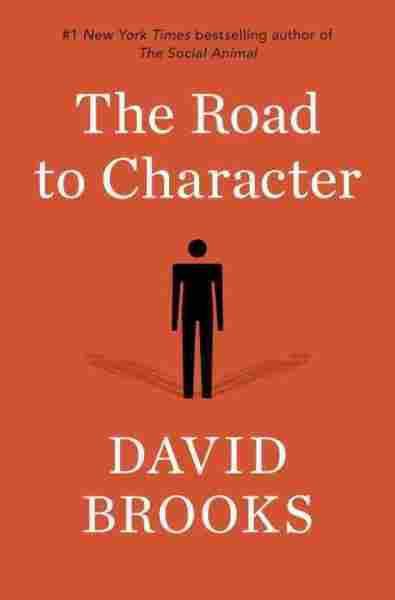
#۱ NEW YORK TIMES BESTSELLER • David Brooks challenges us to rebalance the scales between the focus on external success—“résumé virtues”—and our core principles. NAMED ONE OF THE BEST BOOKS OF THE YEAR BY THE ECONOMIST With the wisdom, humor, curiosity, and sharp insights that have brought millions of readers to his New York Times column and his previous bestsellers, David Brooks has consistently illuminated our daily lives in surprising and original ways. In The Social Animal, he explored the neuroscience of human connection and how we can flourish together. Now, in The Road to Character, he focuses on the deeper values that should inform our lives. Looking to some of the world’s greatest thinkers and inspiring leaders, Brooks explores how, through internal struggle and a sense of their own limitations, they have built a strong inner character. Labor activist Frances Perkins understood the need to suppress parts of herself so that she could be an instrument in a larger cause. Dwight Eisenhower organized his life not around impulsive self-expression but considered self-restraint. Dorothy Day, a devout Catholic convert and champion of the poor, learned as a young woman the vocabulary of simplicity and surrender. Civil rights pioneers A. Philip Randolph and Bayard Rustin learned reticence and the logic of self-discipline, the need to distrust oneself even while waging a noble crusade. Blending psychology, politics, spirituality, and confessional, The Road to Character provides an opportunity for us to rethink our priorities, and strive to build rich inner lives marked by humility and moral depth. “Joy,” David Brooks writes, “is a byproduct experienced by people who are aiming for something else. But it comes.”Praise for The Road to Character“A hyper-readable, lucid, often richly detailed human story.”—The New York Times Book Review “This profound and eloquent book is written with moral urgency and philosophical elegance.”—Andrew Solomon, author of Far from the Tree and The Noonday Demon “A powerful, haunting book that works its way beneath your skin.”—The Guardian“Original and eye-opening . . . Brooks is a normative version of Malcolm Gladwell, culling from a wide array of scientists and thinkers to weave an idea bigger than the sum of its parts.”—USA Today
In Goodness and Justice, Joseph Mendola develops a unified moral theory that defends the hedonism of classical utilitarianism while evading utilitarianism’s familiar difficulties by two modifications. His theory incorporates a new form of consequentialism. When, as is common, someone is engaged in conflicting group acts, it requires that one perform the role in that group that is most beneficent. The theory holds that overall value is distribution-sensitive, ceding maximum weight to the well-being of the worst-off sections of sentient lives. It is properly congruent with commonsense intuition and required by the true metaphysics of value, by the unconstituted natural good found in our world.
A classic work in the field of practical and professional ethics, this collection of nine essays by English philosopher and educator Henry Sidgwick (1838-1900) was first published in 1898 and forms a vital complement to Sidgwick’s major treatise on moral theory, The Methods of Ethics. Reissued here as Volume One in a new series sponsored by the Association for Practical and Professional Ethics, the book is composed chiefly of addresses to members of two ethical societies that Sidgwick helped to found in Cambridge and London in the 1880s. Clear, taut, and lively, these essays demonstrate the compassion and calm reasonableness that Sidgwick brought to all his writings. As Sidgwick explains in his opening essay, the societies he addressed aimed to allow academics, professionals, and others to pursue joint efforts at reaching “some results of value for practical guidance and life.” Sidgwick hoped that members might discuss such questions as when, if ever, public officials might be justified in lying or in breaking promises, whether scientists could legitimately inflict suffering on animals for research purposes, when nations might have just cause in going to war, and a score of other issues of ethics in public and private life still debated a century later. This valuable reissue returns Practical Ethics to its rightful place in Sidgwick’s oeuvre. Noted ethicist Sissela Bok provides a superb Introduction, ranging over the course of Sidgwick’s life and career and underscoring the relevance of Practical Ethics to contemporary debate. She writes: “Practical Ethics, the last book that Henry Sidgwick published before his death in 1900, contains the distillation of a lifetime of reflection on ethics and on what it would take for ethical debate to be ‘really of use in the solution of practical questions.'” This rich, engaging work is essential reading for all concerned with the relationship between ethical theory and. practice, and with the questions that have driven the study of professional ethics in recent years.
Here is the concluding volume of Sir Anthony Kenny’s monumental four-volume history of philosophy, the first major single-author narrative history to appear for several decades. Here Kenny tells the fascinating story of the development of philosophy in the modern world, from the early nineteenth century to the end of the millennium. Alongside (and intertwined with) extraordinary scientific advances, cultural changes, and political upheavals, the last two centuries have seen some of the most intriguing and original developments in philosophical thinking, which have transformed our understanding of ourselves and our world. In the first part of the book, Kenny offers a lively narrative introducing the major thinkers in their historical context. Among those we meet are the great figures of continental European philosophy, from Schopenhauer, Kierkegaard, and Nietzsche to Heidegger, Sartre, and Derrida; the Pragmatists such as C.S. Pierce and William James, who first developed a distinctively American philosophical tradition; Marx, Darwin, and Freud, the non-philosophers whose influence on philosophy was immense; and Wittgenstein and Russell, friends and colleagues who set the agenda for analytic philosophy in the twentieth century. Kenny then proceeds to guide the reader lucidly through the nine main areas of philosophical work in the period, offering a serious engagement with ideas and arguments about logic, language, epistemology, metaphysics, ethics, aesthetics, politics, and the existence of God. Graced with many beautiful illustrations, Philosophy in the Modern World concludes Kenny’s stimulating history of the intellectual development of Western civilization, allowing readers to trace the birth and growth of philosophy from antiquity to the present day.
ما از اخلاق چه انتظاری داریم؟ این سوال شاید تاحدودی برای عموم مردم و یا متخصصان این رشته قابل پاسخ باشد؛ اینکه خوب بودن را به ما بیاموزد و در تنظیم روابط فردی م...

جشن کتاب تهران به ایستگاه سی و یکم رسیده است. حال و احوال نشر کتاب خوب نیست و باید فرهنگدوستان را به خرید و هدیه دادن کتاب ترغیب نمود. خانه اخلاقپژوهان جوان ب...

بنیاد کتابهای اخلاق اسلامی عمدتا پالایش جان از آلودگیها و آراستن آن به زیباییها است. اندیشه محوری این قبیل کتابها آن است که انسان فعلی آنی نیست که باید باشد...

-
0 Comments