Notice: تابع WP_Block_Type_Registry::register به طورنادرست فراخوانی شد. نامهای نوع بلوک نباید حروف بزرگ داشته باشند. لطفاً برای اطلاعات بیشتر، اشکال زدایی در وردپرس را مشاهده کنید. (این پیام در نگارش 5.0.0 افزوده شده است.) in /home/ethicsho/public_html/wp-includes/functions.php on line 5313
Warning: Use of undefined constant TDC_PATH_LEGACY - assumed 'TDC_PATH_LEGACY' (this will throw an Error in a future version of PHP) in /home/ethicsho/public_html/wp-content/plugins/td-composer/td-composer.php on line 109
Warning: Use of undefined constant TDSP_THEME_PATH - assumed 'TDSP_THEME_PATH' (this will throw an Error in a future version of PHP) in /home/ethicsho/public_html/wp-content/plugins/td-composer/td-composer.php on line 113 بایگانیهای Thomas M. Bolin - خانه اخلاق پژوهان جوان Notice: Trying to access array offset on value of type bool in /home/ethicsho/public_html/wp-content/plugins/wp-ulike/inc/general-functions.php on line 807
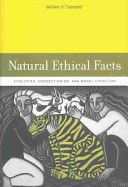
In Natural Ethical Facts William Casebeer argues that we can articulate a fully naturalized ethical theory using concepts from evolutionary biology and cognitive science, and that we can study moral cognition just as we study other forms of cognition. His goal is to show that we have “softly fixed” human natures, that these natures are evolved, and that our lives go well or badly depending on how we satisfy the functional demands of these natures. Natural Ethical Facts is a comprehensive examination of what a plausible moral science would look like.Casebeer begins by discussing the nature of ethics and the possible relationship between science and ethics. He then addresses David Hume’s naturalistic fallacy and G. E. Moore’s open-question argument, drawing on the work of John Dewey and W. V. O. Quine. He then proposes a functional account of ethics, offering corresponding biological and moral descriptions. Discussing in detail the neural correlates of moral cognition, he argues that neural networks can be used to model ethical function. He then discusses the impact his views of moral epistemology and ontology will have on traditional ethical theory and moral education, concluding that there is room for other moral theories as long as they take into consideration the functional aspect of ethics; the pragmatic neo-Aristotelian virtue theory he proposes thus serves as a moral “big tent.” Finally, he addresses objections to ethical naturalism that may arise, and calls for a reconciliation of the sciences and the humanities. “Living well,” Casebeer writes, “depends upon reweaving our ethical theories into the warp and woof of our scientific heritage, attending to the myriad consequences such a project will have for the way we live our lives and the manner in which we structure our collective moral institutions.”
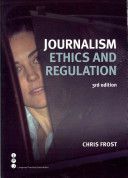
“Technology, and the democratising of news gathering, continue to change traditional journalistic practice making the path through ethical and regulatory frameworks tough to negotiate. As high-profile celebrity cases such as Max Mosley’s vividly illustrate, conflicts between the law, ethics and the public’s right and desire to be informed are not easily resolved. This comprehensive volume addresses the ethical considerations, dilemmas and challenges the practising journalist faces, each minute, every day. Providing context and practical advice, it explores an area of crucial importance for the 21st century, thoroughly equipping the reader with the information and tools to negotiate this challenging area knowledgeably, practically and responsibly.”– Publisher.
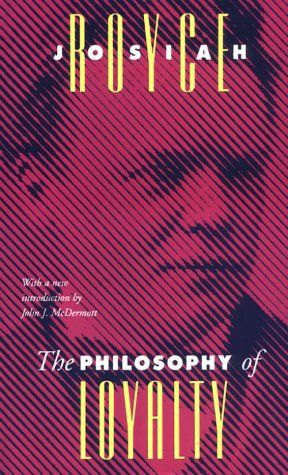
Josiah Royce (1855-1916), one of the outstanding classical American philosophers, is regarded by many as the foremost American idealist. A transitional book in the development of Royce’s thought, The Philosophy of Loyalty is a key to understanding his influence on the development of pragmatism. Royce’s basic argument is clear. Individual wills are a given, and social training is a natural aspect of community. But the two are not fully compatible, and conflicts naturally emerge. Loyalty to a cause unites many individuals into a community, but fanatical loyalty to causes often has inimical results. Long out of print and never before available in paperback, The Philosophy of Loyalty has many beneficial implications for understanding contemporary social passions and outlooks, especially for our own fragmented American culture. As Royce himself asserted nearly ninety years ago, in the preface of this book, “I am writing…not merely and not mainly for philosophers, but for all those who love…ideals, and also for those who love…their country – a country so ripe at present for idealism, and so confused, nevertheless, by the vastness and the complication of its social and political problems.” Royce speaks to these continuing concerns in a voice that is perceptive, learned, and sensitive to the human situation, and he offers powerful conceptual tools for our own troubled times.
Presenting a series of innovative visual manuals on a wide variety of popular subjects, these richly illustrated companions offer detailed cutaway views, maps, specially commissioned photographs, informative captions, biographical profiles, and a fact-filled text as they cover the basics of different topics of interest.
ما از اخلاق چه انتظاری داریم؟ این سوال شاید تاحدودی برای عموم مردم و یا متخصصان این رشته قابل پاسخ باشد؛ اینکه خوب بودن را به ما بیاموزد و در تنظیم روابط فردی م...

جشن کتاب تهران به ایستگاه سی و یکم رسیده است. حال و احوال نشر کتاب خوب نیست و باید فرهنگدوستان را به خرید و هدیه دادن کتاب ترغیب نمود. خانه اخلاقپژوهان جوان ب...

بنیاد کتابهای اخلاق اسلامی عمدتا پالایش جان از آلودگیها و آراستن آن به زیباییها است. اندیشه محوری این قبیل کتابها آن است که انسان فعلی آنی نیست که باید باشد...

-
0 Comments