Notice: تابع WP_Block_Type_Registry::register به طورنادرست فراخوانی شد. نامهای نوع بلوک نباید حروف بزرگ داشته باشند. لطفاً برای اطلاعات بیشتر، اشکال زدایی در وردپرس را مشاهده کنید. (این پیام در نگارش 5.0.0 افزوده شده است.) in /home/ethicsho/public_html/wp-includes/functions.php on line 5313
Warning: Use of undefined constant TDC_PATH_LEGACY - assumed 'TDC_PATH_LEGACY' (this will throw an Error in a future version of PHP) in /home/ethicsho/public_html/wp-content/plugins/td-composer/td-composer.php on line 109
Warning: Use of undefined constant TDSP_THEME_PATH - assumed 'TDSP_THEME_PATH' (this will throw an Error in a future version of PHP) in /home/ethicsho/public_html/wp-content/plugins/td-composer/td-composer.php on line 113 بایگانیهای Teresa - خانه اخلاق پژوهان جوان Notice: Trying to access array offset on value of type bool in /home/ethicsho/public_html/wp-content/plugins/wp-ulike/inc/general-functions.php on line 807
“Anne Margaret Baxley offers a systematic interpretation of Kant’s theory of virtue, whose most distinctive features have not been properly understood. She explores the rich moral psychology in Kant’s later and less widely read works on ethics, and argues that the key to understanding his account of virtue is the concept of autocracy, a form of moral self-government in which reason rules over sensibility. Although certain aspects of Kant’s theory bear comparison to more familiar Aristotelian claims about virtue, Baxley contends that its most important aspects combine to produce something different – a distinctively modern, egalitarian conception of virtue which is an important and overlooked alternative to the more traditional Greek views which have dominated contemporary virtue ethics”–
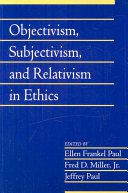
Do we desire things because they are good, or are they good because we desire them? Objectivists answer that we desire things because they are good; subjectivists answer that things are good because we desire them. Further, does it make sense to account for moral disagreement by claiming, as the moral relativist does, that something might be good for one person but not for another? Some essays in this book consider whether objective moral truths can be grounded in an understanding of the nature of human beings as rational and social animals. Some discuss the ethical theories of historical figures-Aristotle, Aquinas, or Kant-or offer critical assessments of the work of recent and contemporary theorists-such as Moore, Putnam, Ayn Rand, Philippa Foot, and Rosalind Hursthouse. Other essays ask whether moral principles and values can be constructed through a process of practical reasoning or deliberation. Still others consider what the phenomenology of our moral experiences can reveal about moral objectivity.
Containing material from hundreds of highly distinguished contributors representing the world’s top universities and institutions, the second edition has a truly global perspective. It contains more than 2,100 entries — including more than 450 new articles. Among the many topics covered are African, Islamic, Jewish, Russian, Chinese, and Buddhist philosophies; bioethics and biomedical ethics; art and aesthetics; epistemology; metaphysics; peace and war; social and political philosophy; the Holocaust; feminist thought; and much more. Additionally, the second edition also features 1,000 biographical entries on major figures in philosophical thought throughout history.
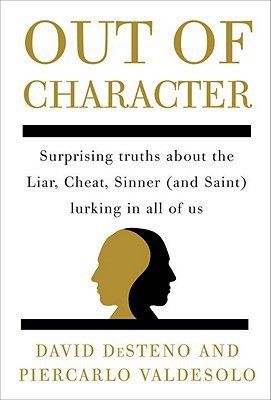
Have you ever wondered why a trumpeter of family values would suddenly turn around and cheat on his wife? Why jealousy would send an otherwise level-headed person into a violent rage? What could drive a person to blow a family fortune at the blackjack tables? Or have you ever pondered what might make Mr. Right leave his beloved at the altar, why hypocrisy seems to be rampant, or even why, every once in awhile, even you are secretly tempted, to lie, cheat, or steal (or, conversely, help someone you never even met)? This book answers these questions and more, and in doing so, turns the prevailing wisdom about who we are upside down. Our character, argue psychologists DeSteno and Valdesolo, isn’t a stable set of traits, but rather a shifting state that is subject to the constant push and pull of hidden mechanisms in our mind. And it’s the battle between these dueling psychological forces that determine how we act at any given point in time. Drawing on the surprising results of the clever experiments concocted in their own laboratory, DeSteno and Valdesolo shed new scientific light on so many of the puzzling behaviors that regularly grace the headlines. For example, you’ll learn: • Why Tiger Woods just couldn’t resist the allure of his mistresses even though he had a picture-perfect family at home. And why no one, including those who knew him best, ever saw it coming. • Why even the shrewdest of investors can be tempted to gamble their fortunes away (and why risky financial behavior is driven by the same mechanisms that compel us to root for the underdog in sports). • Why Eliot Spitzer, who made a career of crusading against prostitution, turned out to be one of the most famous johns of all time. • Why Mel Gibson, a noted philanthropist and devout Catholic, has been repeatedly caught spewing racist rants, even though close friends say he doesn’t have a racist bone in his body. • And why any of us is capable of doing the same, whether we believe it or not!A surprising look at the hidden forces driving the saint and sinner lurking in us all, Out of Character reveals why human behavior is so much more unpredictable than we ever realized.
ما از اخلاق چه انتظاری داریم؟ این سوال شاید تاحدودی برای عموم مردم و یا متخصصان این رشته قابل پاسخ باشد؛ اینکه خوب بودن را به ما بیاموزد و در تنظیم روابط فردی م...

جشن کتاب تهران به ایستگاه سی و یکم رسیده است. حال و احوال نشر کتاب خوب نیست و باید فرهنگدوستان را به خرید و هدیه دادن کتاب ترغیب نمود. خانه اخلاقپژوهان جوان ب...

بنیاد کتابهای اخلاق اسلامی عمدتا پالایش جان از آلودگیها و آراستن آن به زیباییها است. اندیشه محوری این قبیل کتابها آن است که انسان فعلی آنی نیست که باید باشد...

-
0 Comments