Notice: تابع WP_Block_Type_Registry::register به طورنادرست فراخوانی شد. نامهای نوع بلوک نباید حروف بزرگ داشته باشند. لطفاً برای اطلاعات بیشتر، اشکال زدایی در وردپرس را مشاهده کنید. (این پیام در نگارش 5.0.0 افزوده شده است.) in /home/ethicsho/public_html/wp-includes/functions.php on line 5313
Warning: Use of undefined constant TDC_PATH_LEGACY - assumed 'TDC_PATH_LEGACY' (this will throw an Error in a future version of PHP) in /home/ethicsho/public_html/wp-content/plugins/td-composer/td-composer.php on line 109
Warning: Use of undefined constant TDSP_THEME_PATH - assumed 'TDSP_THEME_PATH' (this will throw an Error in a future version of PHP) in /home/ethicsho/public_html/wp-content/plugins/td-composer/td-composer.php on line 113 بایگانیهای Steven D. Hales - خانه اخلاق پژوهان جوان Notice: Trying to access array offset on value of type bool in /home/ethicsho/public_html/wp-content/plugins/wp-ulike/inc/general-functions.php on line 807
In academic and non-academic debates the practice of human rights enforcement is usually reduced to the intentions, interests and capabilities of agents – particularly the United States and other Western states. Whether seen as a policy adopted to promote national interest or an imperialist device used by the West, the practice of human rights enforcement is discussed in isolation from the structure of the late-modern Global Political Economy. This book develops a structural approach to post-Cold war military humanitarianism and demonstrates the nature of reciprocal causal relations between the global capitalist economy and the practice of human rights enforcement. It provides an historical analysis of the notion of individual rights and their relationship with capitalism and demonstrates that today the actors engaged in human rights enforcement – whether for selfish or humanitarian reasons – unintentionally provide global capital with a Gramscian quality of moral leadership thereby contributing to its hegemony.
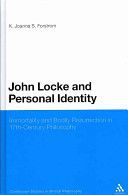
One of the most influential debates in John Locke`s work is the problem of personal identity over time. This problem is that of how a person at one time is the same person later in time, and so can be held responsible for past actions. The time of most concern for Locke is that of the general resurrection promised in the New Testament. Given the turbulence of the Reformation and the formation of new approaches to the Bible, many philosophers and scientists paid careful attention to emerging orthodoxies or heterodoxies about death. Here K. Joanna S. Forstrom examines the interrelated positions of Rene Descartes, Thomas Hobbes, Henry More and Robert Boyle in their individual contexts and in Locke`s treatment of them. She argues that, in this way, we can better understand Locke and his position on personal identity and immortality. Once his unique take is understood and grounded in his own theological convictions (or lack thereof), we can better evaluate Locke and defend him against classic objections to his thought.
Religion is one of the most powerful forces running through human history, and although often presented as a force for good, its impact is frequently violent and divisive. This provocative work brings together cutting-edge research from both evolutionary and cognitive psychology to help readers understand the psychological structure of religious morality and the origins of religious violence. Introduces a fundamentally new approach to the analysis of religion in a style accessible to the general reader Applies insights from evolutionary and cognitive psychology to both Judaism and Christianity, and their texts, to help understand the origins of religious violence Argues that religious violence is grounded in the moral psychology of religion Illustrates its controversial argument with reference to the 9/11 terrorist attacks, and the response to the attacks from both the terrorists and the President. Suggests strategies for beginning to counter the divisive aspects of religion. Discusses the role of religion and religious criticism in the contemporary world. Argues for a position sceptical of the moral authority of religion, while also critiquing the excesses of the “new atheists” for failing to appreciate the moral contributions of religion.
Principia Ethica is recognized as the definitive starting point for twentieth-century ethical theory. The text is reprinted here with the previously unpublished preface Moore wrote for a planned, but never completed, second edition. Though unfinished, it sets out clearly Moore’s second thoughts about his own work. The volume also includes two important pieces from his later ethical writings, “Free Will” and “The Conception of Intrinsic Value,” and a new introduction by Thomas Baldwin.
ما از اخلاق چه انتظاری داریم؟ این سوال شاید تاحدودی برای عموم مردم و یا متخصصان این رشته قابل پاسخ باشد؛ اینکه خوب بودن را به ما بیاموزد و در تنظیم روابط فردی م...

جشن کتاب تهران به ایستگاه سی و یکم رسیده است. حال و احوال نشر کتاب خوب نیست و باید فرهنگدوستان را به خرید و هدیه دادن کتاب ترغیب نمود. خانه اخلاقپژوهان جوان ب...

بنیاد کتابهای اخلاق اسلامی عمدتا پالایش جان از آلودگیها و آراستن آن به زیباییها است. اندیشه محوری این قبیل کتابها آن است که انسان فعلی آنی نیست که باید باشد...

-
0 Comments