Notice: تابع WP_Block_Type_Registry::register به طورنادرست فراخوانی شد. نامهای نوع بلوک نباید حروف بزرگ داشته باشند. لطفاً برای اطلاعات بیشتر، اشکال زدایی در وردپرس را مشاهده کنید. (این پیام در نگارش 5.0.0 افزوده شده است.) in /home/ethicsho/public_html/wp-includes/functions.php on line 5313
Warning: Use of undefined constant TDC_PATH_LEGACY - assumed 'TDC_PATH_LEGACY' (this will throw an Error in a future version of PHP) in /home/ethicsho/public_html/wp-content/plugins/td-composer/td-composer.php on line 109
Warning: Use of undefined constant TDSP_THEME_PATH - assumed 'TDSP_THEME_PATH' (this will throw an Error in a future version of PHP) in /home/ethicsho/public_html/wp-content/plugins/td-composer/td-composer.php on line 113 بایگانیهای Stephen H. Aby - خانه اخلاق پژوهان جوان Notice: Trying to access array offset on value of type bool in /home/ethicsho/public_html/wp-content/plugins/wp-ulike/inc/general-functions.php on line 807
Although Kantian autonomy is often considered independent of time and place, J.B. Schneewind’s landmark study, The Invention of Autonomy, has shown that much can be learned by analyzing Kant’s moral philosophy in the context of the history of modern moral philosophy. Distinguished contributors accordingly relate Kant’s work to the historical context of his predecessors (as well as the empirical context of human agency) in this valuable resource for professionals and advanced students.
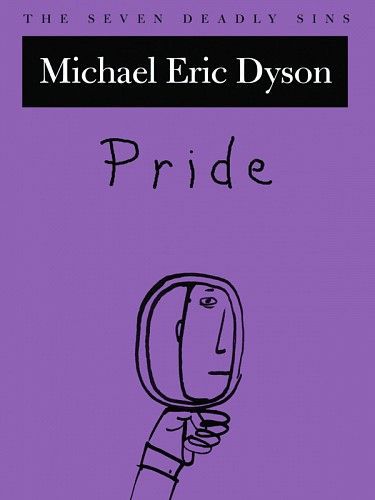
Of the seven deadly sins, pride is the only one with a virtuous side. It is certainly a good thing to have pride in one’s country, in one’s community, in oneself. But when taken too far, as Michael Eric Dyson shows in Pride, these virtues become deadly sins. Dyson, named by Ebony magazine as one of the 100 most influential African Americans, here looks at the many dimensions of pride. Ranging from Augustine and Aquinas, MacIntyre and Hauerwas, to Niebuhr and King, Dyson offers a thoughtful, multifaceted look at this “virtuous vice.” He probes the philosophical and theological roots of pride in examining its transformation in Western culture. Dyson discusses how black pride keeps blacks from being degraded and excluded by white pride, which can be invisible, unspoken, but nonetheless very powerful. Dyson also offers a moving glimpse into the teachers and books that shaped his personal pride and vocation. Dyson also looks at less savory aspects of national pride. Since 9/11, he notes, we have had to close ranks. But the collective embrace of all things American, to the exclusion of anything else, has taken the place of a much richer, much more enduring, much more profound version of love of country. This unchecked pride asserts the supremacy of America above all others–elevating our national beliefs above any moral court in the world–and attacking critics of American foreign policy as unpatriotic and even traitorous. Hubris, temerity, arrogance–the unquestioned presumption that one’s way of life defines how everyone else should live–pride has many destructive manifestations. In this engaging and energetic volume, Michael Eric Dyson, one of the nation’s foremost public intellectuals, illuminates this many-sided human emotion, one that can be an indispensable virtue or a deadly sin.
The Oxford Handbook of Ethical Theory is a major new reference work in ethical theory consisting of commissioned essays by leading moral philosophers. Ethical theories have always been of central importance to philosophy, and remain so; ethical theory is one of the most active areas of philosophical research and teaching today. Courses in ethics are taught in colleges and universities at all levels, and ethical theory is the organizing principle for all of them. The Handbook is divided into two parts, mirroring the field. The first part treats meta-ethical theory, which deals with theoretical questions about morality and moral judgment, including questions about moral language, the epistemology of moral belief, the truth aptness of moral claims, and so forth. The second part addresses normative theory, which deals with general moral issues, including the plausibility of various ethical theories and abstract principles of behavior. Examples of such theories are consequentialism and virtue theory. As with other Oxford Handbooks, the twenty-five contributors cover the field in a comprehensive and highly accessible way, while achieving three goals: exposition of central ideas, criticism of other approaches, and putting forth a distinct viewpoint.
In these essays, John Skorupski develops a distinctive and systematic moral philosophy. He examines the central ethical concepts of reasons, the good, and morality, and applies the results to issues of culture and politics. Ethical Explorations firmly connects liberal politics to its ethical ideal, and links that ideal to modern morality and modern ideas of the good.
ما از اخلاق چه انتظاری داریم؟ این سوال شاید تاحدودی برای عموم مردم و یا متخصصان این رشته قابل پاسخ باشد؛ اینکه خوب بودن را به ما بیاموزد و در تنظیم روابط فردی م...

جشن کتاب تهران به ایستگاه سی و یکم رسیده است. حال و احوال نشر کتاب خوب نیست و باید فرهنگدوستان را به خرید و هدیه دادن کتاب ترغیب نمود. خانه اخلاقپژوهان جوان ب...

بنیاد کتابهای اخلاق اسلامی عمدتا پالایش جان از آلودگیها و آراستن آن به زیباییها است. اندیشه محوری این قبیل کتابها آن است که انسان فعلی آنی نیست که باید باشد...

-
0 Comments