Notice: تابع WP_Block_Type_Registry::register به طورنادرست فراخوانی شد. نامهای نوع بلوک نباید حروف بزرگ داشته باشند. لطفاً برای اطلاعات بیشتر، اشکال زدایی در وردپرس را مشاهده کنید. (این پیام در نگارش 5.0.0 افزوده شده است.) in /home/ethicsho/public_html/wp-includes/functions.php on line 5313
Warning: Use of undefined constant TDC_PATH_LEGACY - assumed 'TDC_PATH_LEGACY' (this will throw an Error in a future version of PHP) in /home/ethicsho/public_html/wp-content/plugins/td-composer/td-composer.php on line 109
Warning: Use of undefined constant TDSP_THEME_PATH - assumed 'TDSP_THEME_PATH' (this will throw an Error in a future version of PHP) in /home/ethicsho/public_html/wp-content/plugins/td-composer/td-composer.php on line 113 بایگانیهای Sarah Buss - خانه اخلاق پژوهان جوان Notice: Trying to access array offset on value of type bool in /home/ethicsho/public_html/wp-content/plugins/wp-ulike/inc/general-functions.php on line 807
In these three Tanner lectures, distinguished ethical theorist Allan Gibbard explores the nature of normative thought and the bases of ethics. In the first lecture he explores the role of intuitions in moral thinking and offers a way of thinking about the intuitive method of moral inquiry that both places this activity within the natural world and makes sense of it as an indispensable part of our lives as planners. In the second and third lectures he takes up the kind of substantive ethical inquiry he has described in the first lecture, asking how we might live together on terms that none of us could reasonably reject. Since working at cross purposes loses fruits that might stem from cooperation, he argues, any consistent ethos that meets this test would be, in a crucial way, utilitarian. It would reconcile our individual aims to establish, in Kant’s phrase, a “kingdom of ends.” The volume also contains an introduction by Barry Stroud, the volume editor, critiques by Michael Bratman (Stanford University), John Broome (Oxford University), and F. M. Kamm (Harvard University), and Gibbard’s responses.
Bernard Gert’s classic work Morality, in which he argues his distinctive and comprehensive moral theory, is now in its sixth edition. Gert argues that morality is an informal system that does not provide answers to every moral question but does always limit the range of morally acceptable options and so explains why some moral questions cannot be resolved. Gert describes the two-step procedure that is used in moral decisions and judgments, and he shows that moral rules cannot be understood independently of the system in which they are embedded. Although his moral theory is sophisticated, it is presented with a clarity that will appeal to undergraduate and graduate students alike, as well as anyone with a general interest in applied ethics. In this new edition, Gert perfects the consistency of his views by presenting his argument in greater detail; he also revises the text in light of a critical book and two symposia dedicated to his theory that have surfaced since the book’s last publication. This is the definitive edition to the work that has received so much attention and acclaim.
The Blackwell Companion to Heidegger is a complete guide to the work and thought of Martin Heidegger, one of the most influential philosophers of the twentieth century. Considers the most important elements of Heidegger’s intellectual biography, including his notorious involvement with National Socialism Provides a systematic and comprehensive exploration of Heidegger’s work One of the few books on Heidegger to cover his later work as well as Being and Time Includes key critical responses to Heidegger’s philosophy Contributors include many of the leading interpreters of, and commentators on, the work of Heidegger
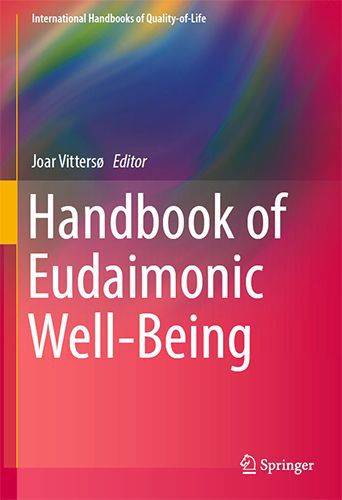
This handbook presents the most comprehensive account of eudaimonic well-being to date. It brings together theoretical insights and empirical updates presented by leading scholars and young researchers. The handbook examines philosophical and historical approaches to the study of happy lives and good societies, and it critically looks at conceptual controversies related to eudaimonia and well-being. It identifies the elements of happiness in a variety of areas such as emotions, health, wisdom, self-determination, internal motivation, personal growth, genetics, work, leisure, heroism, and many more. It then places eudaimonic well-being in the larger context of society, addressing social elements. The most remarkable outcome of the book is arguably its large-scale relevance, reminding us that the more we know about the good way of living, the more we are in a position to build a society that can be supportive and offer opportunities for such a way of living for all of its citizens.
ما از اخلاق چه انتظاری داریم؟ این سوال شاید تاحدودی برای عموم مردم و یا متخصصان این رشته قابل پاسخ باشد؛ اینکه خوب بودن را به ما بیاموزد و در تنظیم روابط فردی م...

جشن کتاب تهران به ایستگاه سی و یکم رسیده است. حال و احوال نشر کتاب خوب نیست و باید فرهنگدوستان را به خرید و هدیه دادن کتاب ترغیب نمود. خانه اخلاقپژوهان جوان ب...

بنیاد کتابهای اخلاق اسلامی عمدتا پالایش جان از آلودگیها و آراستن آن به زیباییها است. اندیشه محوری این قبیل کتابها آن است که انسان فعلی آنی نیست که باید باشد...

-
0 Comments