Notice: تابع WP_Block_Type_Registry::register به طورنادرست فراخوانی شد. نامهای نوع بلوک نباید حروف بزرگ داشته باشند. لطفاً برای اطلاعات بیشتر، اشکال زدایی در وردپرس را مشاهده کنید. (این پیام در نگارش 5.0.0 افزوده شده است.) in /home/ethicsho/public_html/wp-includes/functions.php on line 5313
Warning: Use of undefined constant TDC_PATH_LEGACY - assumed 'TDC_PATH_LEGACY' (this will throw an Error in a future version of PHP) in /home/ethicsho/public_html/wp-content/plugins/td-composer/td-composer.php on line 109
Warning: Use of undefined constant TDSP_THEME_PATH - assumed 'TDSP_THEME_PATH' (this will throw an Error in a future version of PHP) in /home/ethicsho/public_html/wp-content/plugins/td-composer/td-composer.php on line 113 بایگانیهای Samuel J. Kerstein - خانه اخلاق پژوهان جوان Notice: Trying to access array offset on value of type bool in /home/ethicsho/public_html/wp-content/plugins/wp-ulike/inc/general-functions.php on line 807
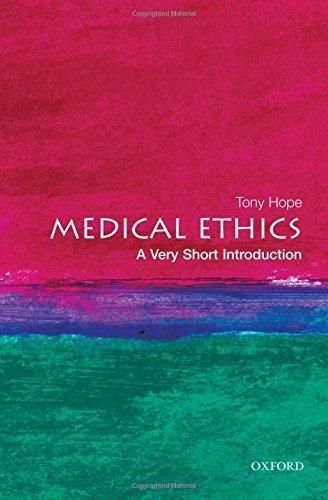
Medical ethics is an area that has particular interest for the general public as well as for the medical practitioner, and issues concerning medical ethics seem to be constantly in the headlines. This short and accessible introduction provides an invaluable tool with which to think about the ethical values that lie at the heart of medicine. Tony Hope deals with thorny moral issues, including euthanasia and the morality of killing. He also explores political questions, such as how we can make sure health care resources are distributed fairly. Each chapter in the book considers a different issue, for example, genetics, modern reproductive technologies, resource allocation, mental health, and medical research. Each section also discusses controversial questions such as: Who should have access to reproductive technology? Is it right to fund expensive drug treatment for individuals? Should treatment for mental illness be imposed on patients without their consent? Considering a wide range of questions of medical ethics, this Very Short Introduction will help to explain some of the confusing issues facing the field of medicine today.
Using hitherto unstudied sources, this monograph provides a comprehensive interdisciplinary study of the ethical theory of al-R?z?, one of the most complex and influential medieval philosophers and theologians. It reveals remarkable and previously unidentified aspects of ethical thought in Islam.
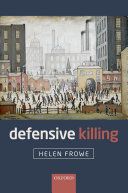
Most people believe that it is sometimes morally permissible for a person to use force to defend herself or others against harm. In Defensive Killing, Helen Frowe offers a detailed exploration of when and why the use of such force is permissible. She begins by considering the use of force between individuals, investigating both the circumstances under which an attacker forfeits her right not to be harmed, and the distinct question of when it is all-things-considered permissible to use force against an attacker. Frowe then extends this enquiry to war, defending the view that we should judge the ethics of killing in war by the moral rules that govern killing between individuals. She argues that this requires us to significantly revise our understanding of the moral status of non-combatants in war. Non-combatants who intentionally contribute to an unjust war forfeit their rights not to be harmed, such that they are morally liable to attack by combatants fighting a just war.
By showing how and why human nature is what it is, evolutionary theory can help us see better what we need to do to improve the human condition. Following evolutionary theory to its logical conclusion, Death, Hope and Sex uses life history theory and attachment theory to construct a model of human nature in which critical features are understood in terms of the development of alternative reproductive strategies contingent on environmental risk and uncertainty. James Chisholm examines the implications of this model for perspectives on concerns associated with human reproduction, including teen pregnancy, and young male violence. He thus develops new approaches for thorny issues such as the nature-nurture and mind-body dichotomies. Bridging the gap between the social and biological sciences, this far-reaching volume will be a source of inspiration, debate and discussion for all those interested in the evolution of human nature and the potential for an evolutionary humanism.
Addictive thought is inherently self-deceptive, yet offers a superficial logic that can be misleading to the addict as well as to the addict’s family members.Abnormal thinking in addiction was originally recognized by members of Alcoholics Anonymous, who coined the term “stinking thinking.” Addictive thinking often appears rational, but only on a superficial level. Addicts, as well as their family members, are easily seduced by the attendant–and erroneous–reasoning process it can foster. In Addictive Thinking, author Abraham Twerski reveals how self-deceptive thought can undermine self-esteem and threaten the sobriety of a recovering individual. This timely revision of the original classic includes updated information and research on depression and affective disorders, the relationship between addictive thinking and relapse, and the origins of addictive thought. Ultimately, Addictive Thinking offers hope to those seeking a healthy and rewarding life in recovery. Dr. Twerski is founder and medical director of the Gateway Rehabilitation Center in Pittsburgh, Pennsylvania. A rabbi, psychiatrist, and chemical dependency counselor, he is the author of numerous journal articles and books including Self Discovery in Recovery, I Didn’t Ask to be in This Family: Sibling Relationships and How They Shame Adult Behavior and Dependencies, and with “Peanuts” cartoonist Charles Schulz, When Do the Good Things Start?
ما از اخلاق چه انتظاری داریم؟ این سوال شاید تاحدودی برای عموم مردم و یا متخصصان این رشته قابل پاسخ باشد؛ اینکه خوب بودن را به ما بیاموزد و در تنظیم روابط فردی م...

جشن کتاب تهران به ایستگاه سی و یکم رسیده است. حال و احوال نشر کتاب خوب نیست و باید فرهنگدوستان را به خرید و هدیه دادن کتاب ترغیب نمود. خانه اخلاقپژوهان جوان ب...

بنیاد کتابهای اخلاق اسلامی عمدتا پالایش جان از آلودگیها و آراستن آن به زیباییها است. اندیشه محوری این قبیل کتابها آن است که انسان فعلی آنی نیست که باید باشد...

-
0 Comments