Notice: تابع WP_Block_Type_Registry::register به طورنادرست فراخوانی شد. نامهای نوع بلوک نباید حروف بزرگ داشته باشند. لطفاً برای اطلاعات بیشتر، اشکال زدایی در وردپرس را مشاهده کنید. (این پیام در نگارش 5.0.0 افزوده شده است.) in /home/ethicsho/public_html/wp-includes/functions.php on line 5313
Warning: Use of undefined constant TDC_PATH_LEGACY - assumed 'TDC_PATH_LEGACY' (this will throw an Error in a future version of PHP) in /home/ethicsho/public_html/wp-content/plugins/td-composer/td-composer.php on line 109
Warning: Use of undefined constant TDSP_THEME_PATH - assumed 'TDSP_THEME_PATH' (this will throw an Error in a future version of PHP) in /home/ethicsho/public_html/wp-content/plugins/td-composer/td-composer.php on line 113 بایگانیهای Roger J. Sullivan - خانه اخلاق پژوهان جوان Notice: Trying to access array offset on value of type bool in /home/ethicsho/public_html/wp-content/plugins/wp-ulike/inc/general-functions.php on line 807
The ethical assessment of new technologies raises two principal concerns: the need to develop effective policies and legislation, and the reconsideration of the ethical frameworks in which these policies and laws are developed. The importance of rapid, accurate examinations of tensions between Philosophy and Law and the relationship between philosophical principles and empirical data has never been greater.The Concise Encyclopedia of Ethics of New Technologies includes 23 articles previously published in the highly-acclaimed Encyclopedia of Applied Ethics, nine updated articles, and five new articles, commissioned especially for this volume. Over half of the previously published articles include updated facts and bibliographic citations. Authors of genetics articles have updated their works to include the most recent developments and publications. New articles include: “Cloning,” “Geneticization,” “Health Technology Assessment,” “Intrinsic and Instrumental Value,” and “Novel Foods.”Articles fall into these subject categories:* Medical Ethics* Scientific Ethics* Theories of Ethics* Environmental Ethics* Legal Ethics* Ethical Concepts
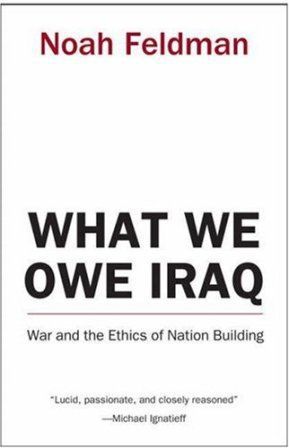
What do we owe Iraq? America is up to its neck in nation building–but the public debate, focused on getting the troops home, devotes little attention to why we are building a new Iraqi nation, what success would look like, or what principles should guide us.What We Owe Iraqsets out to shift the terms of the debate, acknowledging that we are nation building to protect ourselves while demanding that we put the interests of the people being governed–whether in Iraq, Afghanistan, Kosovo, or elsewhere–ahead of our own when we exercise power over them. Noah Feldman argues that to prevent nation building from turning into a paternalistic, colonialist charade, we urgently need a new, humbler approach. Nation builders should focus on providing security, without arrogantly claiming any special expertise in how successful nation-states should be made. Drawing on his personal experiences in Iraq as a constitutional adviser, Feldman offers enduring insights into the power dynamics between the American occupiers and the Iraqis, and tackles issues such as Iraqi elections, the prospect of successful democratization, and the way home. Elections do not end the occupier’s responsibility. Unless asked to leave, we must resist the temptation of a military pullout before a legitimately elected government can maintain order and govern effectively. But elections that create a legitimate democracy are also the only way a nation builder can put itself out of business and–eventually–send its troops home. Feldman’s new afterword brings the Iraq story up-to-date since the book’s original publication in 2004, and asks whether the United States has acted ethically in pushing the political process in Iraq while failing to control the security situation; it also revisits the question of when, and how, to withdraw.
The past decade has seen an explosion of writing about media ethics and accountability. Most of the work has been focused on the normative side of the subject: ethical philosophies, ethics codes, suggestions for how journalists (and other media workers) can make justifiable decisions when faced with tough ethical questions.Empirical research into media ethics and accountability, by contrast, is hard to find. Relatively little of the past decade’s work–and virtually none of the book-length treatments of the subject–focus on how media accountability works in practice. The gap in practical knowledge is somewhat puzzling, given that most faculty who teach media ethics and accountability work in academic departments that have professional training as part of their academic mission.The underlying assumption of Holding the Media Accountable is that systems of norms such as media law and journalism ethics have meaning only in the context of the actual workings of mechanisms of accountability. No other volume has adopted such an approach.
ما از اخلاق چه انتظاری داریم؟ این سوال شاید تاحدودی برای عموم مردم و یا متخصصان این رشته قابل پاسخ باشد؛ اینکه خوب بودن را به ما بیاموزد و در تنظیم روابط فردی م...

جشن کتاب تهران به ایستگاه سی و یکم رسیده است. حال و احوال نشر کتاب خوب نیست و باید فرهنگدوستان را به خرید و هدیه دادن کتاب ترغیب نمود. خانه اخلاقپژوهان جوان ب...

بنیاد کتابهای اخلاق اسلامی عمدتا پالایش جان از آلودگیها و آراستن آن به زیباییها است. اندیشه محوری این قبیل کتابها آن است که انسان فعلی آنی نیست که باید باشد...

-
0 Comments