Notice: تابع WP_Block_Type_Registry::register به طورنادرست فراخوانی شد. نامهای نوع بلوک نباید حروف بزرگ داشته باشند. لطفاً برای اطلاعات بیشتر، اشکال زدایی در وردپرس را مشاهده کنید. (این پیام در نگارش 5.0.0 افزوده شده است.) in /home/ethicsho/public_html/wp-includes/functions.php on line 5313
Warning: Use of undefined constant TDC_PATH_LEGACY - assumed 'TDC_PATH_LEGACY' (this will throw an Error in a future version of PHP) in /home/ethicsho/public_html/wp-content/plugins/td-composer/td-composer.php on line 109
Warning: Use of undefined constant TDSP_THEME_PATH - assumed 'TDSP_THEME_PATH' (this will throw an Error in a future version of PHP) in /home/ethicsho/public_html/wp-content/plugins/td-composer/td-composer.php on line 113 بایگانیهای Roger Burbach - خانه اخلاق پژوهان جوان Notice: Trying to access array offset on value of type bool in /home/ethicsho/public_html/wp-content/plugins/wp-ulike/inc/general-functions.php on line 807
“Anne Margaret Baxley offers a systematic interpretation of Kant’s theory of virtue, whose most distinctive features have not been properly understood. She explores the rich moral psychology in Kant’s later and less widely read works on ethics, and argues that the key to understanding his account of virtue is the concept of autocracy, a form of moral self-government in which reason rules over sensibility. Although certain aspects of Kant’s theory bear comparison to more familiar Aristotelian claims about virtue, Baxley contends that its most important aspects combine to produce something different – a distinctively modern, egalitarian conception of virtue which is an important and overlooked alternative to the more traditional Greek views which have dominated contemporary virtue ethics”–
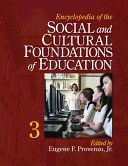
More than any other field in education, the social and cultural foundations of education reflect many of the conflicts, tensions, and forces in American society. This is hardly surprising, since the area focuses on issues such as race, gender, socioeconomic class, the impact of technology on learning, what it means to be educated, and the role of teaching and learning in a societal context.The Encyclopedia of the Social and Cultural Foundations of Education provides a comprehensive introduction to the social and cultural foundations of education. With more than 400 entries, the three volumes of this indispensable resource offer a thorough and interdisciplinary view of the field for all those interested in issues involving schools and society.Key Features· Provides an interdisciplinary perspective from areas such as comparative education, educational anthropology, educational sociology, the history of education, and the philosophy of education· Presents essays on major movements in the field, including the Free School and Visual Instruction movements· Includes more than 130 biographical entries on important men and women in education· Offers interpretations of legal material including Brown v. Board of Education(1954) and the GI Bill of Rights· Explores theoretical debates fundamental to the field such as religion in the public school curriculum, rights of students and teachers, surveillance in schools, tracking and detracking, and many more · Contains a visual history of American education with nearly 350 images and an accompanying narrativeKey Themes· Arts, Media, and Technology· Curriculum· Economic Issues· Equality and Social Stratification· Evaluation, Testing, and Research Methods· History of Education· Law and Public Policy· Literacy· Multiculturalism and Special Populations· Organizations, Schools, and Institutions· Religion and Social Values· School Governance· Sexuality and Gender· Teachers· Theories, Models, and Philosophical Perspectives· A Visual History of American Education
Experience and Value: Essays on John Dewey and Pragmatic Naturalism brings together twelve philosophical essays spanning the career of noted Dewey scholar, S. Morris Eames. The volume includes both critiques and interpretations of important issues in John Dewey’s value theory as well as the application of Eames’s pragmatic naturalism in addressing contemporary problems in social theory, education, and religion. The collection begins with a discussion of the underlying principles of Dewey’s pragmatic naturalism, including the concepts of nature, experience, and philosophic method. Essays “Experience and Philosophical Method in John Dewey” and “Primary Experience in the Philosophy of John Dewey” develop what Eames believed to be a central theme in Dewey’s thought and provide a theoretical framework for subsequent discussion. The volume continues with specific applications of this framework in the areas of value theory, moral theory, social philosophy, and the philosophy of religion. Eames’s analysis of value exposes the connection between the immediately felt values of experience and the more sophisticated judgments of value that are the product of reflection. From this basis in moral theory, Eames considers the derivation of judgments of obligation from judgments of fact. This discussion provides a grounding for a consideration of contemporary social issues directed by naturalistic and scientific principles. In the third section, with regard to educational theory, Eames considers possible resolutions of the current dichotomy between the factual worldview of science and the humanistic worldview of the liberal arts. The comprehensive article, “Dewey’s Views of Truth, Beauty, and Goodness,” connects the essays of the first and second sections and explores the placement of Dewey’s value theory with respect to morals and aesthetics. With “Creativity and Democracy,” in the fourth section, Eames also considers the concept of democracy from the standpoint of current and historical issues faced by society. This article hints at a major project of Eames’s intellectual life—the theory of democracy. The volume concludes with a discussion of the difficulty of maintaining the values of religious experience in a scientifically and technologically sophisticated world, the very topic that first brought Eames to philosophy—the meaning of religion and the religious life. Suggested solutions are offered in “The Lost Individual and Religious Unity.” Experience and Value: Essays on John Dewey and Pragmatic Naturalism illuminates Eames’ life of inquiry, a life that included moral, social, aesthetic, and religious dimensions of value—all suffused with the influence of John Dewey.
ما از اخلاق چه انتظاری داریم؟ این سوال شاید تاحدودی برای عموم مردم و یا متخصصان این رشته قابل پاسخ باشد؛ اینکه خوب بودن را به ما بیاموزد و در تنظیم روابط فردی م...

جشن کتاب تهران به ایستگاه سی و یکم رسیده است. حال و احوال نشر کتاب خوب نیست و باید فرهنگدوستان را به خرید و هدیه دادن کتاب ترغیب نمود. خانه اخلاقپژوهان جوان ب...

بنیاد کتابهای اخلاق اسلامی عمدتا پالایش جان از آلودگیها و آراستن آن به زیباییها است. اندیشه محوری این قبیل کتابها آن است که انسان فعلی آنی نیست که باید باشد...

-
0 Comments