Notice: تابع WP_Block_Type_Registry::register به طورنادرست فراخوانی شد. نامهای نوع بلوک نباید حروف بزرگ داشته باشند. لطفاً برای اطلاعات بیشتر، اشکال زدایی در وردپرس را مشاهده کنید. (این پیام در نگارش 5.0.0 افزوده شده است.) in /home/ethicsho/public_html/wp-includes/functions.php on line 5313
Warning: Use of undefined constant TDC_PATH_LEGACY - assumed 'TDC_PATH_LEGACY' (this will throw an Error in a future version of PHP) in /home/ethicsho/public_html/wp-content/plugins/td-composer/td-composer.php on line 109
Warning: Use of undefined constant TDSP_THEME_PATH - assumed 'TDSP_THEME_PATH' (this will throw an Error in a future version of PHP) in /home/ethicsho/public_html/wp-content/plugins/td-composer/td-composer.php on line 113 بایگانیهای Robert Obach - خانه اخلاق پژوهان جوان Notice: Trying to access array offset on value of type bool in /home/ethicsho/public_html/wp-content/plugins/wp-ulike/inc/general-functions.php on line 807
There is a veritable gold rush mentality in the life science world as scientists, entrepreneurs and multinationals are staking claims to the ‘code of life’ embodied in the world’s current stock of plants, animals, microbes and human populations. In response, the communities that see themselves as the custodians of both that traditional knowledge and specific genetic resources have demanded greater recognition of their role in creating and conserving this resource, access to any resulting improvements and a share of the benefits arising from their patrimony. This has precipitated a widespread effort—in local communities, in the marketplace, in many developing and developed countries and at the talks in the Doha Round of the WTO—to reconcile the interests and concerns of the two opposing groups. This edited volume explores the legal, economic and political context for the debate about intellectual property rights for traditional knowledge and genetic resources and critically analyses the theory and practice of access and benefits sharing efforts around the world. The book also investigates the current flashpoints—the David and Goliath battle between Monsanto and Percy Schmeiser over farmers’ rights; the dispute over coexistence of GM and organic production; and the ownership and control of human genetic materials stored in human gene banks around the world. .
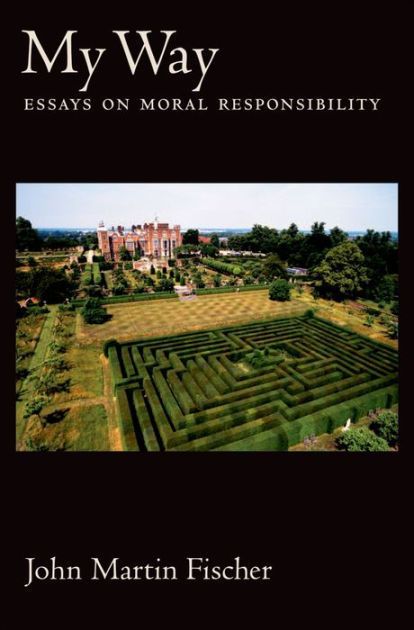
This is a selection of essays on moral responsibility that represent the major components of John Martin Fischer’s overall approach to freedom of the will and moral responsibility. The collection exhibits the overall structure of Fischer’s view and shows how the various elements fit together to form a comprehensive framework for analyzing free will and moral responsibility. The topics include deliberation and practical reasoning, freedom of the will, freedom of action, various notions of control, and moral accountability. The essays seek to provide a foundation for our practices of holding each other (and ourselves) morally and legally accountable for our behavior. A crucial move is the distinction between two kinds of control. According to Fischer, “regulative control” involves freedom to choose and do otherwise (“alternative possibilities”), whereas “guidance control” does not. Fischer contends that guidance control is all the freedom we need to be morally responsible agents. Further, he contends that such control is fully compatible with causal determinism. Additionally, Fischer argues that we do not need genuine access to alternative possibilities in order for there to be a legitimate point to practical reasoning. Fischer’s overall framework contains an argument for the contention that guidance control, and not regulative control, is associated with moral responsibility, a sketch of a comprehensive theory of moral responsibility (that ties together responsibility for actions, omissions, consequences, and character), and an account of the value of moral responsibility. On this account, the value of exhibiting freedom (of the relevant sort) and thus being morally responsible for one’s behavior is a species of the value of artistic self-expression.
This important new book develops a new concept of autonomy. The notion of autonomy has emerged as central to contemporary moral and political philosophy, particularly in the area of applied ethics. Professor Dworkin examines the nature and value of autonomy and used the concept to analyze various practical moral issues such as proxy consent in the medical context, paternalism, and entrapment by law enforcement officials.
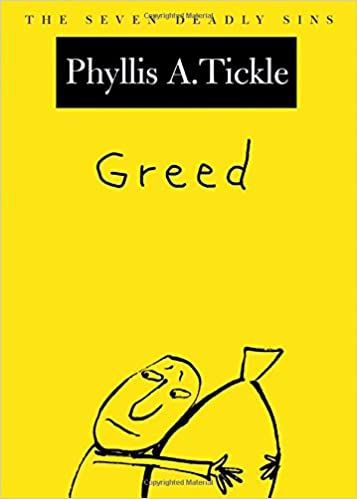
Grasping. Avarice. Covetousness. Miserliness. Insatiable cupidity. Overreaching ambition. Desire spun out of control. The deadly sin of Greed goes by many names, appears in many guises, and wreaks havoc on individuals and nations alike. In this lively and generous book, Phyllis A. Tickle argues that Greed is “the Matriarch of the Deadly Clan,” the ultimate source of Pride, Envy, Sloth, Gluttony, Lust, and Anger. She shows that the major faiths, from Hinduism and Taoism to Buddhism and Christianity regard Greed as the greatest calamity humans can indulge in, engendering further sins and eviscerating all virtues. As the Sikh holy book Adi Granth asks: “Where there is greed, what love can there be?” Tickle takes a long view of Greed, from St. Paul to the present, focusing particularly on changing imaginative representations of Greed in Western literature and art. Looking at such works as the Psychomachia, or “Soul Battle” of the fifth-century poet Aurelius Clemens Prudentius, the paintings of Peter Bruegel and Hieronymous Bosch, the 1987 film Wall Street, and the contemporary Italian artist Mario Donizetti, Tickle shows how our perceptions have evolved from the medieval understanding of Greed as a spiritual enemy to a nineteenth-century sociological construct to an early twentieth-century psychological deficiency, and finally to a new view, powerfully articulated in Donizetti’s mystical paintings, of Greed as both tragic and beautiful. Engaging, witty, brilliantly insightful, Greed explores the full range of this deadly sin’s subtle, chameleon-like qualities, and the enormous destructive power it wields, evidenced all too clearly in the world today.
ما از اخلاق چه انتظاری داریم؟ این سوال شاید تاحدودی برای عموم مردم و یا متخصصان این رشته قابل پاسخ باشد؛ اینکه خوب بودن را به ما بیاموزد و در تنظیم روابط فردی م...

جشن کتاب تهران به ایستگاه سی و یکم رسیده است. حال و احوال نشر کتاب خوب نیست و باید فرهنگدوستان را به خرید و هدیه دادن کتاب ترغیب نمود. خانه اخلاقپژوهان جوان ب...

بنیاد کتابهای اخلاق اسلامی عمدتا پالایش جان از آلودگیها و آراستن آن به زیباییها است. اندیشه محوری این قبیل کتابها آن است که انسان فعلی آنی نیست که باید باشد...

-
0 Comments