Notice: تابع WP_Block_Type_Registry::register به طورنادرست فراخوانی شد. نامهای نوع بلوک نباید حروف بزرگ داشته باشند. لطفاً برای اطلاعات بیشتر، اشکال زدایی در وردپرس را مشاهده کنید. (این پیام در نگارش 5.0.0 افزوده شده است.) in /home/ethicsho/public_html/wp-includes/functions.php on line 5313
Warning: Use of undefined constant TDC_PATH_LEGACY - assumed 'TDC_PATH_LEGACY' (this will throw an Error in a future version of PHP) in /home/ethicsho/public_html/wp-content/plugins/td-composer/td-composer.php on line 109
Warning: Use of undefined constant TDSP_THEME_PATH - assumed 'TDSP_THEME_PATH' (this will throw an Error in a future version of PHP) in /home/ethicsho/public_html/wp-content/plugins/td-composer/td-composer.php on line 113 بایگانیهای Philip J. Boyle - خانه اخلاق پژوهان جوان Notice: Trying to access array offset on value of type bool in /home/ethicsho/public_html/wp-content/plugins/wp-ulike/inc/general-functions.php on line 807
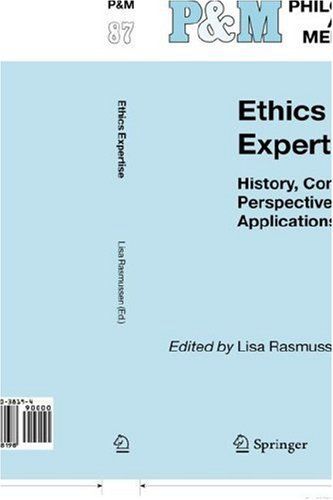
Section I examines historical philosophical understandings of expertise in order to situate the current institution of bioethics. Section II focuses on philosophical analyses of the concept of expertise, asking, among other things, how it should be understood, how it can be acquired, and what such expertise warrants. Finally, section III addresses topics in bioethics and how ethics expertise should or should not be brought to bear in these areas, including expertise in the court room, in the hospital room, in the media, and in making policy. 2. A GUIDED HISTORICAL TOUR As Scott LaBarge points out, Plato’s dialogues can be viewed as an extended treatment of the concept of moral expertise, so it is fitting to begin the volume with an examination of “Socrates and Moral Expertise”. Given Socrates’ protestations (the Oracle at Delphi notwithstanding) that he knows nothing, LaBarge observes that it would be interesting to determine both what a Socratic theory of moral expertise might be and whether Socrates qualified as such an expert. Plato’s model of moral expertise is what LaBarge calls “demonstrable expertise”, which is concerned mainly with the ability to attain a goal and to explain how one did it. The problem with this account is that when one tries to solve the various problems in the model – for example, allowing that moral expertise is not an all-or-nothing skill – then one is immediately faced with the “credentials problem”. As LaBarge puts it, “. . .
“Chris Anderson’s initial L̀ong Tail’ analysis was released in 2004 just as the wave of mergers and acquisitions was sweeping the music publishing and radio industries. Music industry executives began looking for Anderson’s L̀ong Tail’ effect and with it the implied redistribution of royalty income from popular songs to long dormant and forgotten works in their catalogs. These music publishers had hoped to further maximize the value of their copyright assets (lyrics and melody) in their existing music catalogs as the sale of compact disks diminished, and consumers switched their purchasing and listening habits to new digital formats in music technology such as the iPod.” “This book deals with the measurement of skewness, heavy tails and asymmetry in performance royalty income data in the music industry from an Economics of Art and Culture perspective. The book is divided into two parts. The first part is a general introduction to the many supply and demand economic factors that are related to music performance royalty payments. The second part is an applied econometrics section that provides modeling and in-depth analysis of income data from a songwriter, music publisher and blanket licensing perspective. The book will appeal to researchers and students in cultural economics, media and statistics as well as general readers and professionals in the music publishing industry.” “As a Senior Economist for the American Society of Composers, Authors, and Publishers (ASCAP) using both internal and licensed external proprietary data, the author found that the so-called s̀uperstar effects’ are still present in performance royalty income. Success is still concentrated on a relatively few copyright holders or members who can be grouped into h̀eavy tails’ of the empirical income distribution in a departure from Anderson’s L̀ong Tail’ analysis.”.
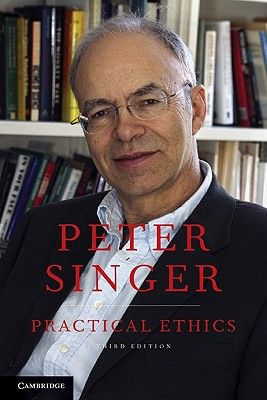
“For thirty years, Peter Singer’s Practical Ethics has been the classic introduction to applied ethics. For this third edition, the author has revised and updated all the chapters and added a new chapter addressing climate change, one of the most important ethical challenges of our generation. Some of the questions discussed in this book concern our daily lives. Is it ethical to buy luxuries when others do not have enough to eat? Should we buy meat from intensively reared animals? Am I doing something wrong if my carbon footprint is above the global average? Other questions confront us as concerned citizens: equality and discrimination on the grounds of race or sex; abortion, the use of embryos for research and euthanasia; political violence and terrorism; and the preservation of our planet’s environment. This book’s lucid style and provocative argumentsmake it an ideal text for university courses and for anyone willing to think about how she or he ought to live”–Provided by publisher.
In this excellent introduction, Christopher Shields introduces and assesses the whole of Aristotle?s philosophy, showing how his powerful conception of human nature shaped much of his thinking on the nature of the soul and the mind, ethics, politics and the arts. Beginning with a brief biography, Christopher Shields carefully explains the fundamental elements of Aristotle?s thought: his explanatory framework, his philosophical methodology and his four-causal explanatory scheme. Subsequently he discusses Aristotle?s metaphysics and the theory of categories and logical theory and his conception of the human being and soul and body. In the last part, he concentrates on Aristotle?s value theory as applied to ethics and politics, and assesses his approach to happiness, virtues and the best life for human beings. He concludes with an appraisal of Aristotelianism today.
Nomy Arpaly rejects the model of rationality used by most ethicists and action theorists. Both observation and psychology indicate that people act rationally without deliberation, and act irrationally with deliberation. By questioning the notion that our own minds are comprehensible to us–and therefore questioning much of the current work of action theorists and ethicists–Arpaly attempts to develop a more realistic conception of moral agency.
ما از اخلاق چه انتظاری داریم؟ این سوال شاید تاحدودی برای عموم مردم و یا متخصصان این رشته قابل پاسخ باشد؛ اینکه خوب بودن را به ما بیاموزد و در تنظیم روابط فردی م...

جشن کتاب تهران به ایستگاه سی و یکم رسیده است. حال و احوال نشر کتاب خوب نیست و باید فرهنگدوستان را به خرید و هدیه دادن کتاب ترغیب نمود. خانه اخلاقپژوهان جوان ب...

بنیاد کتابهای اخلاق اسلامی عمدتا پالایش جان از آلودگیها و آراستن آن به زیباییها است. اندیشه محوری این قبیل کتابها آن است که انسان فعلی آنی نیست که باید باشد...

-
0 Comments