Notice: تابع WP_Block_Type_Registry::register به طورنادرست فراخوانی شد. نامهای نوع بلوک نباید حروف بزرگ داشته باشند. لطفاً برای اطلاعات بیشتر، اشکال زدایی در وردپرس را مشاهده کنید. (این پیام در نگارش 5.0.0 افزوده شده است.) in /home/ethicsho/public_html/wp-includes/functions.php on line 5313
Warning: Use of undefined constant TDC_PATH_LEGACY - assumed 'TDC_PATH_LEGACY' (this will throw an Error in a future version of PHP) in /home/ethicsho/public_html/wp-content/plugins/td-composer/td-composer.php on line 109
Warning: Use of undefined constant TDSP_THEME_PATH - assumed 'TDSP_THEME_PATH' (this will throw an Error in a future version of PHP) in /home/ethicsho/public_html/wp-content/plugins/td-composer/td-composer.php on line 113 بایگانیهای Pauline Chazan - خانه اخلاق پژوهان جوان Notice: Trying to access array offset on value of type bool in /home/ethicsho/public_html/wp-content/plugins/wp-ulike/inc/general-functions.php on line 807
Moral Sentiments and Material Interests presents an innovative synthesis of research in different disciplines to argue that cooperation stems not from the stereotypical selfish agent acting out of disguised self-interest but from the presence of “strong reciprocators” in a social group.Presenting an overview of research in economics, anthropology, evolutionary and human biology, social psychology, and sociology, the book deals with both the theoretical foundations and the policy implications of this explanation for cooperation. Chapter authors in the remaining parts of the book discuss the behavioral ecology of cooperation in humans and nonhuman primates, modeling and testing strong reciprocity in economic scenarios, and reciprocity and social policy. The evidence for strong reciprocity in the book includes experiments using the famous Ultimatum Game (in which two players must agree on how to split a certain amount of money or they both get nothing.)
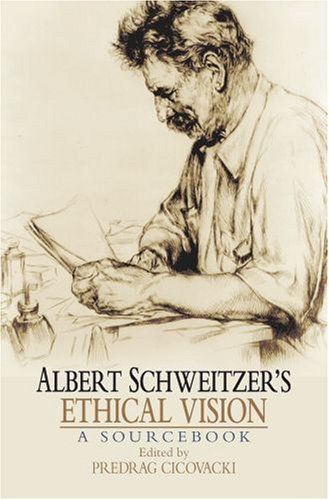
The philosophy of Albert Schweitzer has proved widely influential in modern thinking, especially in the field of ethics. His leading ethical idea can be summarized in the phrase “reverence for life” – namely, that good consists in maintaining and perfecting life, and evil consists in destroying and obstructing life. For Schweitzer, all life is sacred. Ethics thus deals with human attitudes and behavior toward all living beings. Unlike many moral philosophers, Schweitzer argues that knowledge of human nature does not provide a sufficient foundation for any adequate moral theory. That is why he bases his ethics on much broader foundations, articulated in his philosophy of civilization and the philosophy of religion. Schweitzer argues that the material aspect of our civilization has become far more important than its spiritual counterpart. Even organized religion has put itself in the service of politics and economy, thereby losing its vitality and moral authority. Schweitzer’s ethics of reverence for life, argues Predrag Cicovacki, offers a viable alternative at a time when traditional ethical theories are found inadequate. Schweitzer’s robust and un-dogmatic idealism may offer the best antidote to the prevailing relativism and nihilism of the postmodern epoch. His ethical vision directs us toward a new way of building a more just and more peaceful world. Collecting sixteen of Schweitzer’s most effective essays, this volume serves as a compelling introduction to this remarkable thinker and humanist.
In Aquinas, Ethics, and Philosophy of Religion, Thomas Hibbs recovers the notion of practice to develop a more descriptive account of human action and knowing, grounded in the venerable vocabulary of virtue and vice. Drawing on Aquinas, who believed that all good works originate from virtue, Hibbs postulates how epistemology, ethics, metaphysics, and theology combine into a set of contemporary philosophical practices that remain open to metaphysics. Hibbs brings Aquinas into conversation with analytic and Continental philosophy and suggests how a more nuanced appreciation of his thought enriches contemporary debates. This book offers readers a new appreciation of Aquinas and articulates a metaphysics integrally related to ethical practice.
New York, Bern, Berlin, Bruxelles, Frankfurt/M., Oxford, Wien. In his three Critiques, Immanuel Kant provides a system of philosophy that encompasses ethics, aesthetics, metaphysics, and epistemology. As Kant’s is a seemingly complete system, one may reasonably infer that it contains an account of the nature of truth. However, Kant’s elliptical remarks on the subject make it difficult to specify the precise nature of his account. This book considers explanations by a number of authors concerning Kant’s account of truth, and proposes an alternative to these views.
ما از اخلاق چه انتظاری داریم؟ این سوال شاید تاحدودی برای عموم مردم و یا متخصصان این رشته قابل پاسخ باشد؛ اینکه خوب بودن را به ما بیاموزد و در تنظیم روابط فردی م...

جشن کتاب تهران به ایستگاه سی و یکم رسیده است. حال و احوال نشر کتاب خوب نیست و باید فرهنگدوستان را به خرید و هدیه دادن کتاب ترغیب نمود. خانه اخلاقپژوهان جوان ب...

بنیاد کتابهای اخلاق اسلامی عمدتا پالایش جان از آلودگیها و آراستن آن به زیباییها است. اندیشه محوری این قبیل کتابها آن است که انسان فعلی آنی نیست که باید باشد...

-
0 Comments