Notice: تابع WP_Block_Type_Registry::register به طورنادرست فراخوانی شد. نامهای نوع بلوک نباید حروف بزرگ داشته باشند. لطفاً برای اطلاعات بیشتر، اشکال زدایی در وردپرس را مشاهده کنید. (این پیام در نگارش 5.0.0 افزوده شده است.) in /home/ethicsho/public_html/wp-includes/functions.php on line 5313
Warning: Use of undefined constant TDC_PATH_LEGACY - assumed 'TDC_PATH_LEGACY' (this will throw an Error in a future version of PHP) in /home/ethicsho/public_html/wp-content/plugins/td-composer/td-composer.php on line 109
Warning: Use of undefined constant TDSP_THEME_PATH - assumed 'TDSP_THEME_PATH' (this will throw an Error in a future version of PHP) in /home/ethicsho/public_html/wp-content/plugins/td-composer/td-composer.php on line 113 بایگانیهای Paula Gottlieb - خانه اخلاق پژوهان جوان Notice: Trying to access array offset on value of type bool in /home/ethicsho/public_html/wp-content/plugins/wp-ulike/inc/general-functions.php on line 807
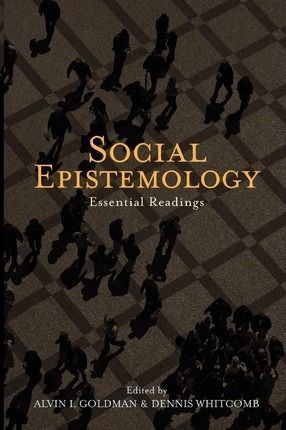
What if anything justifies us in believing the testimony of others? How should we react to disagreement between ourselves and our peers, and to disagreement among the experts when we ourselves are novices? Can beliefs be held by groups of people in addition to the people composing those groups? And if so, how should groups go about forming their beliefs? How should we design social systems, such as legal juries and scientific research-sharing schemes, to promote knowledge among the people who engage in them? When different groups of people judge different beliefs to be justified, how can we tell which groups are correct? These questions are at the heart of the vital discipline of social epistemology. The classic articles in this volume address these questions in ways that are both cutting-edge and easy to understand. This volume will be of great interest to scholars and students in epistemology.
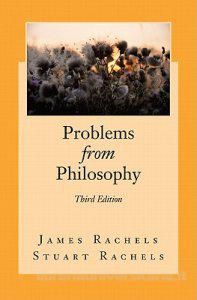
Problems from Philosophy is an introduction to philosophy which is organized around the great philosophical problems—the existence of God, the nature of the mind, human freedom, the limits of knowledge, and the truth about ethics. It begins by reflecting on the life of the first great philosopher, Socrates. Then it takes up the fundamental question of whether God exists. Next comes a discussion of death and the soul, which leads to a chapter about persons. The later chapters of the book are about whether objective knowledge is possible in science and ethics. Each chapter is self-contained and may be read independently of the others. Problems from Philosophy represents the final work of author and philosopher James Rachels. In it, he brings the same liveliness and clarity to the introduction of philosophy that he brings to his best-selling ethics text, The Elements of Moral Philosophy. The second and third edition have been revised by Rachels’ son Stuart, who carefully has carefully refined his father’s work to further strengthen its clarity and accessibility.
The question “What am I to do?” needs the balance and completion of “What are we to do?” With clarity and insight Jersild addresses the particular need of our time: a great awareness of our interdependence as a world community. The relationship between private and public morality is clarified by exploring such questions as: “What prompts Christians to disagree on moral issues?” “Is there a Christian morality?” and “How are convictions related to decisions?” Using critical incidents or cases to illustrate ethical points, Jersild examines such contemporary issues as euthanasia, employment and one’s sense of vocation, homosexuality, and more.
Postmodernism has had a significant and divisive impact on late-Twentieth Century thought. Proponents of the postmodernist critique of absolute knowledge have felt it necessary to jettison the Enlightenment concepts of truth, reason and the self. Opponents of postmodernism have seized on this abandonment of rational standards only to ignore the very real problems raised by the postmodernists. Michael Luntley provides a lively introduction to debate and offers a clear and careful exposition of how rational debate can survive even if the main postmodernist critique of the Enlightenment is accepted.Reason, Truth and Selfcovers many of the key questions of our age: the rationality of science; the availability of rational but non-scientific ways of understanding ourselves and our world; the nature of mind and of knowledge; the nature of moral judgement and the scope for accounts of the self that do justice to our situatedness in real historical circumstances.
ما از اخلاق چه انتظاری داریم؟ این سوال شاید تاحدودی برای عموم مردم و یا متخصصان این رشته قابل پاسخ باشد؛ اینکه خوب بودن را به ما بیاموزد و در تنظیم روابط فردی م...

جشن کتاب تهران به ایستگاه سی و یکم رسیده است. حال و احوال نشر کتاب خوب نیست و باید فرهنگدوستان را به خرید و هدیه دادن کتاب ترغیب نمود. خانه اخلاقپژوهان جوان ب...

بنیاد کتابهای اخلاق اسلامی عمدتا پالایش جان از آلودگیها و آراستن آن به زیباییها است. اندیشه محوری این قبیل کتابها آن است که انسان فعلی آنی نیست که باید باشد...

-
0 Comments