Notice: تابع WP_Block_Type_Registry::register به طورنادرست فراخوانی شد. نامهای نوع بلوک نباید حروف بزرگ داشته باشند. لطفاً برای اطلاعات بیشتر، اشکال زدایی در وردپرس را مشاهده کنید. (این پیام در نگارش 5.0.0 افزوده شده است.) in /home/ethicsho/public_html/wp-includes/functions.php on line 5313
Warning: Use of undefined constant TDC_PATH_LEGACY - assumed 'TDC_PATH_LEGACY' (this will throw an Error in a future version of PHP) in /home/ethicsho/public_html/wp-content/plugins/td-composer/td-composer.php on line 109
Warning: Use of undefined constant TDSP_THEME_PATH - assumed 'TDSP_THEME_PATH' (this will throw an Error in a future version of PHP) in /home/ethicsho/public_html/wp-content/plugins/td-composer/td-composer.php on line 113 بایگانیهای Paul Horwich - خانه اخلاق پژوهان جوان Notice: Trying to access array offset on value of type bool in /home/ethicsho/public_html/wp-content/plugins/wp-ulike/inc/general-functions.php on line 807
What is the environment, and how does it figure in an ethical life? This book is an introduction to the philosophical issues involved in this important question, focussing primarily on ethics but also encompassing questions in aesthetics and political philosophy. Topics discussed include the environment as an ethical question, human morality, meta-ethics, normative ethics, humans and other animals, the value of nature, and nature’s future. The discussion is accessible and richly illustrated with examples. The book will be valuable for students taking courses in environmental philosophy, and also for a wider audience in courses in ethics, practical ethics, and environmental studies. It will also appeal to general readers who want a reliable and sophisticated introduction to the field.
A Companion to the Philosophy of Action offers a comprehensive overview of the issues and problems central to the philosophy of action. The first volume to survey the entire field of philosophy of action (the central issues and processes relating to human actions) Brings together specially commissioned chapters from international experts Discusses a range of ideas and doctrines, including rationality, free will and determinism, virtuous action, criminal responsibility, Attribution Theory, and rational agency in evolutionary perspective Individual chapters also cover prominent historic figures from Plato to Ricoeur Can be approached as a complete narrative, but also serves as a work of reference Offers rich insights into an area of philosophical thought that has attracted thinkers since the time of the ancient Greeks
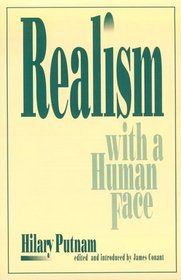
The time has come to reform philosophy, says Hilary Putnam, one of America’s great philosophers. He calls upon philosophers to attend to the gap between the present condition of their subject and the human aspirations that philosophy should and once did claim to represent. Putnam’s goal is to embed philosophy in social life.The first part of this book is dedicated to metaphysical questions. Putnam rejects the contemporary metaphysics that insists on describing both the mind and the world from a God’s-eye view. In its place he argues for pluralism, for a philosophy that is not a closed systematic method but a human practice connected to real life. Philosophy has a task, to be sure, but it is not to provide an inventory of the basic furniture of the universe or to separate reality in itself from our own projections. Putnam makes it clear that science is not in the business of describing a ready-made world, and philosophy should not be in that business either.The author moves on to show that the larger human context in which science matters is a world of values animated by ethics and aesthetic judgments. No adequate philosophy should try to explain away ethical facts. The dimension of history is added in the third part of the book. Here Putnam takes up a set of American philosophers, some firmly within and others outside the canon of analytic philosophy, such as William James and C. S. Peirce, and he explores the pragmatist contribution to philosophy from James to Quine and Goodman.This book connects issues in metaphysics with cultural and literary issues and argues that the collapse of philosophical realism does not entail a fall into the abyss of relativism and postmodern skepticism. It is aimed primarily at philosophers but should appeal to a wide range of humanists and social scientists.
In this excellent introduction, Christopher Shields introduces and assesses the whole of Aristotle?s philosophy, showing how his powerful conception of human nature shaped much of his thinking on the nature of the soul and the mind, ethics, politics and the arts. Beginning with a brief biography, Christopher Shields carefully explains the fundamental elements of Aristotle?s thought: his explanatory framework, his philosophical methodology and his four-causal explanatory scheme. Subsequently he discusses Aristotle?s metaphysics and the theory of categories and logical theory and his conception of the human being and soul and body. In the last part, he concentrates on Aristotle?s value theory as applied to ethics and politics, and assesses his approach to happiness, virtues and the best life for human beings. He concludes with an appraisal of Aristotelianism today.
ما از اخلاق چه انتظاری داریم؟ این سوال شاید تاحدودی برای عموم مردم و یا متخصصان این رشته قابل پاسخ باشد؛ اینکه خوب بودن را به ما بیاموزد و در تنظیم روابط فردی م...

جشن کتاب تهران به ایستگاه سی و یکم رسیده است. حال و احوال نشر کتاب خوب نیست و باید فرهنگدوستان را به خرید و هدیه دادن کتاب ترغیب نمود. خانه اخلاقپژوهان جوان ب...

بنیاد کتابهای اخلاق اسلامی عمدتا پالایش جان از آلودگیها و آراستن آن به زیباییها است. اندیشه محوری این قبیل کتابها آن است که انسان فعلی آنی نیست که باید باشد...

-
0 Comments