Notice: تابع WP_Block_Type_Registry::register به طورنادرست فراخوانی شد. نامهای نوع بلوک نباید حروف بزرگ داشته باشند. لطفاً برای اطلاعات بیشتر، اشکال زدایی در وردپرس را مشاهده کنید. (این پیام در نگارش 5.0.0 افزوده شده است.) in /home/ethicsho/public_html/wp-includes/functions.php on line 5313
Warning: Use of undefined constant TDC_PATH_LEGACY - assumed 'TDC_PATH_LEGACY' (this will throw an Error in a future version of PHP) in /home/ethicsho/public_html/wp-content/plugins/td-composer/td-composer.php on line 109
Warning: Use of undefined constant TDSP_THEME_PATH - assumed 'TDSP_THEME_PATH' (this will throw an Error in a future version of PHP) in /home/ethicsho/public_html/wp-content/plugins/td-composer/td-composer.php on line 113 بایگانیهای Paul Helm - خانه اخلاق پژوهان جوان Notice: Trying to access array offset on value of type bool in /home/ethicsho/public_html/wp-content/plugins/wp-ulike/inc/general-functions.php on line 807
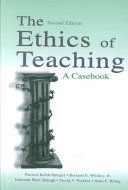
The Ethics of Teaching provides a frank discussion of the most frequently encountered ethical dilemmas that can arise in educational settings, as well as tips on how to avoid these predicaments and how to deal with them when they do occur. The goal is to stimulate discussion and raise faculties’ consciousness about ethical issues. Ethical dilemmas are presented as short, engaging case scenarios, most of which are based on actual situations, so as to furnish more realistic and interesting stimuli for individual reflection and group discussion. These scenarios offer the opportunity to consider the subtle complexities inherent in the social and psychological contexts in which educator-student interactions occur and the effects of those complexities on ethical decision making. Each case is followed by a detailed analysis and advice. The book’s 195 cases are grouped into 22 chapters representing topics, such as the controversial classroom presentations and assignments, debatable testing and grading practices, problematic student-faculty interactions, dual-role relationships with students, collegial conflicts, managing very difficult students, and confidentiality dilemmas. The Ethics of Teaching: A Casebook, Second Edition: *focuses on commonly encountered ethical “gray areas” that have no clear solution; *includes questions to stimulate discussion of related ethical issues; *concludes with a chapter on prevention, peer mentoring, and intervention; and *serves as excellent “assigned reading” to stimulate group discussion in teaching workshops and faculty development programs. The first edition of this book evolved by collecting a variety of teaching situations that commonly occur in college and university settings. The authors then created responses to the situations and circulated both the cases and the responses to reviewers from a number of departments across the country. As a result, the vast majority of the cases are “discipline free.” The second edition features many new cases to reflect recent trends and events related to academic ethics. Questions were added to stimulate discussion and to further elaborate the issues. The Ethics of Teaching: A Casebook is ideal for college and university faculty, graduate assistants, and administrators involved in workshops, graduate teaching assistant courses, and faculty development and new faculty orientation programs. As a result of the book’s cross-disciplinary development, it will be beneficial to faculty from a broad spectrum of disciplines.
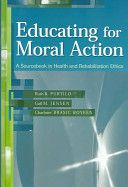
This new resource is written for physical therapy and occupational therapy administrators, curriculum coordinators and educators. Stemming from the summer 2003 “Dreamcatchers” Conference, Creighton University’s “Leadership in Ethics Education,” the authors have assembled a veritable “who’s who” of PT and OT academics to share their insights regarding contemporary issues in health and rehabilitation ethics. Going beyond the “nuts and bolts” of teaching ethics, the text aims to present pedagogical strategies that will ultimately change the face of how educators think, and consequently, how they teach ethics to the next generation of health professionals.
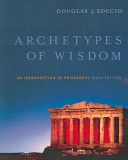
Featuring Douglas J. Soccio’s lucid and conversational prose and a well-chosen, reader-friendly array of succinct excerpts from canonical primary sources, ARCHETYPES OF WISDOM brings philosophy to life for its readers through the examination of many paradigmatic philosophies and philosophers. Very much a student-focused book that speaks out of Soccio’s non-condescending desire to speak to students where they “are” and not where they “should be,” ARCHETYPES OF WISDOM includes numerous pedagogical illustrations and features (Philosophical Queries, a Marginal Glossary, Chapter Summaries, End-of-Chapter Questions for Reflection, to name a few) to make this often-times daunting subject the approachable and engaging subject it ought to be. The Sixth Edition represents a careful revision, with all changes made by Soccio to enhance and refresh the book’s reader-praised search-for-wisdom motif. In particular, this edition features new coverage of Lao-Tzu; expanded, chapter-length treatment of Kierkegaard; and an engaging introduction to the complex landscape of philosophy in the twentieth century focusing on the two archetypal thinkers of this time period: Wittgenstein and Heidegger. Soccio’s lauded prose is also enhanced in this Sixth Edition by the text’s new full-color design. The text is supported by an unmatched array of teaching and learning resources that include CengageNOW-a powerful online tutorial and course management system, and dynamic easy-to-use lecture and class preparation tools exclusive to Wadsworth, a part of Cengage Learning.
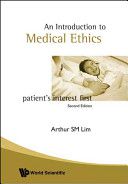
Throughout history, men have repeatedly made judgments regarding their own conduct and that of their fellow men. Some acts have been judged to be right or good, while other acts have been denounced as wrong or evil. Ethical judgment in medicine, as in other areas of life, is an attempt to distinguish between good and bad conduct.This book is based on three lectures given by the author as the Medical Director of Eye Clinic Singapura International. The first lecture was an address delivered to medical undergraduates at the National University of Singapore in 1975. The second was a Commonwealth Medical Association lecture delivered a decade ago. The third was a Singapore Medical Association lecture delivered in 1981. This volume, emphasizing the principles of medical ethics, has been kept simple and brief, and it is hoped that it will make interesting reading for both medical professionals and the general public.
ما از اخلاق چه انتظاری داریم؟ این سوال شاید تاحدودی برای عموم مردم و یا متخصصان این رشته قابل پاسخ باشد؛ اینکه خوب بودن را به ما بیاموزد و در تنظیم روابط فردی م...

جشن کتاب تهران به ایستگاه سی و یکم رسیده است. حال و احوال نشر کتاب خوب نیست و باید فرهنگدوستان را به خرید و هدیه دادن کتاب ترغیب نمود. خانه اخلاقپژوهان جوان ب...

بنیاد کتابهای اخلاق اسلامی عمدتا پالایش جان از آلودگیها و آراستن آن به زیباییها است. اندیشه محوری این قبیل کتابها آن است که انسان فعلی آنی نیست که باید باشد...

-
0 Comments