Notice: تابع WP_Block_Type_Registry::register به طورنادرست فراخوانی شد. نامهای نوع بلوک نباید حروف بزرگ داشته باشند. لطفاً برای اطلاعات بیشتر، اشکال زدایی در وردپرس را مشاهده کنید. (این پیام در نگارش 5.0.0 افزوده شده است.) in /home/ethicsho/public_html/wp-includes/functions.php on line 5313
Warning: Use of undefined constant TDC_PATH_LEGACY - assumed 'TDC_PATH_LEGACY' (this will throw an Error in a future version of PHP) in /home/ethicsho/public_html/wp-content/plugins/td-composer/td-composer.php on line 109
Warning: Use of undefined constant TDSP_THEME_PATH - assumed 'TDSP_THEME_PATH' (this will throw an Error in a future version of PHP) in /home/ethicsho/public_html/wp-content/plugins/td-composer/td-composer.php on line 113 بایگانیهای Paul Davis - خانه اخلاق پژوهان جوان Notice: Trying to access array offset on value of type bool in /home/ethicsho/public_html/wp-content/plugins/wp-ulike/inc/general-functions.php on line 807
Christine M. Korsgaard presents an account of the foundation of practical reason and moral obligation. Moral philosophy aspires to understand the fact that human actions, unlike the actions of the other animals, can be morally good or bad, right or wrong. Few moral philosophers, however, have exploited the idea that actions might be morally good or bad in virtue of being good or bad of their kind – good or bad as actions. Just as we need to know that it is the function of the heart to pump blood to know that a good heart is one that pumps blood successfully, so we need to know what the function of an action is in order to know what counts as a good or bad action. Drawing on the work of Plato, Aristotle, and Kant, Korsgaard proposes that the function of an action is to constitute the agency and therefore the identity of the person who does it. As rational beings, we are aware of, and therefore in control of, the principles that govern our actions. A good action is one that constitutes its agent as the autonomous and efficacious cause of her own movements. These properties correspond, respectively, to Kant’s two imperatives of practical reason. Conformity to the categorical imperative renders us autonomous, and conformity to the hypothetical imperative renders us efficacious. And in determining what effects we will have in the world, we are at the same time determining our own identities. Korsgaard develops a theory of action and of interaction, and of the form interaction must take if we are to have the integrity that, she argues, is essential for agency. On the basis of that theory, she argues that only morally good action can serve the function of action, which is self-constitution.
This new book reflects Derrida’s latest views on the role of education and international organizations in an era of globalization. In this book, Derrida develops a notion of the global citizen that is uniquely post-Kantian. He looks especially at the changing role of UNESCO and similar organizations at a time when individual and national identities, knowledge and commerce, and human rights all are brought to world attention in new ways than they have been in the past. Following Derrida’s writings on these issues, prominent scholars engage in a dialogue with him on his approach to understanding the ethics of international institutions and education today. Visit our website for sample chapters!
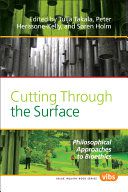
“This book examines the role of philosophy and philosophers in bioethics. Academics often see bioethical studies as too practical while decision makers tend to see them as too theoretical. The purpose of this collection of new essays by an international group of distinguished scholars is to explore the troubled relationship between theory and practice in the ethical assessment of medicine, health care, and new medical and genetic technologies. The book is divided into six parts. In the first part, philosophers consider the definition of bioethics, the nature of applied ethics more generally, and the possibility of combining utilitarian and liberal strands of thinking in moral and political studies. In the second part, authors discuss the place and justification of principles in bioethics and the significance of medical and nursing experience in moral decision making. The third part addresses the complementary (or contradictory, as the case may be) principles of dignity, autonomy, precaution, and solidarity, and their use in theoretical and practical settings. In the fourth part, public health measures and experimental research are defended against traditional moral concerns. Part five scrutinizes parental responsibilities in bearing and rearing children, especially the reasons for and against human reproduction in individual cases. In part six, enhancements to human nature by various means are analyzed.”–Publisher’s description.
ما از اخلاق چه انتظاری داریم؟ این سوال شاید تاحدودی برای عموم مردم و یا متخصصان این رشته قابل پاسخ باشد؛ اینکه خوب بودن را به ما بیاموزد و در تنظیم روابط فردی م...

جشن کتاب تهران به ایستگاه سی و یکم رسیده است. حال و احوال نشر کتاب خوب نیست و باید فرهنگدوستان را به خرید و هدیه دادن کتاب ترغیب نمود. خانه اخلاقپژوهان جوان ب...

بنیاد کتابهای اخلاق اسلامی عمدتا پالایش جان از آلودگیها و آراستن آن به زیباییها است. اندیشه محوری این قبیل کتابها آن است که انسان فعلی آنی نیست که باید باشد...

-
0 Comments