Notice: تابع WP_Block_Type_Registry::register به طورنادرست فراخوانی شد. نامهای نوع بلوک نباید حروف بزرگ داشته باشند. لطفاً برای اطلاعات بیشتر، اشکال زدایی در وردپرس را مشاهده کنید. (این پیام در نگارش 5.0.0 افزوده شده است.) in /home/ethicsho/public_html/wp-includes/functions.php on line 5313
Warning: Use of undefined constant TDC_PATH_LEGACY - assumed 'TDC_PATH_LEGACY' (this will throw an Error in a future version of PHP) in /home/ethicsho/public_html/wp-content/plugins/td-composer/td-composer.php on line 109
Warning: Use of undefined constant TDSP_THEME_PATH - assumed 'TDSP_THEME_PATH' (this will throw an Error in a future version of PHP) in /home/ethicsho/public_html/wp-content/plugins/td-composer/td-composer.php on line 113 بایگانیهای P.A. Sorokin - خانه اخلاق پژوهان جوان Notice: Trying to access array offset on value of type bool in /home/ethicsho/public_html/wp-content/plugins/wp-ulike/inc/general-functions.php on line 807
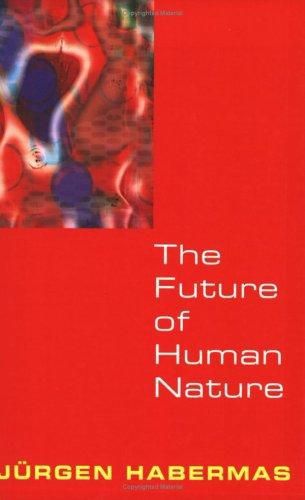
Recent developments in biotechnology and genetic research are raising complex ethical questions concerning the legitimate scope and limits of genetic intervention. As we begin to contemplate the possibility of intervening in the human genome to prevent diseases, we cannot help but feel that the human species might soon be able to take its biological evolution in its own hands. ‘Playing God’ is the metaphor commonly used for this self-transformation of the species, which, it seems, might soon be within our grasp. In this important new book, Jurgen Habermas – the most influential philosopher and social thinker in Germany today – takes up the question of genetic engineering and its ethical implications and subjects it to careful philosophical scrutiny. His analysis is guided by the view that genetic manipulation is bound up with the identity and self-understanding of the species. We cannot rule out the possibility that knowledge of one’s own hereditary factors may prove to be restrictive for the choice of an individual’s way of life and may undermine the symmetrical relations between free and equal human beings. In the concluding chapter – which was delivered as a lecture on receiving the Peace Prize of the German Book Trade for 2001 – Habermas broadens the discussion to examine the tension between science and religion in the modern world, a tension which exploded, with such tragic violence, on September 11th.
A scholarship-based, easy-to-read exploration looks at who lies, how and why lies are told, and what we can do to protect ourselves from being manipulated.
At what point can we concede that the realities of world politics require that moral principles be compromised, and how do we know when a real ethical limit has been reached? This volume gathers leading constructivist scholars to explore the issue of moral limit and possibility in global political dilemmas. The contributors examine pressing ethical challenges such as sanctions, humanitarian intervention, torture, the self-determination of indigenous peoples, immigration, and the debate about international criminal tribunals and amnesties in cases of atrocity. Their analyses entail theoretical and empirical claims about the conditions of possibility and limits of moral change in world politics, therefore providing insightful leverage on the ethical question of ‘what ought we to do?’ This is a valuable contribution to the growing field of normative theory in International Relations and will appeal to scholars and advanced students of international ethics and political theory.
ما از اخلاق چه انتظاری داریم؟ این سوال شاید تاحدودی برای عموم مردم و یا متخصصان این رشته قابل پاسخ باشد؛ اینکه خوب بودن را به ما بیاموزد و در تنظیم روابط فردی م...

جشن کتاب تهران به ایستگاه سی و یکم رسیده است. حال و احوال نشر کتاب خوب نیست و باید فرهنگدوستان را به خرید و هدیه دادن کتاب ترغیب نمود. خانه اخلاقپژوهان جوان ب...

بنیاد کتابهای اخلاق اسلامی عمدتا پالایش جان از آلودگیها و آراستن آن به زیباییها است. اندیشه محوری این قبیل کتابها آن است که انسان فعلی آنی نیست که باید باشد...

-
0 Comments