Notice: تابع WP_Block_Type_Registry::register به طورنادرست فراخوانی شد. نامهای نوع بلوک نباید حروف بزرگ داشته باشند. لطفاً برای اطلاعات بیشتر، اشکال زدایی در وردپرس را مشاهده کنید. (این پیام در نگارش 5.0.0 افزوده شده است.) in /home/ethicsho/public_html/wp-includes/functions.php on line 5313
Warning: Use of undefined constant TDC_PATH_LEGACY - assumed 'TDC_PATH_LEGACY' (this will throw an Error in a future version of PHP) in /home/ethicsho/public_html/wp-content/plugins/td-composer/td-composer.php on line 109
Warning: Use of undefined constant TDSP_THEME_PATH - assumed 'TDSP_THEME_PATH' (this will throw an Error in a future version of PHP) in /home/ethicsho/public_html/wp-content/plugins/td-composer/td-composer.php on line 113 بایگانیهای Nathan Smith and Jason Taylor - خانه اخلاق پژوهان جوان Notice: Trying to access array offset on value of type bool in /home/ethicsho/public_html/wp-content/plugins/wp-ulike/inc/general-functions.php on line 807
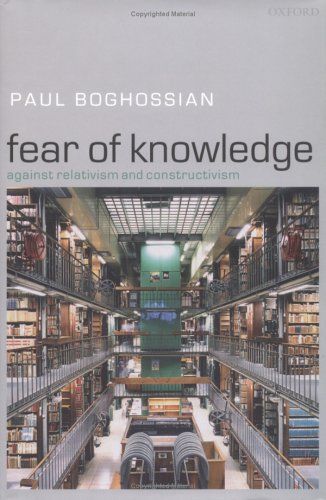
Relativist and constructivist conceptions of truth and knowledge have become orthodoxy in vast stretches of the academic world in recent times. In his long-awaited first book, Paul Boghossian critically examines such views and exposes their fundamental flaws. Boghossian focuses on three different ways of reading the claim that knowledge is socially constructed–one as a thesis about truth and two about justification. And he rejects all three. The intuitive, common-sense view is that there is a way the world is that is independent of human opinion; and that we are capable of arriving at beliefs about how it is that are objectively reasonable, binding on anyone capable of appreciating the relevant evidence regardless of their social or cultural perspective. Difficult as these notions may be, it is a mistake to think that philosophy has uncovered powerful reasons for rejecting them. This short, lucid, witty book shows that philosophy provides rock-solid support for common sense against the relativists. It will prove provocative reading throughout the discipline and beyond.
This text not only provides an introduction to the main traditions in ethical thought–such as virtue ethics, utilitarianism, and deontology–but also offers a conceptual framework of ethical pluralism for understanding the relationship among these various theories. This new edition has been significantly affected by the events of September 11, 2001.
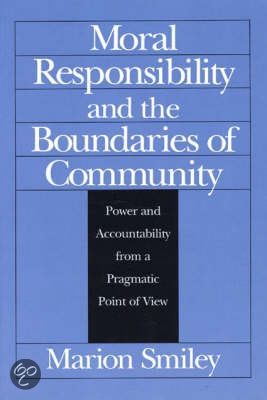
The question of responsibility plays a critical role not only in our attempts to resolve social and political problems, but in our very conceptions of what those problems are. Who, for example, is to blame for apartheid in South Africa? Is the South African government responsible? What about multinational corporations that do business there? Will uncovering the “true facts of the matter” lead us to the right answer? In an argument both compelling and provocative, Marion Smiley demonstrates how attributions of blame–far from being based on an objective process of factual discovery–are instead judgments that we ourselves make on the basis of our own political and social points of view. She argues that our conception of responsibility is a singularly modern one that locates the source of blameworthiness in an individual’s free will. After exploring the flaws inherent in this conception, she shows how our judgments of blame evolve out of our configuration of social roles, our conception of communal boundaries, and the distribution of power upon which both are based. The great strength of Smiley’s study lies in the way in which it brings together both rigorous philosophical analysis and an appreciation of the dynamics of social and political practice. By developing a pragmatic conception of moral responsibility, this work illustrates both how moral philosophy can enhance our understanding of social and political practices and why reflection on these practices is necessary to the reconstruction of our moral concepts.
R. Jay Wallace argues in this book that moral accountability hinges on questions of fairness: When is it fair to hold people morally responsible for what they do? Would it be fair to do so even in a deterministic world? To answer these questions, we need to understand what we are doing when we hold people morally responsible, a stance that Wallace connects with a central class of moral sentiments, those of resentment, indignation, and guilt. To hold someone responsible, he argues, is to be subject to these reactive emotions in one’s dealings with that person. Developing this theme with unusual sophistication, he offers a new interpretation of the reactive emotions and traces their role in our practices of blame and moral sanction. With this account in place, Wallace advances a powerful and sustained argument against the common view that accountability requires freedom of will. Instead, he maintains, the fairness of holding people responsible depends on their rational competence: the power to grasp moral reasons and to control their behavior accordingly. He shows how these forms of rational competence are compatible with determinism. At the same time, giving serious consideration to incompatibilist concerns, Wallace develops a compelling diagnosis of the common assumption that freedom is necessary for responsibility. Rigorously argued, eminently readable, this book touches on issues of broad concern to philosophers, legal theorists, political scientists, and anyone with an interest in the nature and limits of responsibility.
ما از اخلاق چه انتظاری داریم؟ این سوال شاید تاحدودی برای عموم مردم و یا متخصصان این رشته قابل پاسخ باشد؛ اینکه خوب بودن را به ما بیاموزد و در تنظیم روابط فردی م...

جشن کتاب تهران به ایستگاه سی و یکم رسیده است. حال و احوال نشر کتاب خوب نیست و باید فرهنگدوستان را به خرید و هدیه دادن کتاب ترغیب نمود. خانه اخلاقپژوهان جوان ب...

بنیاد کتابهای اخلاق اسلامی عمدتا پالایش جان از آلودگیها و آراستن آن به زیباییها است. اندیشه محوری این قبیل کتابها آن است که انسان فعلی آنی نیست که باید باشد...

-
0 Comments