

Notice: تابع WP_Block_Type_Registry::register به طورنادرست فراخوانی شد. نامهای نوع بلوک نباید حروف بزرگ داشته باشند. لطفاً برای اطلاعات بیشتر، اشکال زدایی در وردپرس را مشاهده کنید. (این پیام در نگارش 5.0.0 افزوده شده است.) in /home/ethicsho/public_html/wp-includes/functions.php on line 5313
Warning: Use of undefined constant TDC_PATH_LEGACY - assumed 'TDC_PATH_LEGACY' (this will throw an Error in a future version of PHP) in /home/ethicsho/public_html/wp-content/plugins/td-composer/td-composer.php on line 109
Warning: Use of undefined constant TDSP_THEME_PATH - assumed 'TDSP_THEME_PATH' (this will throw an Error in a future version of PHP) in /home/ethicsho/public_html/wp-content/plugins/td-composer/td-composer.php on line 113 بایگانیهای Michael L. Gross - خانه اخلاق پژوهان جوان Notice: Trying to access array offset on value of type bool in /home/ethicsho/public_html/wp-content/plugins/wp-ulike/inc/general-functions.php on line 807
As second in command, Katherine Ann Miles understands the responsibilities of her role as vice president. But when the president of the United States dies from a heart attack only eight months into his term, Katherine feels utterly unprepared to assume the highest office in the land.
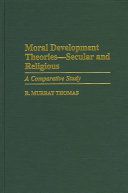
Moral Development Theories–Secular and Religious introduces readers to 13 secular models and 13 religious theories in a wide-ranging comparative study of the roots of moral development. The secular models include attribution theory, cognitive-structural views, social-learning and social-cognition approaches, Freud’s psychoanalysis (plus Erikson and Fromm), Marxist beliefs, a composite theory, Hoffman’s conception of empathy, Anderson’s information-integration view, Gilligan’s gender distinction, Sutherland and Cressey’s explanation of delinquency, and Lovinger on ego development. Religious theories represent the Judaic-Christian-Islamic line, Hinduism and derivatives (Buddhism, Jainism, Sikhism), Confucianism, Shinto, and four minor theories drawn from the belief systems of the Navajo, Zulus, Vodou adherents, and Okinawans.
Monte Johnson examines the most controversial aspects of Aristiotle’snatural philosophy: his teleology. Is teleology about causation or explanation?Does it exclude or obviate mechanism, determinism, or materialism? Is it focusedon the good of individual organisms, or is god or man the ultimate end of allprocesses and entities? Is teleology restricted to living things, or does itapply to the cosmos as a whole? Does it identify objectively existent causes inthe world, or is it merely a heuristic for our understanding of other causalprocesses? Johnson argues that Aristotle’s aporetic approach drives a middlecourse between these traditional oppositions, and avoids the dilemma, frequentlyurged against teleology, between backwards causation and anthropomorphism.Although these issues have been debated with extraordinary depth by Aristotlescholars, and touched upon by many in the wider philosophical and scientificcommunity as well, there is no comprehensive historical treatment of the issue. Aristotle is commonly considered the inventor of teleology, although the preciseterm originated in the eighteenth century. If teleology means the use of endsand goals in natural science, then Aristotle was rather a critical innovator ofteleological explanation. Teleological notions were widespread among hispredecessors, but Aristotle rejected their conception of extrinsic causes suchas mind or god as the primary causes for natural things. Aristotle’s radicalalternative was to assert nature itself as an internal principle of change andan end, and his teleological explanations focus on the intrinsic ends of naturalsubstances – those ends that benefit the natural thing itself. Aristotle’s use of ends was subsequently conflated with incompatible’teleological’ notions, including proofs for the existence of a providential ordesigner god, vitalism and animism, opposition to mechanism and non-teleologicalcausation, and anthropocentrism. Johnson addresses these misconceptions throughan elaboration of Aristotle’s methodological statements, as well as anexamination of the explanations actually offered in the scientific works.
ما از اخلاق چه انتظاری داریم؟ این سوال شاید تاحدودی برای عموم مردم و یا متخصصان این رشته قابل پاسخ باشد؛ اینکه خوب بودن را به ما بیاموزد و در تنظیم روابط فردی م...

جشن کتاب تهران به ایستگاه سی و یکم رسیده است. حال و احوال نشر کتاب خوب نیست و باید فرهنگدوستان را به خرید و هدیه دادن کتاب ترغیب نمود. خانه اخلاقپژوهان جوان ب...

بنیاد کتابهای اخلاق اسلامی عمدتا پالایش جان از آلودگیها و آراستن آن به زیباییها است. اندیشه محوری این قبیل کتابها آن است که انسان فعلی آنی نیست که باید باشد...

-
0 Comments