Notice: تابع WP_Block_Type_Registry::register به طورنادرست فراخوانی شد. نامهای نوع بلوک نباید حروف بزرگ داشته باشند. لطفاً برای اطلاعات بیشتر، اشکال زدایی در وردپرس را مشاهده کنید. (این پیام در نگارش 5.0.0 افزوده شده است.) in /home/ethicsho/public_html/wp-includes/functions.php on line 5313
Warning: Use of undefined constant TDC_PATH_LEGACY - assumed 'TDC_PATH_LEGACY' (this will throw an Error in a future version of PHP) in /home/ethicsho/public_html/wp-content/plugins/td-composer/td-composer.php on line 109
Warning: Use of undefined constant TDSP_THEME_PATH - assumed 'TDSP_THEME_PATH' (this will throw an Error in a future version of PHP) in /home/ethicsho/public_html/wp-content/plugins/td-composer/td-composer.php on line 113 بایگانیهای Michael J. Zimmerman - خانه اخلاق پژوهان جوان Notice: Trying to access array offset on value of type bool in /home/ethicsho/public_html/wp-content/plugins/wp-ulike/inc/general-functions.php on line 807
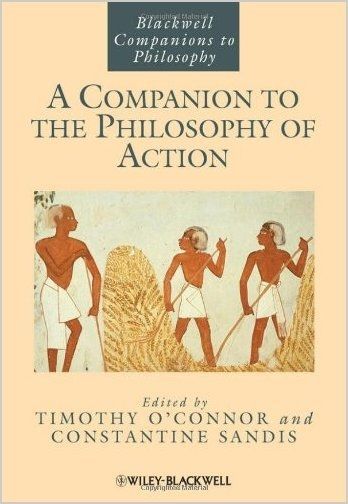
A Companion to the Philosophy of Action offers a comprehensive overview of the issues and problems central to the philosophy of action. The first volume to survey the entire field of philosophy of action (the central issues and processes relating to human actions) Brings together specially commissioned chapters from international experts Discusses a range of ideas and doctrines, including rationality, free will and determinism, virtuous action, criminal responsibility, Attribution Theory, and rational agency in evolutionary perspective Individual chapters also cover prominent historic figures from Plato to Ricoeur Can be approached as a complete narrative, but also serves as a work of reference Offers rich insights into an area of philosophical thought that has attracted thinkers since the time of the ancient Greeks
Is there a public good? A prevalent view in political science is that democracy is unavoidably chaotic, arbitrary, meaningless, and impossible. Such scepticism began with Condorcet in the eighteenth century, and continued most notably with Arrow and Riker in the twentieth century. In this powerful book, Gerry Mackie confronts and subdues these long-standing doubts about democratic governance. Problems of cycling, agenda control, strategic voting, and dimensional manipulation are not sufficiently harmful, frequent, or irremediable, he argues, to be of normative concern. Mackie also examines every serious empirical illustration of cycling and instability, including Rikers famous argument that the US Civil War was due to arbitrary dimensional manipulation. Almost every empirical claim is erroneous, and none is normatively troubling, Mackie says. This spirited defence of democratic institutions should prove both provocative and influential.
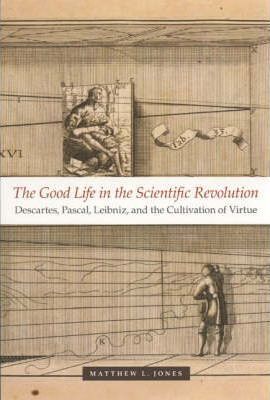
Amid the unrest, dislocation, and uncertainty of seventeenth-century Europe, readers seeking consolation and assurance turned to philosophical and scientific books that offered ways of conquering fears and training the mind—guidance for living a good life. The Good Life in the Scientific Revolution presents a triptych showing how three key early modern scientists, René Descartes, Blaise Pascal, and Gottfried Leibniz, envisioned their new work as useful for cultivating virtue and for pursuing a good life. Their scientific and philosophical innovations stemmed in part from their understanding of mathematics and science as cognitive and spiritual exercises that could create a truer mental and spiritual nobility. In portraying the rich contexts surrounding Descartes’ geometry, Pascal’s arithmetical triangle, and Leibniz’s calculus, Matthew L. Jones argues that this drive for moral therapeutics guided important developments of early modern philosophy and the Scientific Revolution.
ما از اخلاق چه انتظاری داریم؟ این سوال شاید تاحدودی برای عموم مردم و یا متخصصان این رشته قابل پاسخ باشد؛ اینکه خوب بودن را به ما بیاموزد و در تنظیم روابط فردی م...

جشن کتاب تهران به ایستگاه سی و یکم رسیده است. حال و احوال نشر کتاب خوب نیست و باید فرهنگدوستان را به خرید و هدیه دادن کتاب ترغیب نمود. خانه اخلاقپژوهان جوان ب...

بنیاد کتابهای اخلاق اسلامی عمدتا پالایش جان از آلودگیها و آراستن آن به زیباییها است. اندیشه محوری این قبیل کتابها آن است که انسان فعلی آنی نیست که باید باشد...

-
0 Comments