Notice: تابع WP_Block_Type_Registry::register به طورنادرست فراخوانی شد. نامهای نوع بلوک نباید حروف بزرگ داشته باشند. لطفاً برای اطلاعات بیشتر، اشکال زدایی در وردپرس را مشاهده کنید. (این پیام در نگارش 5.0.0 افزوده شده است.) in /home/ethicsho/public_html/wp-includes/functions.php on line 5313
Warning: Use of undefined constant TDC_PATH_LEGACY - assumed 'TDC_PATH_LEGACY' (this will throw an Error in a future version of PHP) in /home/ethicsho/public_html/wp-content/plugins/td-composer/td-composer.php on line 109
Warning: Use of undefined constant TDSP_THEME_PATH - assumed 'TDSP_THEME_PATH' (this will throw an Error in a future version of PHP) in /home/ethicsho/public_html/wp-content/plugins/td-composer/td-composer.php on line 113 بایگانیهای Mark Richard - خانه اخلاق پژوهان جوان Notice: Trying to access array offset on value of type bool in /home/ethicsho/public_html/wp-content/plugins/wp-ulike/inc/general-functions.php on line 807
Genetic research and testing is not limited to individuals and their families. Increasingly, there is focus on communities and even whole populations. This raises legal and socio-ethical and issues that have not been addressed. In this age of international biobanking involving populations, are current legal and ethical approaches sufficient? This book of selected papers covers population research and banking as well as accompanying confidentiality, and governance concerns. Possible commercialization, patents, benefit sharing, discrimination, and the role of patient organizations and of developing countries are also discussed. New perspectives and models are provided. The book concludes with a “Statement of Principles on the Ethical Conduct of Human Genetic Research Involving Populations,” Policymakers, academics, legislators and researchers will find this book to be current and controversial. The human genome may be mapped but the legal and socio-ethical debate is far from over.
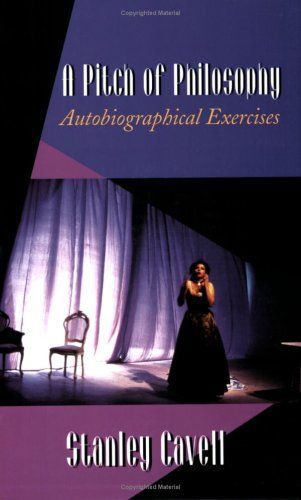
What is the pitch of philosophy? Something thrown, for us to catch? A lurch, meant to unsettle us? The relative position of a tone on a scale? A speech designed to persuade? This book is an invitation to the life of philosophy in the United States, as Emerson once lived it and as Stanley Cavell now lives it – in all its topographical ambiguity. Cavell talks about his vocation in connection with what he calls voice – the tone of philosophy – and his right to take that tone, and to describe an anecdotal journey toward the discovery of his own voice. Cavell asks how the voice of philosophy can be heard amid the commerce of everyday life. His autobiographical exercises begin at home with his parents, his father an accidental pawnbroker and accomplished raconteur, his mother a trained and talented musician. In the course of showing us his certain steps in the discovery of his trade, he conveys the sense of what it means to learn to walk on one’s own, with a Thoreauvian deliberateness. He pays suitableattention to a serious ally and antagonist to the task of philosophy as he understands it, namely, Jacques Derrida – yet Derrida has mounted a full-scale attack on “voice” and other concepts that Cavell has held open for much of a lifetime. The chapters are interwoven with intense family reminiscences in Cavell’s discovery of J. L. Austin, his understanding of Wittgenstein, his raising of Emerson to the philosophical canon, his fascination with film (images of women in a medium for women), the revelation that film and opera are the media of otherness for women. And the voice at the end: hearing in himself the voice of his mother, which is music. Complex, sentimental, witty, A Pitch ofPhilosophy is for anyone who cares to take on philosophy, under whatever name it goes.
In the context of the current financial crisis, and at a time of deep global change, growing attention is paid to the global norms and ethical values that could underpin future global policy. Water is a key global resource. At the 3rd Marcelino Botin Foundation Water Workshop, held in Santander, Spain, June 12-14, 2007, the role of ethics in the deep roots, values, and the potential commonalities of the global water policy were discussed. Experts from different cultural, geographic and religious backgrounds considered the different ethical points of view to enhance the debate on how ethical considerations can play a more significant and explicit role in water development and management. Common ground for all contributing authors was considered to be the UN Declaration of 1948, and more specifically the basic aspects related to water ethics: 1. the dignity of every human being and 2. the necessity of solidarity among all human beings.The book is divided in 8 sections which correspond to the papers presented at the Workshop: Some Cultural Traditional Approaches on Water Ethics Some Ethical Aspects of New Water Management Water as a Human Right and as an Economic Resource Water and Poverty Groundwater Use and its Ethical Aspects Ethics of Water Ownership and Management Corruption, Transparency and Participation in the Water Sector Ethical Aspects of Unforeseen and Extreme Events Management such as Floods and Droughts
ما از اخلاق چه انتظاری داریم؟ این سوال شاید تاحدودی برای عموم مردم و یا متخصصان این رشته قابل پاسخ باشد؛ اینکه خوب بودن را به ما بیاموزد و در تنظیم روابط فردی م...

جشن کتاب تهران به ایستگاه سی و یکم رسیده است. حال و احوال نشر کتاب خوب نیست و باید فرهنگدوستان را به خرید و هدیه دادن کتاب ترغیب نمود. خانه اخلاقپژوهان جوان ب...

بنیاد کتابهای اخلاق اسلامی عمدتا پالایش جان از آلودگیها و آراستن آن به زیباییها است. اندیشه محوری این قبیل کتابها آن است که انسان فعلی آنی نیست که باید باشد...

-
0 Comments