Notice: تابع WP_Block_Type_Registry::register به طورنادرست فراخوانی شد. نامهای نوع بلوک نباید حروف بزرگ داشته باشند. لطفاً برای اطلاعات بیشتر، اشکال زدایی در وردپرس را مشاهده کنید. (این پیام در نگارش 5.0.0 افزوده شده است.) in /home/ethicsho/public_html/wp-includes/functions.php on line 5313
Warning: Use of undefined constant TDC_PATH_LEGACY - assumed 'TDC_PATH_LEGACY' (this will throw an Error in a future version of PHP) in /home/ethicsho/public_html/wp-content/plugins/td-composer/td-composer.php on line 109
Warning: Use of undefined constant TDSP_THEME_PATH - assumed 'TDSP_THEME_PATH' (this will throw an Error in a future version of PHP) in /home/ethicsho/public_html/wp-content/plugins/td-composer/td-composer.php on line 113 بایگانیهای Mariam Al-Attar - خانه اخلاق پژوهان جوان Notice: Trying to access array offset on value of type bool in /home/ethicsho/public_html/wp-content/plugins/wp-ulike/inc/general-functions.php on line 807
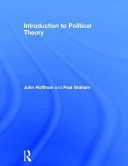
Introduction to Political Theory is a text for the 21st century. It shows students why an understanding of theory is crucial to an understanding of issues and events in a rapidly shifting global political landscape. Bringing together classic and contemporary political concepts and ideologies into one book, this new text introduces the major approaches to political issues that have shaped the modern world, and the ideas that form the currency of political debate. Introduction to Political Theory relates political ideas to political realities through effective use of examples and case studies making theory lively, contentious and relevant. This updated third edition comes with significant revisions which reflect the latest questions facing political theory, such as the French burqa controversy, ethnic nationalism and the value of research from sociobiology. Accompanying these debates is a wealth of new and thought-provoking case studies for discussion, including (consensual) sadomasochism, affirmative action and same-sex marriage. A new chapter on difference has also been added to complement those on feminism and multiculturalism. The revised glossary, revamped website for further reading and new streamlined layout make Introduction to Political Theory third edition the perfect accompaniment to undergraduate study.
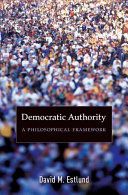
Democracy is not naturally plausible. Why turn such important matters over to masses of people who have no expertise? Many theories of democracy answer by appealing to the intrinsic value of democratic procedure, leaving aside whether it makes good decisions. In Democratic Authority, David Estlund offers a groundbreaking alternative based on the idea that democratic authority and legitimacy must depend partly on democracy’s tendency to make good decisions. Just as with verdicts in jury trials, Estlund argues, the authority and legitimacy of a political decision does not depend on the particular decision being good or correct. But the “epistemic value” of the procedure–the degree to which it can generally be accepted as tending toward a good decision–is nevertheless crucial. Yet if good decisions were all that mattered, one might wonder why those who know best shouldn’t simply rule. Estlund’s theory–which he calls “epistemic proceduralism”–avoids epistocracy, or the rule of those who know. He argues that while some few people probably do know best, this can be used in political justification only if their expertise is acceptable from all reasonable points of view. If we seek the best epistemic arrangement in this respect, it will be recognizably democratic–with laws and policies actually authorized by the people subject to them.
Here is a thorough, vividly written introduction to contemporary philosophy and some of the most crucial questions of human existence: the nature of mind and knowledge, the status of moral claims, the existence of God, the role of science, and the mysteries of language, among them. In Thinking It Through, esteemed philosopher Kwame Anthony Appiah shows us what it means to “do” philosophy in our time and why it should matter to anyone who wishes to live a more thoughtful life. Opposing the common misconceptions that being a philosopher means espousing a set of philosophical beliefs, or being a follower of a particular thinker, Appiah argues that “the result of philosophical exploration is not the end of inquiry in a settled opinion, but a mind resting more comfortably among many possibilities, or else the reframing of the question, and a new inquiry.” Thinking It Through is organized around eight central topics — mind, knowledge, language, science, morality, politics, law, and metaphysics. It traces how philosophers in the past have considered each subject (how Hobbes, Wittgenstein, and Frege, for example, approached the problem of language) and then explores some of the major questions that still engage philosophers today. More important, Appiah shows us not only what philosophers have thought but how they think, giving us examples we might use in our own attempts to navigate the complex issues that confront any reflective person in the 21st century. Filled with concrete examples of how philosophers work and written in the liveliest prose, Thinking It Through guides readers through the process of philosophical reflection and enlarges our understanding of the central questions of human life.
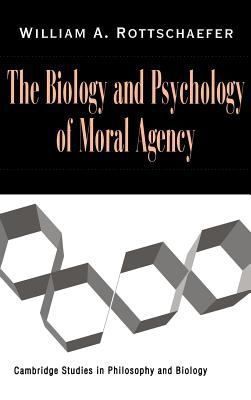
This important book brings recent findings and theories in biology and psychology to bear on the fundamental question in ethics of what it means to behave morally. By presenting a complete model of moral agency based on contemporary evolutionary theory, developmental biology and psychology, and social cognitive theory, the book offers a unique perspective. It will be read with profit by a broad range of philosophers, as well as psychologists and biologists.
ما از اخلاق چه انتظاری داریم؟ این سوال شاید تاحدودی برای عموم مردم و یا متخصصان این رشته قابل پاسخ باشد؛ اینکه خوب بودن را به ما بیاموزد و در تنظیم روابط فردی م...

جشن کتاب تهران به ایستگاه سی و یکم رسیده است. حال و احوال نشر کتاب خوب نیست و باید فرهنگدوستان را به خرید و هدیه دادن کتاب ترغیب نمود. خانه اخلاقپژوهان جوان ب...

بنیاد کتابهای اخلاق اسلامی عمدتا پالایش جان از آلودگیها و آراستن آن به زیباییها است. اندیشه محوری این قبیل کتابها آن است که انسان فعلی آنی نیست که باید باشد...

-
0 Comments