Notice: تابع WP_Block_Type_Registry::register به طورنادرست فراخوانی شد. نامهای نوع بلوک نباید حروف بزرگ داشته باشند. لطفاً برای اطلاعات بیشتر، اشکال زدایی در وردپرس را مشاهده کنید. (این پیام در نگارش 5.0.0 افزوده شده است.) in /home/ethicsho/public_html/wp-includes/functions.php on line 5313
Warning: Use of undefined constant TDC_PATH_LEGACY - assumed 'TDC_PATH_LEGACY' (this will throw an Error in a future version of PHP) in /home/ethicsho/public_html/wp-content/plugins/td-composer/td-composer.php on line 109
Warning: Use of undefined constant TDSP_THEME_PATH - assumed 'TDSP_THEME_PATH' (this will throw an Error in a future version of PHP) in /home/ethicsho/public_html/wp-content/plugins/td-composer/td-composer.php on line 113 بایگانیهای Lucan Freppert - خانه اخلاق پژوهان جوان Notice: Trying to access array offset on value of type bool in /home/ethicsho/public_html/wp-content/plugins/wp-ulike/inc/general-functions.php on line 807
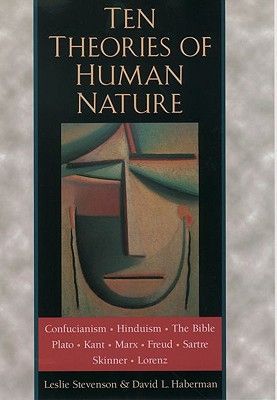
Ten Theories of Human Nature compresses into a small space the essence of such thinkers as Plato, Karl Marx, Sigmund Freud, Jean-Paul Sartre, B.F. Skinner, and Konrad Lorenz. Moreover, the authors juxtapose the ideas of these and other thinkers in a way that helps us to understand how humanity has struggled to comprehend its nature.
Moving back and forth between the history of philosophy and the contributions of philosophers in his own day, Durkheim takes up topics as diverse as philosophical psychology, logic, ethics, and metaphysics, and seeks to articulate a unified philosophical position. Remarkably, the ‘social realism’ that is so characteristic of his later work – where he insists, famously, that social facts cannot be reduced to psychological or economic ones, and that such facts constrain human action in important ways – is totally absent in these early lectures. For this reason, they will be of special interest to students of the history of the social sciences, for they shed important light on the course of Durkheim’s intellectual development. Intellectual historians, historically-minded philosophers, and French historians will all find the lectures a valuable historical document. Insofar as they speak to the philosophical foundations of Durkheim’s thought, they should also be of great interest to social theorists.
The fundamental question of the ethics of belief is “What ought one to believe?” According to the traditional view of evidentialism, the strength of one’s beliefs should be proportionate to the evidence. Conventional ways of defending and challenging evidentialism rely on the idea that what one ought to believe is a matter of what it is rational, prudent, ethical, or personally fulfilling to believe. Common to all these approaches is that they look outside of belief itself to determine what one ought to believe. In this book Jonathan Adler offers a strengthened version of evidentialism, arguing that the ethics of belief should be rooted in the concept of belief—that evidentialism is belief’s own ethics. A key observation is that it is not merely that one ought not, but that one cannot, believe, for example, that the number of stars is even. The “cannot” represents a conceptual barrier, not just an inability. Therefore belief in defiance of one’s evidence (or evidentialism) is impossible. Adler addresses such questions as irrational beliefs, reasonableness, control over beliefs, and whether justifying beliefs requires a foundation. Although he treats the ethics of belief as a central topic in epistemology, his ideas also bear on rationality, argument and pragmatics, philosophy of religion, ethics, and social cognitive psychology.
The Animal Ethics Readeris the first comprehensive, state-of-the-art anthology of readings on this substantial area of study and interest. A subject that regularly captures the headlines, the book is designed to appeal to anyone interested in tracing the history of the subject, as well as providing a powerful insight into the debate as it has developed. The recent wealth of material published in this area has not, until now, been collected in one volume. Readings are arranged thematically, carefully presenting a balanced representation of the subject as it stands. It will be essential reading for students taking a course in the subject as well as being of considerable interest to the general reader. Articles are arranged under the following headings: Theories of Animal Ethics; Animal Capacities; Animals for Food; Animal Experimentation; Genetic Engineering of Animals; Ethics and Wildlife; Zoos, Aquaria, and Animals in Entertainment; Companion Animals; Legal Rights for Animals. Readings from leading experts in the field including Peter Singer, Mary Midgley and Bernard Rollin are featured as well as selections from Donald Griffin, Mark Bekoff, Jane Goodall, Raymond Frey, Barbara Orlans, Tom Regan, and Baird Callicott. There is an emphasis on balancing classic and contemporary readings with a view to presenting debates as they stand at this point in time. Each chapter is introduced by the editors and study questions feature at the end. The foreword has been written by Bernard Rollin.
ما از اخلاق چه انتظاری داریم؟ این سوال شاید تاحدودی برای عموم مردم و یا متخصصان این رشته قابل پاسخ باشد؛ اینکه خوب بودن را به ما بیاموزد و در تنظیم روابط فردی م...

جشن کتاب تهران به ایستگاه سی و یکم رسیده است. حال و احوال نشر کتاب خوب نیست و باید فرهنگدوستان را به خرید و هدیه دادن کتاب ترغیب نمود. خانه اخلاقپژوهان جوان ب...

بنیاد کتابهای اخلاق اسلامی عمدتا پالایش جان از آلودگیها و آراستن آن به زیباییها است. اندیشه محوری این قبیل کتابها آن است که انسان فعلی آنی نیست که باید باشد...

-
0 Comments