Notice: تابع WP_Block_Type_Registry::register به طورنادرست فراخوانی شد. نامهای نوع بلوک نباید حروف بزرگ داشته باشند. لطفاً برای اطلاعات بیشتر، اشکال زدایی در وردپرس را مشاهده کنید. (این پیام در نگارش 5.0.0 افزوده شده است.) in /home/ethicsho/public_html/wp-includes/functions.php on line 5313
Warning: Use of undefined constant TDC_PATH_LEGACY - assumed 'TDC_PATH_LEGACY' (this will throw an Error in a future version of PHP) in /home/ethicsho/public_html/wp-content/plugins/td-composer/td-composer.php on line 109
Warning: Use of undefined constant TDSP_THEME_PATH - assumed 'TDSP_THEME_PATH' (this will throw an Error in a future version of PHP) in /home/ethicsho/public_html/wp-content/plugins/td-composer/td-composer.php on line 113 بایگانیهای Lawrence E. Johnson - خانه اخلاق پژوهان جوان Notice: Trying to access array offset on value of type bool in /home/ethicsho/public_html/wp-content/plugins/wp-ulike/inc/general-functions.php on line 807
Max Weber�2s The Protestant Ethic and the Spirit of Capitalism continues to be one of the most influential texts in the sociology of modern Western societies. Although Weber never produced the further essays with which he intended to extend the study, he did complete four lengthy Replies to reviews of the text by two German historians. Written between 1907 and 1910, the Replies offer a fascinating insight into Weber�2s intentions in the original study, and the present volume is the first complete translation of all four Replies in English.
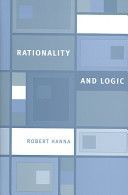
In Rationality and Logic, Robert Hanna argues that logic is intrinsically psychological and that human psychology is intrinsically logical. He claims that logic is cognitively constructed by rational animals (including humans) and that rational animals are essentially logical animals. In order to do so, he defends the broadly Kantian thesis that all (and only) rational animals possess an innate cognitive “logic faculty.” Hanna’s claims challenge the conventional philosophical wisdom that sees logic as a fully formal or “topic-neutral” science irreconcilably separate from the species- or individual-specific focus of empirical psychology. Logic and psychology went their separate ways after attacks by Frege and Husserl on logical psychologism—the explanatory reduction of logic to empirical psychology. Hanna argues, however, that—despite the fact that logical psychologism is false—there is an essential link between logic and psychology. Rational human animals constitute the basic class of cognizers or thinkers studied by cognitive psychology; given the connection between rationality and logic that Hanna claims, it follows that the nature of logic is significantly revealed to us by cognitive psychology. Hanna’s proposed “logical cognitivism” has two important consequences: the recognition by logically oriented philosophers that psychologists are their colleagues in the metadiscipline of cognitive science; and radical changes in cognitive science itself. Cognitive science, Hanna argues, is not at bottom a natural science; it is both an objective or truth-oriented science and a normative human science, as is logic itself.
Ethics and Qualities of Life looks at what enters into ethical judgment and choice. Interpretation of a case and of what the options are is always a factor, as is a sense of the possible values at stake. Intuitions also enter in, but often are unreliable. For a long time it seemed only fair that oldest sons inherited, and struck few people as unfair that women were not allowed to attend universities. A moral judgment is putatively part of a moral order in a society that any reasonable person would accept. But what counts as “reasonable” is generally contestable. The unreliability of intuitions leads naturally to ethical theory. Kantian, contractualist, and consequentialist theories all have some important truth in them, but not the whole truth. Contractualism lacks the resources required for a fully determinate account of what counts as “reasonable”. Broad general rules are important to Kant and are at the center of everyday morality. But can Kantian ethics explain why they have to have this central role? Our evolving social contract now contains elements (e.g. the rejection of racism and sexism) that once would have seemed counter-intuitive to most people. But could consequentialists have predicted with entire confidence the consequences of social changes that we now think were desirable? The last part of this book contains a double argument. One is that ethical theory is employed by humans in a state of semi-ignorance of relevant factors, grasping at likely truths and evolved intuitions. The other is that consequentialist considerations have a major role at the fundamental level, but much more in justification or criticism than in ethical discovery.
What motivates us to be altruistic? How did an altruistic trait evolve in humans, given that evolutionary theory assumes we are self-interested? What sorts of people are altruistic and in what circumstances? Is the welfare state a channel for altruism or does it crowd out people’s altruistic motivations? This accessible book is the first introduction to the idea of altruism. It explores how we have come to be altruistic, and considers why it is important to remain altruistic, not just for the sake of others, but in order maintain the fragile fabric of human society. The book surveys the history of the concept of altruism and examines it from a variety of disciplinary perspectives, including moral philosophy, evolutionary biology, psychology, economics and political science. It then attempts to bring together the distinct issues and concerns of these disciplines to arrive at a unified understanding of altruism. The rational self-interested individual of economics is compared with the altruist who exhibits the virtues of empathy, compassion and benevolence. The book also discusses heroic altruism, such as that displayed by rescuers of Jews in Nazi-occupied Europe, and psychological experiments which seek to identify the altruistic trait. Scott and Seglow argue that altruism is easily extinguished and hard to nourish, but vital for a fundamentally human future. Academics and students in social sciences and philosophy will find Altruism of great interest. So too will professionals in the voluntary and charitable sectors and journalists involved in communicating social scientific and philosophical ideas to the public.
ما از اخلاق چه انتظاری داریم؟ این سوال شاید تاحدودی برای عموم مردم و یا متخصصان این رشته قابل پاسخ باشد؛ اینکه خوب بودن را به ما بیاموزد و در تنظیم روابط فردی م...

جشن کتاب تهران به ایستگاه سی و یکم رسیده است. حال و احوال نشر کتاب خوب نیست و باید فرهنگدوستان را به خرید و هدیه دادن کتاب ترغیب نمود. خانه اخلاقپژوهان جوان ب...

بنیاد کتابهای اخلاق اسلامی عمدتا پالایش جان از آلودگیها و آراستن آن به زیباییها است. اندیشه محوری این قبیل کتابها آن است که انسان فعلی آنی نیست که باید باشد...

-
0 Comments