Notice: تابع WP_Block_Type_Registry::register به طورنادرست فراخوانی شد. نامهای نوع بلوک نباید حروف بزرگ داشته باشند. لطفاً برای اطلاعات بیشتر، اشکال زدایی در وردپرس را مشاهده کنید. (این پیام در نگارش 5.0.0 افزوده شده است.) in /home/ethicsho/public_html/wp-includes/functions.php on line 5313
Warning: Use of undefined constant TDC_PATH_LEGACY - assumed 'TDC_PATH_LEGACY' (this will throw an Error in a future version of PHP) in /home/ethicsho/public_html/wp-content/plugins/td-composer/td-composer.php on line 109
Warning: Use of undefined constant TDSP_THEME_PATH - assumed 'TDSP_THEME_PATH' (this will throw an Error in a future version of PHP) in /home/ethicsho/public_html/wp-content/plugins/td-composer/td-composer.php on line 113 بایگانیهای Kristen R. Monroe - خانه اخلاق پژوهان جوان Notice: Trying to access array offset on value of type bool in /home/ethicsho/public_html/wp-content/plugins/wp-ulike/inc/general-functions.php on line 807
This second edition of the Oxford Handbook of Free Will is intended to be a sourcebook and guide to current work on free will and related subjects. Its focus is on writings of the past forty years, in which there has been a resurgence of interest in traditional issues about the freedom of the will in the light of new developments in the sciences, philosophy and humanistic studies. Special attention is given to research on free will of the first decade of the twenty-first century since the publication of the first edition of the Handbook. All the essays have been newly written or rewritten for this volume. In addition, there are new essayists and essays surveying topics that have become prominent in debates about free will in the past decade, including new work on the relation of free will to physics, the neurosciences, cognitive science, psychology and empirical philosophy, new versions of traditional views (compatibilist, incompatibilist, libertarian, etc.) and new views (e.g., revisionism) that have emerged. The twenty-eight essays by prominent international scholars and younger scholars cover a host of free will related issues, such as moral agency and responsibility, accountability and blameworthiness in ethics, autonomy, coercion and control in social theory, criminal liability, responsibility and punishment in legal theory, issues about the relation of mind to body, consciousness and the nature of action in philosophy of mind and the cognitive and neurosciences, questions about divine foreknowledge, providence and human freedom in philosophy of religion, and general metaphysical questions about necessity and possibility, determinism, time and chance, quantum reality, causation and explanation.
A paradox can be defined as an unacceptable conclusion derived by apparently acceptable reasoning from apparently acceptable premises. Many paradoxes raise serious philosophical problems, and they are associated with crises of thought and revolutionary advances. The expanded and revised third edition of this intriguing book considers a range of knotty paradoxes including Zeno’s paradoxical claim that the runner can never overtake the tortoise, a new chapter on paradoxes about morals, paradoxes about belief, and hardest of all, paradoxes about truth. The discussion uses a minimum of technicality but also grapples with complicated and difficult considerations, and is accompanied by helpful questions designed to engage the reader with the arguments. The result is not only an explanation of paradoxes but also an excellent introduction to philosophical thinking.
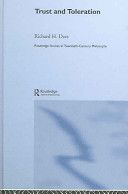
This book outlines the social, conceptual, and psychological preconditions for toleration.By looking closely at the religious wars of the sixteenth and seventeenth centuries in France and England and at contemporary controversies about the rights of homosexuals, Richard Dees demonstrates how trust between the opposing parties is needed first, but in just these cases, distrust is all-too-rational. Ultimately, that distrust can only be overcome if the parties undergo a fundamental shift of values – a conversion. Only then can they accept some form of toleration.
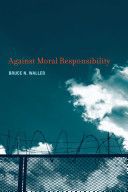
In Against Moral Responsibility, Bruce Waller launches a spirited attack on a system that is profoundly entrenched in our society and its institutions, deeply rooted in our emotions, and vigorously defended by philosophers from ancient times to the present. Waller argues that, despite the creative defenses of it by contemporary thinkers, moral responsibility cannot survive in our naturalistic-scientific system. The scientific understanding of human behavior and the causes that shape human character, he contends, leaves no room for moral responsibility. Waller argues that moral responsibility in all its forms–including criminal justice, distributive justice, and all claims of just deserts–is fundamentally unfair and harmful and that its abolition will be liberating and beneficial. What we really want–natural human free will, moral judgments, meaningful human relationships, creative abilities–would survive and flourish without moral responsibility. In the course of his argument, Waller examines the origins of the basic belief in moral responsibility, proposes a naturalistic understanding of free will, offers a detailed argument against moral responsibility and critiques arguments in favor of it, gives a general account of what a world without moral responsibility would look like, and examines the social and psychological aspects of abolishing moral responsibility. Waller not only mounts a vigorous, and philosophically rigorous, attack on the moral responsibility system, but also celebrates the benefits that would result from its total abolition.
ما از اخلاق چه انتظاری داریم؟ این سوال شاید تاحدودی برای عموم مردم و یا متخصصان این رشته قابل پاسخ باشد؛ اینکه خوب بودن را به ما بیاموزد و در تنظیم روابط فردی م...

جشن کتاب تهران به ایستگاه سی و یکم رسیده است. حال و احوال نشر کتاب خوب نیست و باید فرهنگدوستان را به خرید و هدیه دادن کتاب ترغیب نمود. خانه اخلاقپژوهان جوان ب...

بنیاد کتابهای اخلاق اسلامی عمدتا پالایش جان از آلودگیها و آراستن آن به زیباییها است. اندیشه محوری این قبیل کتابها آن است که انسان فعلی آنی نیست که باید باشد...

-
0 Comments