Notice: تابع WP_Block_Type_Registry::register به طورنادرست فراخوانی شد. نامهای نوع بلوک نباید حروف بزرگ داشته باشند. لطفاً برای اطلاعات بیشتر، اشکال زدایی در وردپرس را مشاهده کنید. (این پیام در نگارش 5.0.0 افزوده شده است.) in /home/ethicsho/public_html/wp-includes/functions.php on line 5313
Warning: Use of undefined constant TDC_PATH_LEGACY - assumed 'TDC_PATH_LEGACY' (this will throw an Error in a future version of PHP) in /home/ethicsho/public_html/wp-content/plugins/td-composer/td-composer.php on line 109
Warning: Use of undefined constant TDSP_THEME_PATH - assumed 'TDSP_THEME_PATH' (this will throw an Error in a future version of PHP) in /home/ethicsho/public_html/wp-content/plugins/td-composer/td-composer.php on line 113 بایگانیهای Kim Atkins - خانه اخلاق پژوهان جوان Notice: Trying to access array offset on value of type bool in /home/ethicsho/public_html/wp-content/plugins/wp-ulike/inc/general-functions.php on line 807
Written across the disciplines of art history, literature, philosophy, sociology, and theology, the ten essays comprising the collection all insist on multidimensional definitions of evil.Taking its title from a moment in Shakespeare’s Tempest when Prospero acknowledges his responsibility for Caliban, this collection explores the necessarily ambivalent relationship between humanity and evil. To what extent are a given society’s definitions of evil self-serving? Which figures are marginalized in the process of identifying evil? How is humanity itself implicated in the production of evil? Is evil itself something fundamentally human? These questions, indicative of the kinds of issues raised in this collection, seem all the more pressing in light of recent world events.The ten essays were originally presented at the First Global Conference on Perspectives on Evil and Human Wickedness, held in March 2000, in Lady Margaret Hall, Oxford University.At the Interface/Probing the Boundaries seeks to encourage and promote cutting edge inter-disciplinary and multi-disciplinary projects and inquiry. By bringing people together from differing contexts, disciplines, professions, and vocations, the aim is to engage in conversations that are innovative, imaginative, and creatively interactive.Inter-Disciplinary dialogue enables people to go beyond the boundaries of what they usually encounter and share in perspectives that are new, challenging, and richly rewarding. This kind of dialogue often illuminates one’s own area of work, is suggestive of new possibilities for development, and creates exciting horizons for future conversations with persons from a wide variety of national and international settings.By sharing cross-disciplinary insights and perspectives, ATI/PTB publications are designed to be both exploratory examinations of particular areas and issues, and rigorous inquiries into specific subjects. Books in the series are enabling resources which will encourage sustained and creative dialogue, and become the future resource for further inquiries and research.
Online dating represents an amazing new way to meet people, but it requires technology skills in addition to social skills. “Truth, Lies, and Online Dating” shows you how you can effectively use your PC, digital camera, word processor and other PC-based tools to effectively market yourself and communicate who you are — and who you are looking for. It teaches the mechanics of online dating services and shows you how to put each service’s search engines to work to find the best dates. Learn how you can try services first without having to subscribe, and how to find dating sources that match your lifestyle. Finally, you’ll explores the darker side of online dating, learning how to spot people who may not be telling the truth about themselves and even using background check services to verify the identity of the person you are interested in.
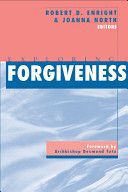
Pioneers in the study of forgiveness, Robert Enright and Joanna North have compiled a collection of twelve essays ranging from a first-person account of the mother of a murdered child to an assessment of the United States’ post-war reconciliations with Germany and Vietnam. This book explores forgiveness in interpersonal relationships, family relationships, the individual and society relationship, and international relations through the eyes of philosophers and educators as well as a psychologist, police chief-turned-minister, law professor, sociologist, psychiatrist, social worker, and theologian.
Malice that cannot speak its name, cold-blooded but secret hostility, impotent desire, hidden rancor and spite–all cluster at the center of envy. Envy clouds thought, writes Joseph Epstein, clobbers generosity, precludes any hope of serenity, and ends in shriveling the heart. Of the seven deadly sins, he concludes, only envy is no fun at all. Writing in a conversational, erudite, self-deprecating style that wears its learning lightly, Epstein takes us on a stimulating tour of the many faces of envy. He considers what great thinkers–such as John Rawls, Schopenhauer, and Nietzsche–have written about envy; distinguishes between envy, yearning, jealousy, resentment, and schadenfreude (“a hardy perennial in the weedy garden of sour emotions”); and catalogs the many things that are enviable, including wealth, beauty, power, talent, knowledge and wisdom, extraordinary good luck, and youth (or as the title of Epstein’s chapter on youth has it, “The Young, God Damn Them”). He looks at resentment in academia, where envy is mixed with snobbery, stirred by impotence, and played out against a background of cosmic injustice; and he offers a brilliant reading of Othello as a play more driven by Iago’s envy than Othello’s jealousy. He reveals that envy has a strong touch of malice behind it–the envious want to destroy the happiness of others. He suggests that envy of the astonishing success of Jews in Germany and Austria may have lurked behind the virulent anti-Semitism of the Nazis. As he proved in his best-selling Snobbery, Joseph Epstein has an unmatched ability to highlight our failings in a way that is thoughtful, provocative, and entertaining. If envy is no fun, Epstein’s Envy is truly a joy to read.
ما از اخلاق چه انتظاری داریم؟ این سوال شاید تاحدودی برای عموم مردم و یا متخصصان این رشته قابل پاسخ باشد؛ اینکه خوب بودن را به ما بیاموزد و در تنظیم روابط فردی م...

جشن کتاب تهران به ایستگاه سی و یکم رسیده است. حال و احوال نشر کتاب خوب نیست و باید فرهنگدوستان را به خرید و هدیه دادن کتاب ترغیب نمود. خانه اخلاقپژوهان جوان ب...

بنیاد کتابهای اخلاق اسلامی عمدتا پالایش جان از آلودگیها و آراستن آن به زیباییها است. اندیشه محوری این قبیل کتابها آن است که انسان فعلی آنی نیست که باید باشد...

-
0 Comments