Notice: تابع WP_Block_Type_Registry::register به طورنادرست فراخوانی شد. نامهای نوع بلوک نباید حروف بزرگ داشته باشند. لطفاً برای اطلاعات بیشتر، اشکال زدایی در وردپرس را مشاهده کنید. (این پیام در نگارش 5.0.0 افزوده شده است.) in /home/ethicsho/public_html/wp-includes/functions.php on line 5313
Warning: Use of undefined constant TDC_PATH_LEGACY - assumed 'TDC_PATH_LEGACY' (this will throw an Error in a future version of PHP) in /home/ethicsho/public_html/wp-content/plugins/td-composer/td-composer.php on line 109
Warning: Use of undefined constant TDSP_THEME_PATH - assumed 'TDSP_THEME_PATH' (this will throw an Error in a future version of PHP) in /home/ethicsho/public_html/wp-content/plugins/td-composer/td-composer.php on line 113 بایگانیهای Keith E. Yandell - خانه اخلاق پژوهان جوان Notice: Trying to access array offset on value of type bool in /home/ethicsho/public_html/wp-content/plugins/wp-ulike/inc/general-functions.php on line 807
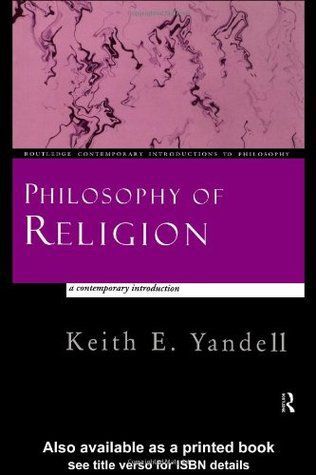
Gives students philosophical tools to think clearly about divisive moral issues faced today. Early chapters introduce moral theory, ethical relativism and objectivism, and classical ethical theories to provide a framework for understanding moral issues. Later chapters explore specific moral issues, such as cloning, suicide, abortion, the death penalty, and animal rights. This second edition contains four new chapters. Can be used as a stand-alone text, or with an anthology by the author. The author teaches philosophy at the US Military Academy in West Point, NY.
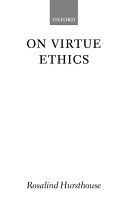
Virtue ethics is perhaps the most important development within late twentieth-century moral philosophy. Rosalind Hursthouse, who has made notable contributions to this development, now presents a full exposition and defence of her neo-Aristotelian version of virtue ethics. She shows how virtueethics can provide guidance for action, illuminate moral dilemmas, and bring out the moral significance of the emotions. Deliberately avoiding a combative stance, she finds less disagreement between Kantian and neo-Aristotelian approaches than is usual, and she offers the first account from a virtueethics perspective of acting ‘from a sense of duty’. She considers the question which character traits are virtues, and explores how answers to this question can be justified by appeal to facts about human nature. Written in a clear, engaging style which makes it accessible to non-specialists, OnVirtue Ethics will appeal to anyone with an interest in moral philosophy.
The diversity of topics discussed in this book reflects the breadth of Judith Jarvis Thomson’s philosophical work. Throughout her long career at MIT, Thomson’s straightforward approach and emphasis on problem-solving have shaped philosophy in significant ways. Some of the book’s contributions discuss specific moral and political issues such as abortion, self-defense, the rights and obligations of prospective fathers, and political campaign finance. Other contributions concern the foundations of moral theory, focusing on hedonism, virtue ethics, the nature of nonconsequentialism, and the objectivity of moral claims. Finally, contributions in metaphysics and epistemology discuss the existence of sets, the structures reflected in conditional statements, and the commitments of testimony.Contributors:Jonathan Bennett, Richard L. Cartwright, Joshua Cohen, N. Ann Davis, Catherine Z. Elgin, Gilbert Harman, Barbara Herman, Frances Myrna Kamm, Claudia Mills, T. M. Scanlon, Ernest Sosa.
The fundamental question of the ethics of belief is “What ought one to believe?” According to the traditional view of evidentialism, the strength of one’s beliefs should be proportionate to the evidence. Conventional ways of defending and challenging evidentialism rely on the idea that what one ought to believe is a matter of what it is rational, prudent, ethical, or personally fulfilling to believe. Common to all these approaches is that they look outside of belief itself to determine what one ought to believe. In this book Jonathan Adler offers a strengthened version of evidentialism, arguing that the ethics of belief should be rooted in the concept of belief—that evidentialism is belief’s own ethics. A key observation is that it is not merely that one ought not, but that one cannot, believe, for example, that the number of stars is even. The “cannot” represents a conceptual barrier, not just an inability. Therefore belief in defiance of one’s evidence (or evidentialism) is impossible. Adler addresses such questions as irrational beliefs, reasonableness, control over beliefs, and whether justifying beliefs requires a foundation. Although he treats the ethics of belief as a central topic in epistemology, his ideas also bear on rationality, argument and pragmatics, philosophy of religion, ethics, and social cognitive psychology.
ما از اخلاق چه انتظاری داریم؟ این سوال شاید تاحدودی برای عموم مردم و یا متخصصان این رشته قابل پاسخ باشد؛ اینکه خوب بودن را به ما بیاموزد و در تنظیم روابط فردی م...

جشن کتاب تهران به ایستگاه سی و یکم رسیده است. حال و احوال نشر کتاب خوب نیست و باید فرهنگدوستان را به خرید و هدیه دادن کتاب ترغیب نمود. خانه اخلاقپژوهان جوان ب...

بنیاد کتابهای اخلاق اسلامی عمدتا پالایش جان از آلودگیها و آراستن آن به زیباییها است. اندیشه محوری این قبیل کتابها آن است که انسان فعلی آنی نیست که باید باشد...

-
0 Comments