Notice: تابع WP_Block_Type_Registry::register به طورنادرست فراخوانی شد. نامهای نوع بلوک نباید حروف بزرگ داشته باشند. لطفاً برای اطلاعات بیشتر، اشکال زدایی در وردپرس را مشاهده کنید. (این پیام در نگارش 5.0.0 افزوده شده است.) in /home/ethicsho/public_html/wp-includes/functions.php on line 5313
Warning: Use of undefined constant TDC_PATH_LEGACY - assumed 'TDC_PATH_LEGACY' (this will throw an Error in a future version of PHP) in /home/ethicsho/public_html/wp-content/plugins/td-composer/td-composer.php on line 109
Warning: Use of undefined constant TDSP_THEME_PATH - assumed 'TDSP_THEME_PATH' (this will throw an Error in a future version of PHP) in /home/ethicsho/public_html/wp-content/plugins/td-composer/td-composer.php on line 113 بایگانیهای Karen Elizabeth Smith - خانه اخلاق پژوهان جوان Notice: Trying to access array offset on value of type bool in /home/ethicsho/public_html/wp-content/plugins/wp-ulike/inc/general-functions.php on line 807
This is the most comprehensive, and most comprehensively chilling, study of modern torture yet written. Darius Rejali, one of the world’s leading experts on torture, takes the reader from the late nineteenth century to the aftermath of Abu Ghraib, from slavery and the electric chair to electrotorture in American inner cities, and from French and British colonial prison cells and the Spanish-American War to the fields of Vietnam, the wars of the Middle East, and the new democracies of Latin America and Europe. As Rejali traces the development and application of one torture technique after another in these settings, he reaches startling conclusions. As the twentieth century progressed, he argues, democracies not only tortured, but set the international pace for torture. Dictatorships may have tortured more, and more indiscriminately, but the United States, Britain, and France pioneered and exported techniques that have become the lingua franca of modern torture: methods that leave no marks. Under the watchful eyes of reporters and human rights activists, low-level authorities in the world’s oldest democracies were the first to learn that to scar a victim was to advertise iniquity and invite scandal. Long before the CIA even existed, police and soldiers turned instead to “clean” techniques, such as torture by electricity, ice, water, noise, drugs, and stress positions. As democracy and human rights spread after World War II, so too did these methods. Rejali makes this troubling case in fluid, arresting prose and on the basis of unprecedented research–conducted in multiple languages and on several continents–begun years before most of us had ever heard of Osama bin Laden or Abu Ghraib. The author of a major study of Iranian torture, Rejali also tackles the controversial question of whether torture really works, answering the new apologists for torture point by point. A brave and disturbing book, this is the benchmark against which all future studies of modern torture will be measured.
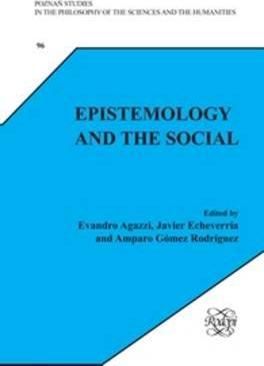
“Epistemology had to come to terms with “the social” on two different occasions. The first was represented by the dispute about the epistemological status of the “social” sciences, and in this case the already well established epistemology of the natural sciences seemed to have the right to dictate the conditions for a discipline to be a science. But the social sciences could successfully vindicate the legitimacy of their specific criteria for scientificity. More recently, the impact of social factors on the construction of our knowledge (including scientific knowledge) has reversed … the old position and promoted social inquiry to the role of a criterion for evaluating the purport of cognitive (including scientific) statements”–P. 4 of cover.
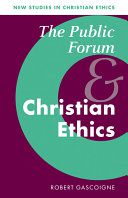
This book addresses the question of the communication of Christian ethics in the public forum of liberal, pluralist societies. Drawing on debates in philosophy, theology and sociological theory, it relates the problem of communication to fundamental questions about the nature of liberal societies and the identity of Christian faith and the Christian community. With particular emphasis on Kantian and neo-Kantian ethics, it explores the link between autonomy and community in liberal societies. The theology of communio, expressed in revealed Christian traditions, can reconcile autonomy and community. Any Christian attempt to communicate this vision must also reflect on Christianity’s own identity, especially the ways in which its own self-consciousness grows in critical interaction with secularity. In this light, Christian ethical communication is both a witness to a distinctive identity, founded in the revelation of the triune God, and a vision of universal human solidarity which can reconcile autonomy and community.
ما از اخلاق چه انتظاری داریم؟ این سوال شاید تاحدودی برای عموم مردم و یا متخصصان این رشته قابل پاسخ باشد؛ اینکه خوب بودن را به ما بیاموزد و در تنظیم روابط فردی م...

جشن کتاب تهران به ایستگاه سی و یکم رسیده است. حال و احوال نشر کتاب خوب نیست و باید فرهنگدوستان را به خرید و هدیه دادن کتاب ترغیب نمود. خانه اخلاقپژوهان جوان ب...

بنیاد کتابهای اخلاق اسلامی عمدتا پالایش جان از آلودگیها و آراستن آن به زیباییها است. اندیشه محوری این قبیل کتابها آن است که انسان فعلی آنی نیست که باید باشد...

-
0 Comments