Notice: تابع WP_Block_Type_Registry::register به طورنادرست فراخوانی شد. نامهای نوع بلوک نباید حروف بزرگ داشته باشند. لطفاً برای اطلاعات بیشتر، اشکال زدایی در وردپرس را مشاهده کنید. (این پیام در نگارش 5.0.0 افزوده شده است.) in /home/ethicsho/public_html/wp-includes/functions.php on line 5313
Warning: Use of undefined constant TDC_PATH_LEGACY - assumed 'TDC_PATH_LEGACY' (this will throw an Error in a future version of PHP) in /home/ethicsho/public_html/wp-content/plugins/td-composer/td-composer.php on line 109
Warning: Use of undefined constant TDSP_THEME_PATH - assumed 'TDSP_THEME_PATH' (this will throw an Error in a future version of PHP) in /home/ethicsho/public_html/wp-content/plugins/td-composer/td-composer.php on line 113 بایگانیهای Joy Palmer - خانه اخلاق پژوهان جوان Notice: Trying to access array offset on value of type bool in /home/ethicsho/public_html/wp-content/plugins/wp-ulike/inc/general-functions.php on line 807
Xiaohe Lu is Professor at the Institute of Philosophy and Executive Director of the Centre for Business Ethics, Shanghai Academy of Social Sciences. Georges Enderle is Arthur and Mary O’Neil Professor of International Business Ethics at the Mendoza College of Business, University of Notre Dame.
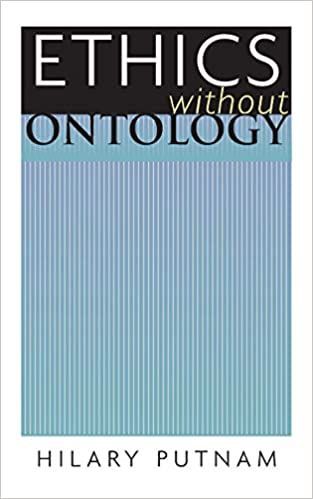
In this brief book one of the most distinguished living American philosophers takes up the question of whether ethical judgments can properly be considered objective–a question that has vexed philosophers over the past century. Looking at the efforts of philosophers from the Enlightenment through the twentieth century, Putnam traces the ways in which ethical problems arise in a historical context. Hilary Putnam’s central concern is ontology–indeed, the very idea of ontology as the division of philosophy concerned with what (ultimately) exists. Reviewing what he deems the disastrous consequences of ontology’s influence on analytic philosophy–in particular, the contortions it imposes upon debates about the objective of ethical judgments–Putnam proposes abandoning the very idea of ontology. He argues persuasively that the attempt to provide an ontological explanation of the objectivity of either mathematics or ethics is, in fact, an attempt to provide justifications that are extraneous to mathematics and ethics–and is thus deeply misguided.
The philosophy of Immanuel Kant is the watershed of modern thought, which irrevocably changed the landscape of the field and prepared the way for all the significant philosophical movements of the nineteenth and twentieth centuries. This volume, which complements The Cambridge Companion to Kant, covers every aspect of Kant’s philosophy, with a particular focus on his moral and political philosophy. It also provides detailed coverage of Kant’s historical context and of the enormous impact and influence that his work has had on the subsequent history of philosophy. The bibliography also offers extensive and organized coverage of both classical and recent books on Kant. This volume thus provides the broadest and deepest introduction currently available on Kant and his place in modern philosophy, making accessible the philosophical enterprise of Kant to those coming to his work for the first time.
There is a veritable gold rush mentality in the life science world as scientists, entrepreneurs and multinationals are staking claims to the ‘code of life’ embodied in the world’s current stock of plants, animals, microbes and human populations. In response, the communities that see themselves as the custodians of both that traditional knowledge and specific genetic resources have demanded greater recognition of their role in creating and conserving this resource, access to any resulting improvements and a share of the benefits arising from their patrimony. This has precipitated a widespread effort—in local communities, in the marketplace, in many developing and developed countries and at the talks in the Doha Round of the WTO—to reconcile the interests and concerns of the two opposing groups. This edited volume explores the legal, economic and political context for the debate about intellectual property rights for traditional knowledge and genetic resources and critically analyses the theory and practice of access and benefits sharing efforts around the world. The book also investigates the current flashpoints—the David and Goliath battle between Monsanto and Percy Schmeiser over farmers’ rights; the dispute over coexistence of GM and organic production; and the ownership and control of human genetic materials stored in human gene banks around the world. .
ما از اخلاق چه انتظاری داریم؟ این سوال شاید تاحدودی برای عموم مردم و یا متخصصان این رشته قابل پاسخ باشد؛ اینکه خوب بودن را به ما بیاموزد و در تنظیم روابط فردی م...

جشن کتاب تهران به ایستگاه سی و یکم رسیده است. حال و احوال نشر کتاب خوب نیست و باید فرهنگدوستان را به خرید و هدیه دادن کتاب ترغیب نمود. خانه اخلاقپژوهان جوان ب...

بنیاد کتابهای اخلاق اسلامی عمدتا پالایش جان از آلودگیها و آراستن آن به زیباییها است. اندیشه محوری این قبیل کتابها آن است که انسان فعلی آنی نیست که باید باشد...

-
0 Comments