Notice: تابع WP_Block_Type_Registry::register به طورنادرست فراخوانی شد. نامهای نوع بلوک نباید حروف بزرگ داشته باشند. لطفاً برای اطلاعات بیشتر، اشکال زدایی در وردپرس را مشاهده کنید. (این پیام در نگارش 5.0.0 افزوده شده است.) in /home/ethicsho/public_html/wp-includes/functions.php on line 5313
Warning: Use of undefined constant TDC_PATH_LEGACY - assumed 'TDC_PATH_LEGACY' (this will throw an Error in a future version of PHP) in /home/ethicsho/public_html/wp-content/plugins/td-composer/td-composer.php on line 109
Warning: Use of undefined constant TDSP_THEME_PATH - assumed 'TDSP_THEME_PATH' (this will throw an Error in a future version of PHP) in /home/ethicsho/public_html/wp-content/plugins/td-composer/td-composer.php on line 113 بایگانیهای Jonathan Bennett - خانه اخلاق پژوهان جوان Notice: Trying to access array offset on value of type bool in /home/ethicsho/public_html/wp-content/plugins/wp-ulike/inc/general-functions.php on line 807
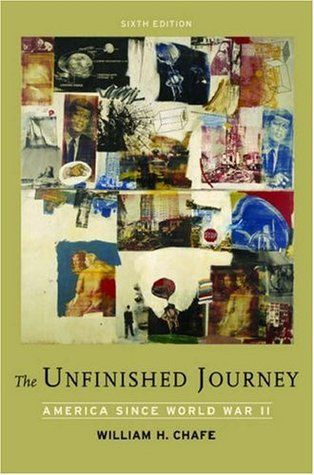
“This popular and classic text chronicles America’s roller-coaster journey through the decades since World War Two. Considering both the paradoxes and the possibilities of postwar America, William H. Chafe portrays the significant cultural and political themes that have colored our country’s past and present, including issues of race, class, gender, foreign policy, and economic and social reform. In this new edition, Chafe provides a nuanced yet unabashed assessment of George W. Bush’s presidency, covering his reelection, the saga of the Iraq War, and the administration’s response to the widespread devastation of Hurricane Katrina.”–BOOK JACKET.
In this book Uwe Steinhoff describes and explains the basic tenets of just war theory and gives a precise, succinct and highly critical account of its present status and of the most important and controversial current debates surrounding it. Rejecting certain in effect medieval assumptions of traditional just war theory and advancing a liberal outlook, Steinhoff argues that every single individual is a legitimate authority and has under certain circumstances the right to declare war on others or the state. He also argues that the just cause cannot be established independently of the other criteria of jus ad bellum (the justification of entering a war), except for right intention, which he interprets more leniently than the tradition does. Turning to jus in bello (which governs the conduct of a war) he criticizes the Doctrine of Double Effect and concludes that insofar as wars kill innocents, and be it as “collateral damage”, they cannot be just but at best justified as the lesser evil. Steinhoff gives particular attention to the question why soldiers, allegedly, are legitimate targets and civilians not. Discussing four approaches to the explanation of the difference he argues that the four principles underlying them all need to be taken into account and outlines how their weighing can proceed if applied to concrete cases. The resulting approach does not square the distinction between legitimate and illegitimate targets with the distinction between soldiers and civilians, which has extremely important consequences for the conduct of war. Finally, Steinhoff analyses the concept of terrorism and argues that some forms of “terrorism” are actually not terrorism at all and that even terrorism proper can under certain circumstances be justified.
This book takes a new approach to ethics by focusing on the kinds of dilemmas that confront people almost daily on the job. The author’s unique contribution is to meld philosophy with everyday decisionmaking, offering the reader a common sense approach to making ethical decisions. Mary Guy introduces ten core values which surround ethical dilemmas, demonstrating the way in which personnel can sensitize themselves to the values involved in a problem and reach a solution which maximizes the important values. Real-life case examples illustrate ethical dilemmas that involve personnel practices, organizing strategies, reporting functions, supervisory practices, whistleblowing, and more. Throughout, the author emphasizes the kinds of concerns which confront the vast majority of employees–from ambitious entry-level personnel to top executives. Realistic in tone, the discussion acknowledges the inevitable need to make compromises, showing how to optimize ethical values situations that arise on the job and for which no formal rules exist. In her introductory chapter, Guy defines ethics, clarifies the relationship between ethical behavior and morality, and presents the ten guiding values that serve as the foundation for ethical decisions. Turning to a focus on decisionmaking, she explores such issues as the theoretical framework for rational decisionmaking, rational decisionmaking in real life, the application of ethical analysis to decisionmaking, and the definition of ethical decisionmaking. The four subsequent chapters present case studies of problems that personnel commonly encounter. In each case, Guy examines the ethical issues involved, applies various scenarios for reaching an ethical decision, and demonstrates the tension that exists among ethical decisionmaking, coping with daily exigencies, and accommodating the preferences of stakeholders. The concluding chapter summarizes the relationship between ethics and decisionmaking and offers a prescription for ensuring ethical decisionmaking throughout the organization. Must reading for managers in business, government, and not-for-profit organizations, this book is also an excellent supplemental text for advanced undergraduate and graduate level courses in business and public administration.
Egalitarianism, the view that equality matters, attracts a great deal of attention amongst contemporary political theorists. And yet it has turned out to be surprisingly difficult to provide a fully satisfactory egalitarian theory. The cutting-edge articles in Egalitarianism move the debate forward. They are written by some of the leading political philosophers in the field.
ما از اخلاق چه انتظاری داریم؟ این سوال شاید تاحدودی برای عموم مردم و یا متخصصان این رشته قابل پاسخ باشد؛ اینکه خوب بودن را به ما بیاموزد و در تنظیم روابط فردی م...

جشن کتاب تهران به ایستگاه سی و یکم رسیده است. حال و احوال نشر کتاب خوب نیست و باید فرهنگدوستان را به خرید و هدیه دادن کتاب ترغیب نمود. خانه اخلاقپژوهان جوان ب...

بنیاد کتابهای اخلاق اسلامی عمدتا پالایش جان از آلودگیها و آراستن آن به زیباییها است. اندیشه محوری این قبیل کتابها آن است که انسان فعلی آنی نیست که باید باشد...

-
0 Comments