Notice: تابع WP_Block_Type_Registry::register به طورنادرست فراخوانی شد. نامهای نوع بلوک نباید حروف بزرگ داشته باشند. لطفاً برای اطلاعات بیشتر، اشکال زدایی در وردپرس را مشاهده کنید. (این پیام در نگارش 5.0.0 افزوده شده است.) in /home/ethicsho/public_html/wp-includes/functions.php on line 5313
Warning: Use of undefined constant TDC_PATH_LEGACY - assumed 'TDC_PATH_LEGACY' (this will throw an Error in a future version of PHP) in /home/ethicsho/public_html/wp-content/plugins/td-composer/td-composer.php on line 109
Warning: Use of undefined constant TDSP_THEME_PATH - assumed 'TDSP_THEME_PATH' (this will throw an Error in a future version of PHP) in /home/ethicsho/public_html/wp-content/plugins/td-composer/td-composer.php on line 113 بایگانیهای John Pynchon Holms - خانه اخلاق پژوهان جوان Notice: Trying to access array offset on value of type bool in /home/ethicsho/public_html/wp-content/plugins/wp-ulike/inc/general-functions.php on line 807
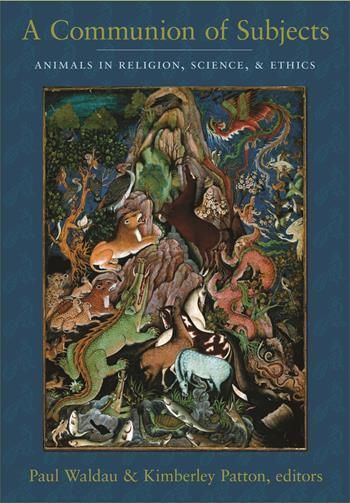
A Communion of Subjectsis the first comparative and interdisciplinary study of the conceptualization of animals in world religions. Scholars from a wide range of disciplines, including Thomas Berry (cultural history), Wendy Doniger (study of myth), Elizabeth Lawrence (veterinary medicine, ritual studies), Marc Bekoff (cognitive ethology), Marc Hauser (behavioral science), Steven Wise (animals and law), Peter Singer (animals and ethics), and Jane Goodall (primatology) consider how major religious traditions have incorporated animals into their belief systems, myths, rituals, and art. Their findings offer profound insights into humans’ relationships with animals and a deeper understanding of the social and ecological web in which we all live.Contributors examine Judaism, Christianity, Islam, Hinduism, Buddhism, Jainism, Daoism, Confucianism, African religions, traditions from ancient Egypt and early China, and Native American, indigenous Tibetan, and Australian Aboriginal traditions, among others. They explore issues such as animal consciousness, suffering, sacrifice, and stewardship in innovative methodological ways. They also address contemporary challenges relating to law, biotechnology, social justice, and the environment. By grappling with the nature and ideological features of various religious views, the contributors cast religious teachings and practices in a new light. They reveal how we either intentionally or inadvertently marginalize “others,” whether they are human or otherwise, reflecting on the ways in which we assign value to living beings.Though it is an ancient concern, the topic of “Religion and Animals” has yet to be systematically studied by modern scholars. This groundbreaking collection takes the first steps toward a meaningful analysis.
Book Summary of Classical Moralists: Selections Illustrating EthicsThis book is a history of ethics based upon selections from the original sources and upon translations of the authors themselves. The evolution of ethical thought is thereby revealed from Socrates to Martineau. Contents: Socrates; Plato; Aristotle; Zeno; Epicurus; Titus Lucretius Carus; Epictetus; Marcus Aurelius Antoninus; Plotinus; Saint Augustine; Peter Abelard; Thomas Abelard; Thomas Aquinas; Hugo Grotius; Thomas Hobbes; Ralph Cudworth; Henry More; Richard Cumberland; Baruch De Spinoza; Nicolas Malebranche; John Locke; Samuel Clarke; Third Earl of Shaftesbury; Benard De Mandeville; William Wollaston; Joseph Butler; Francis Hutcheson; David Hartley; David Hume; Adam Smith; Claude Adrien Helvetius; William Paley; Jeremy Bentham; Richard Price; Thomas Reid; Immanuel Kant; Johann Gottlieb; Georg Wilhelm Friedrich; Arthur Schopnehauer; Friedrich Eduard Beneke; John Stuart Mill; Herbert Spencer; Henry Sidgwick..
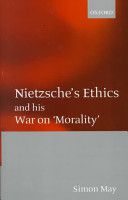
Nietzsche famously attacked traditional morality, and propounded a controversial ethics of ‘life-enhancement’. Simon May presents a radically new view of Nietzsche’s thought, which is shown to be both revolutionary and conservative, and to have much to offer us today after the demise of old values and the ‘death of God’.
From the preface: ” The materialist conception of history is not only important because it allows us to explain history better than has been done up to now, but also because it enables us to make history better than has been hitherto done. And the latter is more important than the former. From the progress of the practice our theoretical knowledge grows and in the progress of the practice our theoretical progress is proved. No world-conception has been in so high a degree a philosophy of deeds as the dialectical materialism. Not only upon research but upon deeds do we rely to show the superiority of our philosophy. ” Karl Kautsky (1854-1938), compiler of Karl Marx’s Theories of Surplus Value (1905-10), has been rightly considered the successor of Engels in the intellectual leadership of the Marxian School. Kautsky was the founder of Die Neue Zeit and a political leader of the German Social Democrats. He denounced both Germany’s aggression in World War I as well as the conduct of Russian Bolshevism after the 1917 Revolution. This book was originally published in 1906.
ما از اخلاق چه انتظاری داریم؟ این سوال شاید تاحدودی برای عموم مردم و یا متخصصان این رشته قابل پاسخ باشد؛ اینکه خوب بودن را به ما بیاموزد و در تنظیم روابط فردی م...

جشن کتاب تهران به ایستگاه سی و یکم رسیده است. حال و احوال نشر کتاب خوب نیست و باید فرهنگدوستان را به خرید و هدیه دادن کتاب ترغیب نمود. خانه اخلاقپژوهان جوان ب...

بنیاد کتابهای اخلاق اسلامی عمدتا پالایش جان از آلودگیها و آراستن آن به زیباییها است. اندیشه محوری این قبیل کتابها آن است که انسان فعلی آنی نیست که باید باشد...

-
0 Comments