Notice: تابع WP_Block_Type_Registry::register به طورنادرست فراخوانی شد. نامهای نوع بلوک نباید حروف بزرگ داشته باشند. لطفاً برای اطلاعات بیشتر، اشکال زدایی در وردپرس را مشاهده کنید. (این پیام در نگارش 5.0.0 افزوده شده است.) in /home/ethicsho/public_html/wp-includes/functions.php on line 5313
Warning: Use of undefined constant TDC_PATH_LEGACY - assumed 'TDC_PATH_LEGACY' (this will throw an Error in a future version of PHP) in /home/ethicsho/public_html/wp-content/plugins/td-composer/td-composer.php on line 109
Warning: Use of undefined constant TDSP_THEME_PATH - assumed 'TDSP_THEME_PATH' (this will throw an Error in a future version of PHP) in /home/ethicsho/public_html/wp-content/plugins/td-composer/td-composer.php on line 113 بایگانیهای John Marshall - خانه اخلاق پژوهان جوان Notice: Trying to access array offset on value of type bool in /home/ethicsho/public_html/wp-content/plugins/wp-ulike/inc/general-functions.php on line 807
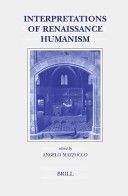
Authored by some of the most preeminent Renaissance scholars active today, the essays of this volume give fresh and illuminating analyses of important aspects of Renaissance humanism, such as the time and causes of its origin, its connection to the papal court and medieval traditions, its classical learning, its religious and literary dimensions, and its dramatis personae. Their interpretations are varied to the point of being contradictory. The essays bear the imprint of the work of the eminent scholars of the second half of the twentieth century, especially Kristeller’s, and demonstrate an awareness of the various modes of critical inquiry that have prevailed in recent years. As such they are an important exemplar of current scholarship on Renaissance humanism and are, therefore, indispensable to the scholar who wishes to explore this pivotal cultural movement. Book jacket.
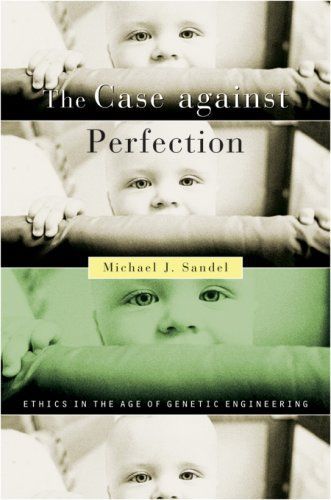
Producer: Heron & CraneBreakthroughs in genetics present us with a promise and a predicament. The promise is that we will soon be able to treat and prevent a host of debilitating diseases. The predicament is that our newfound genetic knowledge may enable us to manipulate our nature–to enhance our genetic traits and those of our children. Although most people find at least some forms of genetic engineering disquieting, it is not easy to articulate why. What is wrong with re-engineering our nature?The Case against Perfection explores these and other moral quandaries connected with the quest to perfect ourselves and our children. Michael Sandel argues that the pursuit of perfection is flawed for reasons that go beyond safety and fairness. The drive to enhance human nature through genetic technologies is objectionable because it represents a bid for mastery and dominion that fails to appreciate the gifted character of human powers and achievements. Carrying us beyond familiar terms of political discourse, this book contends that the genetic revolution will change the way philosophers discuss ethics and will force spiritual questions back onto the political agenda.In order to grapple with the ethics of enhancement, we need to confront questions largely lost from view in the modern world. Since these questions verge on theology, modern philosophers and political theorists tend to shrink from them. But our new powers of biotechnology make these questions unavoidable. Addressing them is the task of this book, by one of America’s preeminent moral and political thinkers.
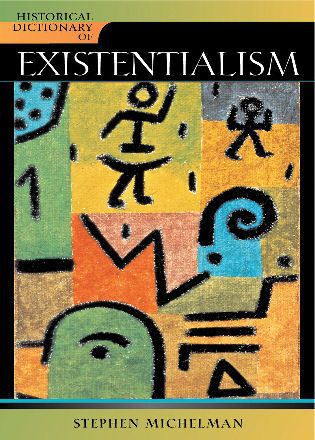
Existentialism is the philosophy of human existence, which flourished first in Germany in the 1920s and 1930s and then in France in the decade following the end of World War II. The operative meaning of existentialism here is thus broader than it was circa 1945 when the term first gained currency in France as a label for the philosophy of Jean-Paul Sartre. However, it is considerably less broad than the view proposed by commentators in the 1950s and 1960s who, in an attempt to overcome Sartre’s hegemony, discovered the seeds of existentialism far and wide: in Shakespeare, Saint Augustine, and the Old Testament prophets. In this dictionary, existentialism is understood as a decidedly 20th-century phenomenon, though with roots in the 19th century. Effort has been made to understand the philosophy of existentialism, as all philosophies should be understood, as part of an ongoing intellectual tradition: an evolving history of problems, concepts, and arguments. The A to Z of Existentialism explains the central claims of existentialist philosophy and the contexts in which it developed into one of the most influential intellectual trends of the 20th century. This is done through a chronology, an introductory essay, a bibliography, and more than 300 cross-referenced dictionary entries offering clear, accessible accounts of the life and thought of major existentialists like Jean-Paul Sartre, Martin Heidegger, Martin Buber, Karl Jaspers, Gabriel Marcel, Simone de Beauvoir, Albert Camus, and Maurice Merleau-Ponty, as well as thinkers influential to its development such as Wilhelm Dilthey, Henri Bergson, Edmund Husserl, and Max Scheler. This book affords readers an integrated, critical, and historically-sensitive understanding of this important philosophical movement.
ما از اخلاق چه انتظاری داریم؟ این سوال شاید تاحدودی برای عموم مردم و یا متخصصان این رشته قابل پاسخ باشد؛ اینکه خوب بودن را به ما بیاموزد و در تنظیم روابط فردی م...

جشن کتاب تهران به ایستگاه سی و یکم رسیده است. حال و احوال نشر کتاب خوب نیست و باید فرهنگدوستان را به خرید و هدیه دادن کتاب ترغیب نمود. خانه اخلاقپژوهان جوان ب...

بنیاد کتابهای اخلاق اسلامی عمدتا پالایش جان از آلودگیها و آراستن آن به زیباییها است. اندیشه محوری این قبیل کتابها آن است که انسان فعلی آنی نیست که باید باشد...

-
0 Comments