Notice: تابع WP_Block_Type_Registry::register به طورنادرست فراخوانی شد. نامهای نوع بلوک نباید حروف بزرگ داشته باشند. لطفاً برای اطلاعات بیشتر، اشکال زدایی در وردپرس را مشاهده کنید. (این پیام در نگارش 5.0.0 افزوده شده است.) in /home/ethicsho/public_html/wp-includes/functions.php on line 5313
Warning: Use of undefined constant TDC_PATH_LEGACY - assumed 'TDC_PATH_LEGACY' (this will throw an Error in a future version of PHP) in /home/ethicsho/public_html/wp-content/plugins/td-composer/td-composer.php on line 109
Warning: Use of undefined constant TDSP_THEME_PATH - assumed 'TDSP_THEME_PATH' (this will throw an Error in a future version of PHP) in /home/ethicsho/public_html/wp-content/plugins/td-composer/td-composer.php on line 113 بایگانیهای John D. Caputo - خانه اخلاق پژوهان جوان Notice: Trying to access array offset on value of type bool in /home/ethicsho/public_html/wp-content/plugins/wp-ulike/inc/general-functions.php on line 807
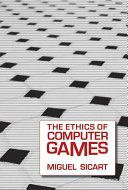
Despite the emergence of computer games as a dominant cultural industry (and the accompanying emergence of computer games as the subject of scholarly research), we know little or nothing about the ethics of computer games. Considerations of the morality of computer games seldom go beyond intermittent portrayals of them in the mass media as training devices for teenage serial killers. In this first scholarly exploration of the subject, Miguel Sicart addresses broader issues about the ethics of games, the ethics of playing the games, and the ethical responsibilities of game designers. He argues that computer games are ethical objects, that computer game players are ethical agents, and that the ethics of computer games should be seen as a complex network of responsibilities and moral duties. Players should not be considered passive amoral creatures; they reflect, relate, and create with ethical minds. The games they play are ethical systems, with rules that create gameworlds with values at play.Drawing on concepts from philosophy and game studies, Sicart proposes a framework for analyzing the ethics of computer games as both designed objects and player experiences. After presenting his core theoretical arguments and offering a general theory for understanding computer game ethics, Sicart offers case studies examining single-player games (using Bioshock as an example), multiplayer games (illustrated by Defcon), and online gameworlds (illustrated by World of Warcraft) from an ethical perspective. He explores issues raised by unethical content in computer games and its possible effect on players and offers a synthesis of design theory and ethics that could be used as both analytical tool and inspiration in the creation of ethical gameplay.
In The Ethics of Romanticism Laurence Lockridge vigorously revives ethical criticism and at the same time brings to light the Romantics’ profound engagement with ethical questions. He argues that a will to value is the pervasive motive of Romantic writers from Blake, Wordsworth, Coleridge and De Quincey to Shelley, Hazlitt, Keats and Byron. They articulate a compelling ethics that has had a significant influence on modern thought. Yet its character has never before been systematically explored within the larger contexts of European thought. Lockridge argues that a focus on the ethical dimension of literature is the single most powerful strategy for structuring a writer’s work as a whole, and that it can even prove congenial. He gives original, interrelated readings of the eight major British Romantic writers. In discussing the place of ethical criticism in modern letters, he qualifies or refutes opposing views – conservative, Marxist, and deconstructive. His book gives strong evidence of one direction criticism might fruitfully take in future years.
“The concept of autonomy is one of Kant’s central legacies for contemporary moral thought. We often invoke autonomy as both a moral ideal and a human right, especially a right to determine oneself independently of foreign determinants; indeed, to violate a person’s autonomy is considered to be a serious moral offence. Yet while contemporary philosophy claims Kant as the originator of its notion of autonomy, Kant’s own conception of the term seems to differ in important respects from our present-day interpretation. Kant on Moral Autonomy brings together a distinguished group of scholars who explore the following questions: what is Kant’s conception of autonomy? What is its history and its influence on contemporary conceptions? And what is its moral significance? Their essays will be of interest both to scholars and students working on Kantian moral philosophy and to anyone interested in the subject of autonomy”–
ما از اخلاق چه انتظاری داریم؟ این سوال شاید تاحدودی برای عموم مردم و یا متخصصان این رشته قابل پاسخ باشد؛ اینکه خوب بودن را به ما بیاموزد و در تنظیم روابط فردی م...

جشن کتاب تهران به ایستگاه سی و یکم رسیده است. حال و احوال نشر کتاب خوب نیست و باید فرهنگدوستان را به خرید و هدیه دادن کتاب ترغیب نمود. خانه اخلاقپژوهان جوان ب...

بنیاد کتابهای اخلاق اسلامی عمدتا پالایش جان از آلودگیها و آراستن آن به زیباییها است. اندیشه محوری این قبیل کتابها آن است که انسان فعلی آنی نیست که باید باشد...

-
0 Comments