Notice: تابع WP_Block_Type_Registry::register به طورنادرست فراخوانی شد. نامهای نوع بلوک نباید حروف بزرگ داشته باشند. لطفاً برای اطلاعات بیشتر، اشکال زدایی در وردپرس را مشاهده کنید. (این پیام در نگارش 5.0.0 افزوده شده است.) in /home/ethicsho/public_html/wp-includes/functions.php on line 5313
Warning: Use of undefined constant TDC_PATH_LEGACY - assumed 'TDC_PATH_LEGACY' (this will throw an Error in a future version of PHP) in /home/ethicsho/public_html/wp-content/plugins/td-composer/td-composer.php on line 109
Warning: Use of undefined constant TDSP_THEME_PATH - assumed 'TDSP_THEME_PATH' (this will throw an Error in a future version of PHP) in /home/ethicsho/public_html/wp-content/plugins/td-composer/td-composer.php on line 113 بایگانیهای Jill Scott - خانه اخلاق پژوهان جوان Notice: Trying to access array offset on value of type bool in /home/ethicsho/public_html/wp-content/plugins/wp-ulike/inc/general-functions.php on line 807
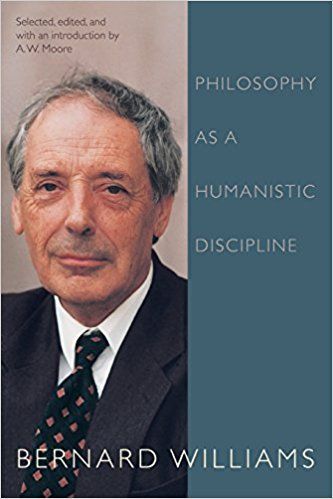
What can–and what can’t–philosophy do? What are its ethical risks–and its possible rewards? How does it differ from science? In Philosophy as a Humanistic Discipline, Bernard Williams addresses these questions and presents a striking vision of philosophy as fundamentally different from science in its aims and methods even though there is still in philosophy “something that counts as getting it right.” Written with his distinctive combination of rigor, imagination, depth, and humanism, the book amply demonstrates why Williams was one of the greatest philosophers of the twentieth century. Spanning his career from his first publication to one of his last lectures, the book’s previously unpublished or uncollected essays address metaphysics, epistemology, and ethics, as well as the scope and limits of philosophy itself. The essays are unified by Williams’s constant concern that philosophy maintain contact with the human problems that animate it in the first place. As the book’s editor, A. W. Moore, writes in his introduction, the title essay is “a kind of manifesto for Williams’s conception of his own life’s work.” It is where he most directly asks “what philosophy can and cannot contribute to the project of making sense of things”–answering that what philosophy can best help make sense of is “being human.”Philosophy as a Humanistic Discipline is one of three posthumous books by Williams to be published by Princeton University Press. In the Beginning Was the Deed: Realism and Moralism in Political Argument was published in the fall of 2005. The Sense of the Past: Essays in the History of Philosophy is being published shortly after the present volume.
Thomas Aquinas is one of the foremost thinkers in Western philosophy and Christian scholarship, recognized as a significant voice in both theological discussions and secular philosophical debates. Alongside a revival of interest in Thomism in philosophy, scholars have realized its relevance when addressing certain contemporary issues in bioethics. This book offers a rigorous interpretation of Aquinas’s metaphysics and ethical thought, and highlights its significance to questions in bioethics. Jason T. Eberl applies Aquinas’s views on the seminal topics of human nature and morality to key questions in bioethics at the margins of human life – questions which are currently contested in the academia, politics and the media such as: * When does a human person’s life begin? How should we define and clinically determine a person’s death? * Is abortion ever morally permissible? How should we resolve the conflict between the potential benefits of embryonic stem cell research and the lives ofhuman embryos? * Does cloning involve a misuse of human ingenuity and technology? * What forms of treatment are appropriate for irreversibly comatose patients? How should we care for patients who experience unbearable suffering as they approach the end of life? * What ethical mandates and concerns underlie the practice of organ donation? Thomistic Principles and Bioethicspresents a significant philosophical viewpoint which should motivate further dialogue amongst religious and secular arenas of inquiry concerning such complex issues of both individual and public concern. It will be illuminating reading for scholars, postgraduate and research students of philosophy, metaphysics, ethics, bioethics and moral theology.
What would stoic ethics be like today if stoicism had survived as a systematic approach to ethical theory, if it had coped successfully with the challenges of modern philosophy and experimental science? A New Stoicism proposes an answer to that question, offered from within the stoic tradition but without the metaphysical and psychological assumptions that modem philosophy and science have abandoned. Lawrence Becker argues that a secular version of the stoic ethical project, based on contemporary cosmology and developmental psychology; provides the basis for a sophisticated form of ethics naturalism, in which virtually all the hard doctrines of the ancient Stoics can be clearly restated and defended.”From the beginning to the end of this compact but lucid book, Becker skillfully brings to life both the arguments and the intuitive appeal of stoicism…. In its essentials (the new stoicism is recognizable, with its particularly astringent rational charm enhanced by Becker’s focused and self-disciplined argumentation.
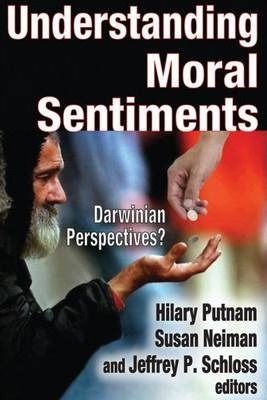
This volume brings together leading scholars to examine Darwinian perspectives on morality from widely ranging disciplines: evolutionary biology, anthropology, psychology, philosophy, and theology. They bring not only varied expertise, but also contrasting judgments about which, and to what extent, differing evolutionary accounts explain morality. They also consider the implications of these explanations for a range of religious and non-religious moral traditions. The book first surveys scientific understandings of morality. Chapters by Joan Silk and Christopher Boehm ask what primatology and anthropology tell us about moral origins. Daniel Batson and Stephen Pinker provide contrasting accounts of how evolution shapes moral psychology, and Jeffrey Schloss assesses a range of biological proposals for morality and altruism. Turning to philosophical issues, Martha Nussbaum argues that recognizing our animal nature does not threaten morality. Stephen Pope and Timothy Jackson explore how Darwinian accounts of moral goodness both enrich and require understandings outside the sciences. Hilary Putnam and Susan Neiman ask whether Darwin is truly useful for helping us to understand what morality actually is and how it functions. The book is a balanced effort to assess the scientific merits and philosophical significance of emerging Darwinian perspectives on morality. how Darwinian accounts of moral goodness both enrich and require understandings outside the sciences. Hilary Putnam and Susan Neiman ask whether Darwin is truly useful for helping us to understand what morality actually is and how it functions. The book is a balanced effort to assess the scientific merits and philosophical significance of emerging Darwinian perspectives on morality.
ما از اخلاق چه انتظاری داریم؟ این سوال شاید تاحدودی برای عموم مردم و یا متخصصان این رشته قابل پاسخ باشد؛ اینکه خوب بودن را به ما بیاموزد و در تنظیم روابط فردی م...

جشن کتاب تهران به ایستگاه سی و یکم رسیده است. حال و احوال نشر کتاب خوب نیست و باید فرهنگدوستان را به خرید و هدیه دادن کتاب ترغیب نمود. خانه اخلاقپژوهان جوان ب...

بنیاد کتابهای اخلاق اسلامی عمدتا پالایش جان از آلودگیها و آراستن آن به زیباییها است. اندیشه محوری این قبیل کتابها آن است که انسان فعلی آنی نیست که باید باشد...

-
0 Comments