Notice: تابع WP_Block_Type_Registry::register به طورنادرست فراخوانی شد. نامهای نوع بلوک نباید حروف بزرگ داشته باشند. لطفاً برای اطلاعات بیشتر، اشکال زدایی در وردپرس را مشاهده کنید. (این پیام در نگارش 5.0.0 افزوده شده است.) in /home/ethicsho/public_html/wp-includes/functions.php on line 5313
Warning: Use of undefined constant TDC_PATH_LEGACY - assumed 'TDC_PATH_LEGACY' (this will throw an Error in a future version of PHP) in /home/ethicsho/public_html/wp-content/plugins/td-composer/td-composer.php on line 109
Warning: Use of undefined constant TDSP_THEME_PATH - assumed 'TDSP_THEME_PATH' (this will throw an Error in a future version of PHP) in /home/ethicsho/public_html/wp-content/plugins/td-composer/td-composer.php on line 113 بایگانیهای Jerry Evensky - خانه اخلاق پژوهان جوان Notice: Trying to access array offset on value of type bool in /home/ethicsho/public_html/wp-content/plugins/wp-ulike/inc/general-functions.php on line 807
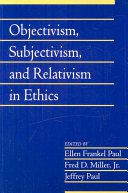
Do we desire things because they are good, or are they good because we desire them? Objectivists answer that we desire things because they are good; subjectivists answer that things are good because we desire them. Further, does it make sense to account for moral disagreement by claiming, as the moral relativist does, that something might be good for one person but not for another? Some essays in this book consider whether objective moral truths can be grounded in an understanding of the nature of human beings as rational and social animals. Some discuss the ethical theories of historical figures-Aristotle, Aquinas, or Kant-or offer critical assessments of the work of recent and contemporary theorists-such as Moore, Putnam, Ayn Rand, Philippa Foot, and Rosalind Hursthouse. Other essays ask whether moral principles and values can be constructed through a process of practical reasoning or deliberation. Still others consider what the phenomenology of our moral experiences can reveal about moral objectivity.
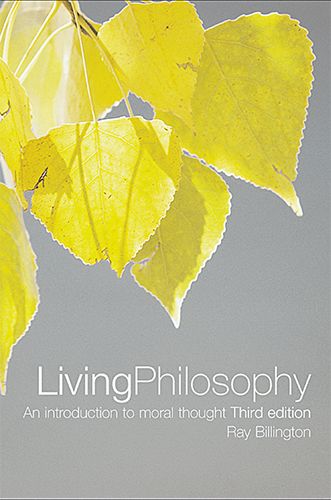
Living Philosophy: An Introduction to Moral Thought, third editionis a thoroughly revised and updated version of its highly successful and popular predecessor. Incorporating several brand new case studies and discussion points, the book introduces central questions in ethical theory to the student and assumes no previous knowledge of philosophy. Each chapter deals with a particular ethical issue and has an accompanying case study designed to encourage discussion. New topics raised include genetically modified organisms (GMO), environmental ethics, bioethics and the human genome, as well as a new chapter on religious and cultural relativism in the light of September 11th. Ray Billington’s style is at once refreshing and honest and his approach to the subject is always clear. The coverage of the book is tailored for any introductory course in ethics.
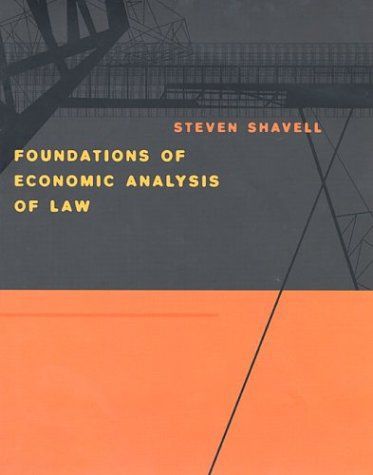
What effects do laws have? Do individuals drive more cautiously, clear ice from sidewalks more diligently, and commit fewer crimes because of the threat of legal sanctions? Do corporations pollute less, market safer products, and obey contracts to avoid suit? And given the effects of laws, which are socially best? Such questions about the influence and desirability of laws have been investigated by legal scholars and economists in a new, rigorous, and systematic manner since the 1970s. Their approach, which is called economic, is widely considered to be intellectually compelling and to have revolutionized thinking about the law. In this book Steven Shavell provides an in-depth analysis and synthesis of the economic approach to the building blocks of our legal system, namely, property law, tort law, contract law, and criminal law. He also examines the litigation process as well as welfare economics and morality. Aimed at a broad audience, this book requires neither a legal background nor technical economics or mathematics to understand it. Because of its breadth, analytical clarity, and general accessibility, it is likely to serve as a definitive work in the economic analysis of law.
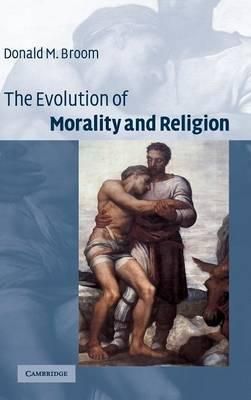
Accepted codes of conduct and established religions are features of human societies throughout the world. Why should this be? In this book, biologist Donald Broom argues that these aspects of human culture have evolved as a consequence of natural selection; that morally acceptable behaviour benefits the humans and other animals and that a principal function of religion is to underpin and encourage such behaviour. The author provides biological insights drawn especially from work on animal behaviour and presents ideas and information from the fields of philosophy and theology to produce a thought-provoking, interdisciplinary treatment. Scientists who read this book will gain an appreciation of the wider literature on morality and religion, and non-scientists will benefit from the author’s extensive knowledge of the biological mechanisms underlying the behaviour of humans and other social animals.
ما از اخلاق چه انتظاری داریم؟ این سوال شاید تاحدودی برای عموم مردم و یا متخصصان این رشته قابل پاسخ باشد؛ اینکه خوب بودن را به ما بیاموزد و در تنظیم روابط فردی م...

جشن کتاب تهران به ایستگاه سی و یکم رسیده است. حال و احوال نشر کتاب خوب نیست و باید فرهنگدوستان را به خرید و هدیه دادن کتاب ترغیب نمود. خانه اخلاقپژوهان جوان ب...

بنیاد کتابهای اخلاق اسلامی عمدتا پالایش جان از آلودگیها و آراستن آن به زیباییها است. اندیشه محوری این قبیل کتابها آن است که انسان فعلی آنی نیست که باید باشد...

-
0 Comments