
Notice: تابع WP_Block_Type_Registry::register به طورنادرست فراخوانی شد. نامهای نوع بلوک نباید حروف بزرگ داشته باشند. لطفاً برای اطلاعات بیشتر، اشکال زدایی در وردپرس را مشاهده کنید. (این پیام در نگارش 5.0.0 افزوده شده است.) in /home/ethicsho/public_html/wp-includes/functions.php on line 5313
Warning: Use of undefined constant TDC_PATH_LEGACY - assumed 'TDC_PATH_LEGACY' (this will throw an Error in a future version of PHP) in /home/ethicsho/public_html/wp-content/plugins/td-composer/td-composer.php on line 109
Warning: Use of undefined constant TDSP_THEME_PATH - assumed 'TDSP_THEME_PATH' (this will throw an Error in a future version of PHP) in /home/ethicsho/public_html/wp-content/plugins/td-composer/td-composer.php on line 113 بایگانیهای Jean Kazez - خانه اخلاق پژوهان جوان Notice: Trying to access array offset on value of type bool in /home/ethicsho/public_html/wp-content/plugins/wp-ulike/inc/general-functions.php on line 807
We live in a ‘bimoral’ society, in which people govern their lives by two contrasting sets of principles. On the one hand there are the principles associated with traditional morality. Although these allow a modicum of self-interest, their emphasis is on our duties and obligations to others: to treat people honestly and with respect, to treat them fairly and without prejudice, to help and are for them when needed, and ultimately, to put their needs above their own. On the other hand there are the principles associated with the entrepreneurial self-interest. These also impose obligations, but of a much more limited kind. Their emphasis is competitive rather than cooperative: to advance our own interests rather than to meet the needs of others. Both sets of principles have always been present in society but in recent years, traditional moral authorities have lost much of their force and the morality of self-interest has acquired a much greater social legitimacy, over a much wider field of behavior, than ever before. The result of this is that in many situations it is no longer at all apparent which set of principles should take precedence. In this book, John Hendry traces the cultural and historical origins of the ‘bimoral’ society have also led to new, more flexible forms of organizing, which have released people’s entrepreneurial energies and significantly enhanced the creative capacities of business. Working within these organizations, however is fraught with moral tensions as obligations and self-interest conflict and managers are pulled in all sorts of different directions. Managing them successfully poses major new challenges of leadership, and ‘moral’ management, as the technical problem-solving that previously characterized managerial work is increasingly accomplished by technology and market mechanisms. The key role of management becomes the political and moral one of determining purposes and priorities, reconciling divergent interests, and nurturing trust in interpersonal relationships. Exploring these tensions and challenges, Hendry identifies new issues of contemporary management and puts recognized issues into context. He also explores the challenges posed for a post-traditional society as it seeks to regulate and govern an increasingly powerful and global business sector.
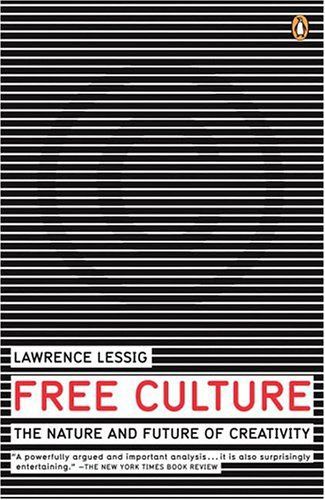
Lawrence Lessig, the most important thinker on intellectual property in the Internet era (The New Yorker), masterfully argues that never before in human history has the power to control creative progress been so concentrated in the hands of the powerful few, the so-called Big Media. Never before have the cultural powers- that-be been able to exert such control over what we can and cant do with the culture around us. Our society defends free markets and free speech; why then does it permit such top-down control? To lose our long tradition of free culture, Lawrence Lessig shows us, is to lose our freedom to create, our freedom to build, and, ultimately, our freedom to imagine.
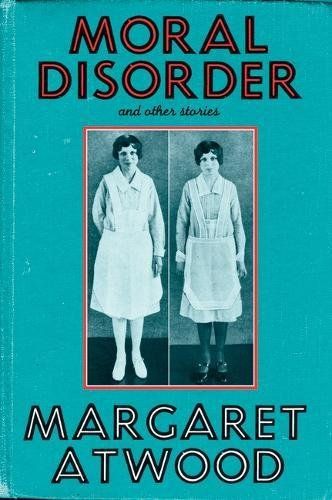
Margaret Atwood has frequently been cited as one of the foremost writers of our time. Moral Disorder, her new work of fiction, could be seen as a collection of ten stories that is almost a novel … or a novel broken up into ten stories. It resembles a photograph album – a series of clearly observed moments that trace the course of a life, and the lives intertwined with it – those of parents, siblings, children, friends, enemies, teachers and even animals. And as in a photograph album, times change; every decade is here, from the 1930s through the 50s, 60s and 70s to the present day. The settings are equally varied: large cities, suburbs, farms, northern forests. The first story, ‘The Bad News,’ is set in the present, as a couple no longer young situate themselves in a larger world no longer safe. Then the narrative switches time, as the central character moves through childhood and adolescence, in ‘The Art of Cooking and Serving’, ‘The Headless Horseman’ and ‘My Last Duchess’. We follow her into young adulthood in ‘The Other Place’, and then through a complex relationship, traced in three of the stories – ‘Monopoly’, ‘Moral Disorder’ and ‘The Entities’. The last two stories, ‘The Labrador Fiasco’ and ‘The Boys at the Lab’, deal with the heartbreaking old age of parents, but circle back to childhood again, to complete the cycle. By turns funny, moving, lyrical, incisive, tragic, earthy, shocking and deeply personal, Moral Disorder displays Atwood’s celebrated storytelling gifts and inimitable style to their best advantage. As the New York Times has said, ‘Atwood has complete access to her people’s emotional histories, complete understanding of their hearts and imaginations.’
There is no other book like this one. Building Moral Communities fills a wide gap in the research literature on effective teaching strategies to build better social skills, conflict management competence, and deep understanding of history, literature, and social interactions and organization. Despite pleas for the infusion of more drama in classroom instruction, there is far too little authority in the form of methodologically sound and convincing research to back up the claims of drama specialists. This book is for those looking for that authority: researchers, advocates, teachers, policy makers, and doctoral students who want to look at responsible citizens. College teachers of such courses as social foundations of education, educational drama and the arts, drama across the curriculum, creative approaches to curriculum, current research method alternatives, instructional strategies, social policy issues in education, and character education will find this a valuable textbook. They will also find the descriptions of drama’s use in adult classes informative and useful. Although the focus of this book is on the effects of drama, teachers of all levels and subjects will find the rich and detailed descriptions of drama in action an illuminating guide for their own practice.
ما از اخلاق چه انتظاری داریم؟ این سوال شاید تاحدودی برای عموم مردم و یا متخصصان این رشته قابل پاسخ باشد؛ اینکه خوب بودن را به ما بیاموزد و در تنظیم روابط فردی م...

جشن کتاب تهران به ایستگاه سی و یکم رسیده است. حال و احوال نشر کتاب خوب نیست و باید فرهنگدوستان را به خرید و هدیه دادن کتاب ترغیب نمود. خانه اخلاقپژوهان جوان ب...

بنیاد کتابهای اخلاق اسلامی عمدتا پالایش جان از آلودگیها و آراستن آن به زیباییها است. اندیشه محوری این قبیل کتابها آن است که انسان فعلی آنی نیست که باید باشد...

-
0 Comments