Notice: تابع WP_Block_Type_Registry::register به طورنادرست فراخوانی شد. نامهای نوع بلوک نباید حروف بزرگ داشته باشند. لطفاً برای اطلاعات بیشتر، اشکال زدایی در وردپرس را مشاهده کنید. (این پیام در نگارش 5.0.0 افزوده شده است.) in /home/ethicsho/public_html/wp-includes/functions.php on line 5313
Warning: Use of undefined constant TDC_PATH_LEGACY - assumed 'TDC_PATH_LEGACY' (this will throw an Error in a future version of PHP) in /home/ethicsho/public_html/wp-content/plugins/td-composer/td-composer.php on line 109
Warning: Use of undefined constant TDSP_THEME_PATH - assumed 'TDSP_THEME_PATH' (this will throw an Error in a future version of PHP) in /home/ethicsho/public_html/wp-content/plugins/td-composer/td-composer.php on line 113 بایگانیهای James F. Keenan - خانه اخلاق پژوهان جوان Notice: Trying to access array offset on value of type bool in /home/ethicsho/public_html/wp-content/plugins/wp-ulike/inc/general-functions.php on line 807
This book comes against the unchallenged methods in medicine, such as “evidence-based medicine,” which claim to be, but often are not, scientific. It completes medical care by adding the comprehensive humanistic perspectives and philosophy of medicine.No specific or absolute recommendations are given regarding medical treatment, moral approaches, or legal advice. Given rather is discussion about each issue involved and the strongest arguments indicated. Each argument is subject to further critical analysis. This is the same position as with any philosophical, medical or scientific view.The argument that decision-making in medicine is inadequate unless grounded on a philosophy of medicine is not meant to include all of philosophy and every philosopher. On the contrary, it includes only sound, practical and humanistic philosophy and philosophers who are creative and critical thinkers and who have concerned themselves with the topics relevant to medicine. These would be those philosophers who engage in practical philosophy, such as the pragmatists, humanists, naturalists, and ordinary-language philosophers.A new definition of our own philosophy of life emerges and it is necessary to have one. Good lifestyle no longer means just abstaining from cigarettes, alcohol and getting exercise. It also means living a holistic life, which includes all of one’s thinking, personality and actions.This book also includes new ways of thinking. In this regard the “Metaphorical Method” is explained, used, and exemplified in depth, for example in the chapters on care, egoism and altruism, letting die, etc.
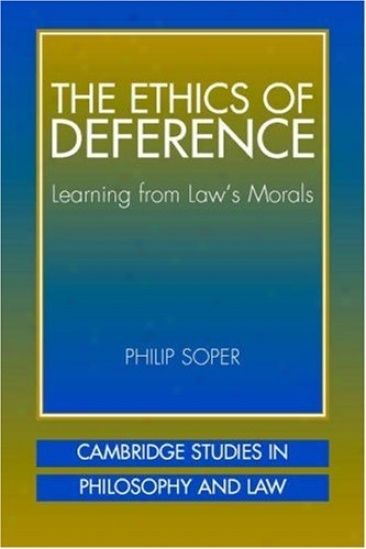
Do citizens have an obligation to obey the law? This book differs from standard approaches by shifting from the language of obedience (orders) to that of deference (normative judgments). The popular view that law claims authority but does not have it is here reversed on both counts: Law does not claim authority but has it. Though the focus is on political obligation, the author approaches that issue indirectly by first developing a more general account of when deference is due to the view of others. Two standard practices that political theorists often consider in exploring the question of political obligation – fair-play and promise-keeping – can themselves be seen as examples of a duty of deference. In this respect the book defends a more general theory of ethics whose scope extends beyond the question of political obligation to questions of duty in the case of law, promises, fair play and friendship.
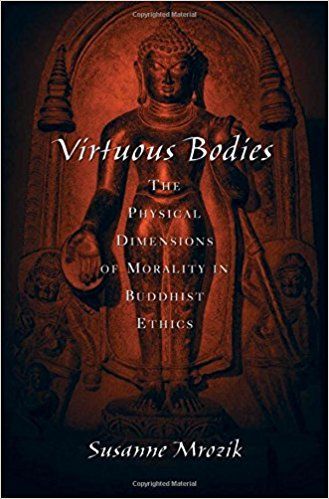
Virtuous Bodies breaks new ground in the field of Buddhist ethics by investigating the diverse roles bodies play in ethical development. Traditionally, Buddhists assumed a close connection between body and morality. Thus Buddhist literature contains descriptions of living beings that stink with sin, are disfigured by vices, or are perfumed and adorned with virtues. Taking an influential early medieval Indian Mahayana Buddhist text-Santideva’s Compendium of Training (Siksasamuccaya)-as a case study, Susanne Mrozik demonstrates that Buddhists regarded ethical development as a process of physical and moral transformation. Mrozik chooses The Compendium of Training because it quotes from over one hundred Buddhist scriptures, allowing her to reveal a broader Buddhist interest in the ethical significance of bodies. The text is a training manual for bodhisattvas, especially monastic bodhisattvas. In it, bodies function as markers of, and conditions for, one’s own ethical development. Most strikingly, bodies also function as instruments for the ethical development of others. When living beings come into contact with the virtuous bodies of bodhisattvas, they are transformed physically and morally for the better. Virtuous Bodies explores both the centrality of bodies to the bodhisattva ideal and the corporeal specificity of that ideal. Arguing that the bodhisattva ideal is an embodied ethical ideal, Mrozik poses an array of fascinating questions: What does virtue look like? What kinds of physical features constitute virtuous bodies? What kinds of bodies have virtuous effects on others? Drawing on a range of contemporary theorists, this book engages in a feminist hermeneutics of recovery and suspicion in order to explore the ethical resources Buddhism offers to scholars and religious practitioners interested in the embodied nature of ethical ideals.
ما از اخلاق چه انتظاری داریم؟ این سوال شاید تاحدودی برای عموم مردم و یا متخصصان این رشته قابل پاسخ باشد؛ اینکه خوب بودن را به ما بیاموزد و در تنظیم روابط فردی م...

جشن کتاب تهران به ایستگاه سی و یکم رسیده است. حال و احوال نشر کتاب خوب نیست و باید فرهنگدوستان را به خرید و هدیه دادن کتاب ترغیب نمود. خانه اخلاقپژوهان جوان ب...

بنیاد کتابهای اخلاق اسلامی عمدتا پالایش جان از آلودگیها و آراستن آن به زیباییها است. اندیشه محوری این قبیل کتابها آن است که انسان فعلی آنی نیست که باید باشد...

-
0 Comments