Notice: تابع WP_Block_Type_Registry::register به طورنادرست فراخوانی شد. نامهای نوع بلوک نباید حروف بزرگ داشته باشند. لطفاً برای اطلاعات بیشتر، اشکال زدایی در وردپرس را مشاهده کنید. (این پیام در نگارش 5.0.0 افزوده شده است.) in /home/ethicsho/public_html/wp-includes/functions.php on line 5313
Warning: Use of undefined constant TDC_PATH_LEGACY - assumed 'TDC_PATH_LEGACY' (this will throw an Error in a future version of PHP) in /home/ethicsho/public_html/wp-content/plugins/td-composer/td-composer.php on line 109
Warning: Use of undefined constant TDSP_THEME_PATH - assumed 'TDSP_THEME_PATH' (this will throw an Error in a future version of PHP) in /home/ethicsho/public_html/wp-content/plugins/td-composer/td-composer.php on line 113 بایگانیهای James C. Peterson - خانه اخلاق پژوهان جوان Notice: Trying to access array offset on value of type bool in /home/ethicsho/public_html/wp-content/plugins/wp-ulike/inc/general-functions.php on line 807
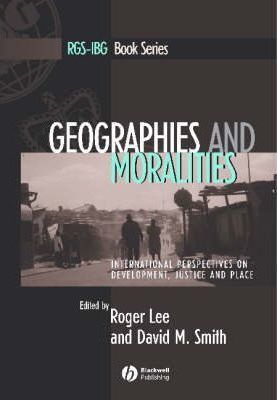
This topical book addresses contemporary concern with the interconnections between geography and morality. Covers both the geographical context of morality, and moralities in geographical methods and practices. Contains up-to-date case studies based on original research. Deals with controversial issues, such as problems of globalization, European integration, human rights in Nigeria, territorial conflict in Israel, and land reform in post-apartheid South Africa. The editors are well-published leading international authorities. The contributors are drawn from Australia, Eastern Europe, Israel, South Africa, the UK and the US.
Religion and Morality addresses central issues arising from religion’s relation to morality. Part one offers a sympathetic but critical appraisal of the claim that features of morality provide evidence for the truth of religious belief. Part two examines divine command theories, objections to them, and positive arguments in their support. Part three explores tensions between human morality, as ordinarily understood, and religious requirements by discussing such issues as the conflict between Buddhist and Christian pacifism and requirements of justice, whether virtue without a love of God is really a vice, whether the God of the Abrahamic religions could require us to do something that seems clearly immoral, and the ambiguous relations between religious mysticism and moral behavior.Covering a broad range of topics, this book draws on both historical and contemporary literature, and explores afresh central issues of morality and religion offering new insights for students, academics and the general reader interested in philosophy and religion.
We tend to suppose that the ancient Greeks had primitive ideas of the self, of responsibility, freedom, and shame, and that now humanity has advanced from these to a more refined moral consciousness. Bernard Williams’s original and radical book questions this picture of Western history. While we are in many ways different from the Greeks, Williams claims that the differences are not to be traced to a shift in these basic conceptions of ethical life. We are more like the ancients than we are prepared to acknowledge, and only when this is understood can we properly grasp our most important differences from them, such as our rejection of slavery.The author is a philosopher, but much of his book is directed to writers such as Homer and the tragedians, whom he discusses as poets and not just as materials for philosophy. At the center of his study is the question of how we can understand Greek tragedy at all, when its world is so far from ours.Williams explains how it is that when the ancients speak, they do not merely tell us about themselves, but about ourselves. Shame and Necessity gives a new account of our relations to the Greeks, and helps us to see what ethical ideas we need in order to live in the modern world.
Is all human behavior based on self-interest? Many social and biological theories would argue so, but such a perspective does not explain the many truly heroic acts committed by people willing to risk their lives to help others. In The Heart of Altruism, Kristen Renwick Monroe boldly lays the groundwork for a social theory receptive to altruism by examining the experiences described by altruists themselves: from Otto, a German businessman who rescued over a hundred Jews in Nazi Germany, to Lucille, a newspaper poetry editor, who, armed with her cane, saved a young girl who was being raped. Monroe’s honest and moving interviews with these little-known heroes enable her to explore the causes of altruism and the differences between altruists and other people. By delineating an overarching perspective of humanity shared by altruists, Monroe demonstrates how social theories may begin to account for altruism and debunks the notions of scientific inevitability that stem from an overemphasis on self-interest.As Monroe has discovered, the financial and religious backgrounds of altruists vary greatly–as do their views on issues such as welfare, civil rights, and morality. Altruists do, however, share a certain way of looking at the world: where the rest of us see a stranger, altruists see a fellow human being. It is this perspective that many social theories overlook. Monroe restores altruism to a general theory of ethical political behavior. She argues that to understand what makes one person act out of concern for others and not the self, we need to ask how that individual’s perspective sets the range of options he or she finds available.
For the first time in history, eradicating world poverty is within our reach. Yet around the world, a billion people struggle to live each day on less than many of us pay for bottled water. In The Life You Can Save, Peter Singer uses ethical arguments, illuminating examples, and case studies of charitable giving to show that our current response to world poverty is not only insufficient but morally indefensible. The Life You Can Save teaches us to be a part of the solution, helping others as we help ourselves.
ما از اخلاق چه انتظاری داریم؟ این سوال شاید تاحدودی برای عموم مردم و یا متخصصان این رشته قابل پاسخ باشد؛ اینکه خوب بودن را به ما بیاموزد و در تنظیم روابط فردی م...

جشن کتاب تهران به ایستگاه سی و یکم رسیده است. حال و احوال نشر کتاب خوب نیست و باید فرهنگدوستان را به خرید و هدیه دادن کتاب ترغیب نمود. خانه اخلاقپژوهان جوان ب...

بنیاد کتابهای اخلاق اسلامی عمدتا پالایش جان از آلودگیها و آراستن آن به زیباییها است. اندیشه محوری این قبیل کتابها آن است که انسان فعلی آنی نیست که باید باشد...

-
0 Comments