Notice: تابع WP_Block_Type_Registry::register به طورنادرست فراخوانی شد. نامهای نوع بلوک نباید حروف بزرگ داشته باشند. لطفاً برای اطلاعات بیشتر، اشکال زدایی در وردپرس را مشاهده کنید. (این پیام در نگارش 5.0.0 افزوده شده است.) in /home/ethicsho/public_html/wp-includes/functions.php on line 5313
Warning: Use of undefined constant TDC_PATH_LEGACY - assumed 'TDC_PATH_LEGACY' (this will throw an Error in a future version of PHP) in /home/ethicsho/public_html/wp-content/plugins/td-composer/td-composer.php on line 109
Warning: Use of undefined constant TDSP_THEME_PATH - assumed 'TDSP_THEME_PATH' (this will throw an Error in a future version of PHP) in /home/ethicsho/public_html/wp-content/plugins/td-composer/td-composer.php on line 113 بایگانیهای Isaac Gregory Smith - خانه اخلاق پژوهان جوان Notice: Trying to access array offset on value of type bool in /home/ethicsho/public_html/wp-content/plugins/wp-ulike/inc/general-functions.php on line 807
The contributions to Law and Art address the interaction between law, justice, the ethical and the aesthetic. The exercise of the legal role and the scholarly understanding of legal texts were classically defined as ars iuris – an art of law – which drew on the panoply of humanist disciplines, from philology to fine art. That tradition has fallen by the wayside, particularly in the wake of modernism. But, as this book demonstrates, a consideration of the relationship between law and art can still bring jurisprudence, and particularly critical jurisprudence, to life. In its attention to the inexpressible, art can contribute to the liberation of legal doctrine from its own self-imposed limits. It can inform the ethics of a legal theory that is concerned to address how theoretical abstractions and concrete oppressions overlook the singularity and spontaneity to which art attests. The contributors to this volume – and their engagement with the full range of ‘the arts’ – seek, therefore, to disturb and to supplement conventional accounts of justice: raising the difficulty, but also the promise, of that surplus which art reveals: of life over legal formalisation.
Here is a thorough, vividly written introduction to contemporary philosophy and some of the most crucial questions of human existence: the nature of mind and knowledge, the status of moral claims, the existence of God, the role of science, and the mysteries of language, among them. In Thinking It Through, esteemed philosopher Kwame Anthony Appiah shows us what it means to “do” philosophy in our time and why it should matter to anyone who wishes to live a more thoughtful life. Opposing the common misconceptions that being a philosopher means espousing a set of philosophical beliefs, or being a follower of a particular thinker, Appiah argues that “the result of philosophical exploration is not the end of inquiry in a settled opinion, but a mind resting more comfortably among many possibilities, or else the reframing of the question, and a new inquiry.” Thinking It Through is organized around eight central topics — mind, knowledge, language, science, morality, politics, law, and metaphysics. It traces how philosophers in the past have considered each subject (how Hobbes, Wittgenstein, and Frege, for example, approached the problem of language) and then explores some of the major questions that still engage philosophers today. More important, Appiah shows us not only what philosophers have thought but how they think, giving us examples we might use in our own attempts to navigate the complex issues that confront any reflective person in the 21st century. Filled with concrete examples of how philosophers work and written in the liveliest prose, Thinking It Through guides readers through the process of philosophical reflection and enlarges our understanding of the central questions of human life.
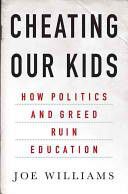
Journalist Joe Williams shows how parents can use consumer power to put children first, shining light on the special interests controlling our schools, where politics and pork infuse everything and our children’s education is compromised, . He argues that increased accountability and choice are necessary, and shows how the people can take back the education system, enhancing responsibility inherent in democracy. The solution is a new brand of hardball politics that demands competence from school leaders and shifts the power away from bureaucrats and union leaders to the people who have a the greatest reason to put kids first: concerned parents. With practical steps and uplifting examples of success, this is a manifesto to action.
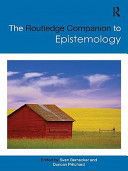
Epistemology, the philosophy of knowledge, is at the core of many of the central debates and issues in philosophy, interrogating the notions of truth, objectivity, trust, belief and perception. The Routledge Companion to Epistemologyprovides a comprehensive and the up-to-date survey of epistemology, charting its history, providing a thorough account of its key thinkers and movements, and addressing enduring questions and contemporary research in the field. Organized thematically, the Companionis divided into ten sections: Foundational Issues, The Analysis of Knowledge, The Structure of Knowledge, Kinds of Knowledge, Skepticism, Responses to Skepticism, Knowledge and Knowledge Attributions, Formal Epistemology, The History of Epistemology, and Metaepistemological Issues. Seventy-eight chapters, each between 5000 and 7000 words and written by the world “s leading epistemologists, provide students with an outstanding and accessible guide to the field. Designed to fit the most comprehensive syllabus in the discipline, this text will be an indispensible resource for anyone interested in this central area of philosophy. The Routledge Companion to Epistemologyis essential reading for students of philosophy.
ما از اخلاق چه انتظاری داریم؟ این سوال شاید تاحدودی برای عموم مردم و یا متخصصان این رشته قابل پاسخ باشد؛ اینکه خوب بودن را به ما بیاموزد و در تنظیم روابط فردی م...

جشن کتاب تهران به ایستگاه سی و یکم رسیده است. حال و احوال نشر کتاب خوب نیست و باید فرهنگدوستان را به خرید و هدیه دادن کتاب ترغیب نمود. خانه اخلاقپژوهان جوان ب...

بنیاد کتابهای اخلاق اسلامی عمدتا پالایش جان از آلودگیها و آراستن آن به زیباییها است. اندیشه محوری این قبیل کتابها آن است که انسان فعلی آنی نیست که باید باشد...

-
0 Comments