Notice: تابع WP_Block_Type_Registry::register به طورنادرست فراخوانی شد. نامهای نوع بلوک نباید حروف بزرگ داشته باشند. لطفاً برای اطلاعات بیشتر، اشکال زدایی در وردپرس را مشاهده کنید. (این پیام در نگارش 5.0.0 افزوده شده است.) in /home/ethicsho/public_html/wp-includes/functions.php on line 5313
Warning: Use of undefined constant TDC_PATH_LEGACY - assumed 'TDC_PATH_LEGACY' (this will throw an Error in a future version of PHP) in /home/ethicsho/public_html/wp-content/plugins/td-composer/td-composer.php on line 109
Warning: Use of undefined constant TDSP_THEME_PATH - assumed 'TDSP_THEME_PATH' (this will throw an Error in a future version of PHP) in /home/ethicsho/public_html/wp-content/plugins/td-composer/td-composer.php on line 113 بایگانیهای Iain Brassington - خانه اخلاق پژوهان جوان Notice: Trying to access array offset on value of type bool in /home/ethicsho/public_html/wp-content/plugins/wp-ulike/inc/general-functions.php on line 807
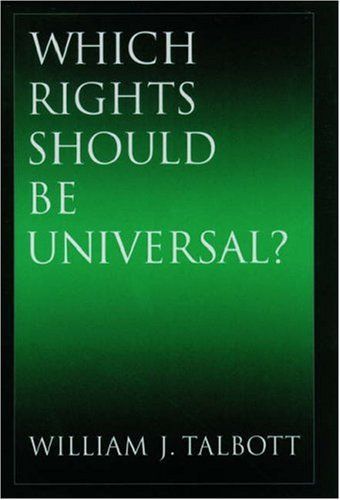
“We hold these truths to be self-evident…” So begins the U.S. Declaration of Independence. What follows those words is a ringing endorsement of universal rights, but it is far from self-evident. Why did the authors claim that it was? William Talbott suggests that they were trapped by a presupposition of Enlightenment philosophy: That there was only one way to rationally justify universal truths, by proving them from self-evident premises. With the benefit of hindsight, it is clear that the authors of the U.S. Declaration had no infallible source of moral truth. For example, many of the authors of the Declaration of Independence endorsed slavery. The wrongness of slavery was not self-evident; it was a moral discovery. In this book, William Talbott builds on the work of John Rawls, Jurgen Habermas, J.S. Mill, Amartya Sen, and Henry Shue to explain how, over the course of history, human beings have learned how to adopt a distinctively moral point of view from which it is possible to make universal, though not infallible, judgments of right and wrong. He explains how this distinctively moral point of view has led to the discovery of the moral importance of nine basic rights. Undoubtedly, the most controversial issue raised by the claim of universal rights is the issue of moral relativism. How can the advocate of universal rights avoid being a moral imperialist? In this book, Talbott shows how to defend basic individual rights from a universal moral point of view that is neither imperialistic nor relativistic. Talbott avoids moral imperialism by insisting that all of us, himself included, have moral blindspots and that we usually depend on others to help us to identify those blindspots. Talbott’s book speaks to not only debates on human rights but to broader issues of moral and cultural relativism, and will interest a broad range of readers.
Neither the morality of human rights nor its relation to the law of human rights is well understood. In this book, Perry addresses three large issues: – There is undeniably a religious ground for the morality of human rights. But is there a nonreligious (secular) ground for the morality of human rights? – What is the relation between the morality of human rights and the law of human rights? Perry here addresses the controversial issues of capital punishment, abortion, and same-sex unions. – What is the proper role of courts, in a liberal democracy, in protecting – and therefore in interpreting – constitutionally entrenched human rights? In considering this question, special attention is paid to the Supreme Court and how it should rule on hot button issues such as capital punishment and abortion. Toward a Theory of Human Rights makes a significant contribution both to human rights studies and to constitutional theory.
Jacques Cory’s second book Activist Business Ethics expands upon the theoretical concepts developed in his first book Business Ethics: The Ethical Revolution of Minority Shareholders published by Kluwer Academic Publishers in March 2001. Activist business ethics is needed in order to remedy the wrongdoing committed to stakeholders and minority shareholders. This will be achieved by cooperation between ethical businessmen, activist academics, stakeholders and minority shareholders. We should treat others as we would want others to treat us, not through interest, but by conviction. Yet this principle is not the guideline of many companies in the modern business world, despite the fact that most religions and philosophers have advocated it in the last 3,000 years. How can we convince or compel modern business to apply this principle? And is it essential to the success of economy? In order to answer these questions this book examines the evolution of activist business ethics in business, in democracies, in Christianity, Judaism, Islam, Buddhism, in philosophy and psychology. The book examines international aspects, the personification of stakeholders, the predominance of values and ethics for CEOs and the inefficient safeguards of the stakeholders’ interests. The book presents new vehicles for the safeguard of those interests, such as the Internet, Transparency, Ethical Funds and Activist Associations, and future activist vehicles, such as the Supervision Board and the Institute of Ethics. Today everybody is a stakeholder and a minority shareholder of a company, directly or through our pension funds, or as a client, a supplier, a member of a community and a citizen. The principal premise of the book is, therefore, that ultimately the wrongdoers act against themselves. The book is woven with many references on ethics and business ethics from the professional and classic world literature, the Bible and other religious texts, poetry, maxims, and folk tales; showing that ethical problems are similar throughout the ages and cultures, but some of the solutions given in this book are new and original. Activist Business Ethics is primarily intended for the academic market and is particularly appropriate for academics in business administration, ethics and finance. It should also appeal strongly to the professional business/finance market, and to stakeholders and minority shareholders as well, who are aware of the wrongdoing committed to them and who want to remedy the situation by activist conduct.
ما از اخلاق چه انتظاری داریم؟ این سوال شاید تاحدودی برای عموم مردم و یا متخصصان این رشته قابل پاسخ باشد؛ اینکه خوب بودن را به ما بیاموزد و در تنظیم روابط فردی م...

جشن کتاب تهران به ایستگاه سی و یکم رسیده است. حال و احوال نشر کتاب خوب نیست و باید فرهنگدوستان را به خرید و هدیه دادن کتاب ترغیب نمود. خانه اخلاقپژوهان جوان ب...

بنیاد کتابهای اخلاق اسلامی عمدتا پالایش جان از آلودگیها و آراستن آن به زیباییها است. اندیشه محوری این قبیل کتابها آن است که انسان فعلی آنی نیست که باید باشد...

-
0 Comments