Notice: تابع WP_Block_Type_Registry::register به طورنادرست فراخوانی شد. نامهای نوع بلوک نباید حروف بزرگ داشته باشند. لطفاً برای اطلاعات بیشتر، اشکال زدایی در وردپرس را مشاهده کنید. (این پیام در نگارش 5.0.0 افزوده شده است.) in /home/ethicsho/public_html/wp-includes/functions.php on line 5313
Warning: Use of undefined constant TDC_PATH_LEGACY - assumed 'TDC_PATH_LEGACY' (this will throw an Error in a future version of PHP) in /home/ethicsho/public_html/wp-content/plugins/td-composer/td-composer.php on line 109
Warning: Use of undefined constant TDSP_THEME_PATH - assumed 'TDSP_THEME_PATH' (this will throw an Error in a future version of PHP) in /home/ethicsho/public_html/wp-content/plugins/td-composer/td-composer.php on line 113 بایگانیهای Hywel David Lewis - خانه اخلاق پژوهان جوان Notice: Trying to access array offset on value of type bool in /home/ethicsho/public_html/wp-content/plugins/wp-ulike/inc/general-functions.php on line 807
Matters of Life and Death, 3/e is a collection of original essays devoted to the major moral issues of the day, including abortion, euthanasia, the death penalty, famine, war, suicide, the environment, and animal rights. The essays are written by moral philosophers who are among the leading thinkers of the world. The previous two editions of this book have been heralded for the clarity and accessibility of the essays, and both editions have enjoyed strong options. The third edition is even better.
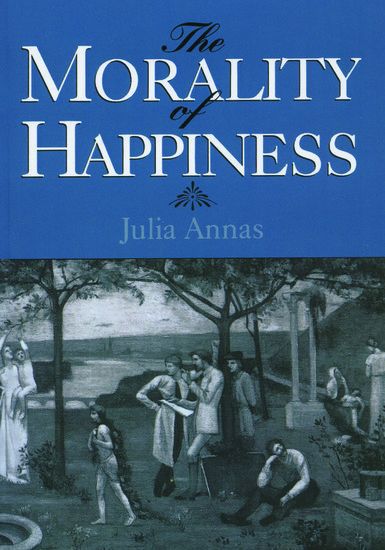
Ancient ethical theories, based on the notions of virtue and happiness, have struck many as an attractive alternative to modern theories. But we cannot find out whether this is true until we understand ancient ethics–and to do this we need to examine the basic structure of ancient ethical theory, not just the details of one or two theories. In this book, Annas brings together the results of a wide-ranging study of ancient ethical philosophy and presents it in a way that is easily accessible to anyone with an interest in ancient or modern ethics. She examines the fundamental notions of happiness and virtue, the role of nature in ethical justification and the relation between concern for self and concern for others. Her careful examination of the ancient debates and arguments shows that many widespread assumptions about ancient ethics are quite mistaken. Ancient ethical theories are not egoistic, and do not depend for their acceptance on metaphysical theories of a teleological kind. Most centrally, they are recognizably theories of morality, and the ancient disputes about the place of virtue in happiness can be seen as akin to modern disputes about the demands of morality.
This book establishes the necessary integration of theological knowledge with theological ethics. It does this as a response to the postmodern critique of Christianity, as exemplified in Rorty and Lyotard. They argue that any claim to know God is necessarily tyrannical. Contemporary responses to such postmodern thinking often fail to address adequately the ethical critique that is made. This book redresses that balance by suggesting that our knowedge of God and love of the Other are so intimately connected that we cannot have one without the other. In the absence of love, then, we simply do not know God. Justin Thacker proposes that an effective theological response to postmodernity must address both knowledge and ethics in an integrated fashion as presented in this book.
In academic and non-academic debates the practice of human rights enforcement is usually reduced to the intentions, interests and capabilities of agents – particularly the United States and other Western states. Whether seen as a policy adopted to promote national interest or an imperialist device used by the West, the practice of human rights enforcement is discussed in isolation from the structure of the late-modern Global Political Economy. This book develops a structural approach to post-Cold war military humanitarianism and demonstrates the nature of reciprocal causal relations between the global capitalist economy and the practice of human rights enforcement. It provides an historical analysis of the notion of individual rights and their relationship with capitalism and demonstrates that today the actors engaged in human rights enforcement – whether for selfish or humanitarian reasons – unintentionally provide global capital with a Gramscian quality of moral leadership thereby contributing to its hegemony.
ما از اخلاق چه انتظاری داریم؟ این سوال شاید تاحدودی برای عموم مردم و یا متخصصان این رشته قابل پاسخ باشد؛ اینکه خوب بودن را به ما بیاموزد و در تنظیم روابط فردی م...

جشن کتاب تهران به ایستگاه سی و یکم رسیده است. حال و احوال نشر کتاب خوب نیست و باید فرهنگدوستان را به خرید و هدیه دادن کتاب ترغیب نمود. خانه اخلاقپژوهان جوان ب...

بنیاد کتابهای اخلاق اسلامی عمدتا پالایش جان از آلودگیها و آراستن آن به زیباییها است. اندیشه محوری این قبیل کتابها آن است که انسان فعلی آنی نیست که باید باشد...

-
0 Comments