Notice: تابع WP_Block_Type_Registry::register به طورنادرست فراخوانی شد. نامهای نوع بلوک نباید حروف بزرگ داشته باشند. لطفاً برای اطلاعات بیشتر، اشکال زدایی در وردپرس را مشاهده کنید. (این پیام در نگارش 5.0.0 افزوده شده است.) in /home/ethicsho/public_html/wp-includes/functions.php on line 5313
Warning: Use of undefined constant TDC_PATH_LEGACY - assumed 'TDC_PATH_LEGACY' (this will throw an Error in a future version of PHP) in /home/ethicsho/public_html/wp-content/plugins/td-composer/td-composer.php on line 109
Warning: Use of undefined constant TDSP_THEME_PATH - assumed 'TDSP_THEME_PATH' (this will throw an Error in a future version of PHP) in /home/ethicsho/public_html/wp-content/plugins/td-composer/td-composer.php on line 113 بایگانیهای Human Rights Watch - خانه اخلاق پژوهان جوان Notice: Trying to access array offset on value of type bool in /home/ethicsho/public_html/wp-content/plugins/wp-ulike/inc/general-functions.php on line 807
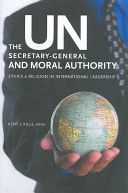
In The UN Secretary-General and Moral Authority, contributors provide case studies of all seven former secretaries-general, establishing a much-needed comparative survey of each office-holder’s personal religious and moral values. From Trygve Lie’s forbearance during the UN’s turbulent formative years to the Nobel committee’s awarding Kofi Annan and the United Nations the prize for peace in 2001, the case studies all follow the same format, first detailing the environmental and experiential factors that forged these men’s ethical frameworks, then analyzing how their “inner code” engaged with the duties of office and the global events particular to their terms. Balanced and unbiased in its approach, this study provides valuable insight into how religious and moral leadership functions in the realm of international relations, and how the promotion of ethical values works to diffuse international tensions and improve the quality of human life around the world.
Can philosophy enable us to lead better lives through a systematic understanding of our human nature? John Cottingham’s thought-provoking study examines three major philosophical approaches to this problem. Starting with the attempts of Classical philosophers to cope with the recalcitrant forces of the passions, he moves on to examine the moral psychology of Descartes, and concludes by analyzing the insights of modern psychoanalytic theory into the human predicament. His study provides a fresh and challenging perspective on moral philosophy and psychology for students and specialists alike.
Intelligent Virtue presents a distinctive new account of virtue and happiness as central ethical ideas. Annas argues that exercising a virtue involves practical reasoning of a kind which can illuminatingly be compared to the kind of reasoning we find in someone exercising a practical skill. Rather than asking at the start how virtues relate to rules, principles, maximizing, or a final end, we should look at the way in which the acquisition and exercise of virtue can be seen to be in many ways like the acquisition and exercise of more mundane activities, such as farming, building or playing the piano. This helps us to see virtue as part of an agent’s happiness or flourishing, and as constituting (wholly, or in part) that happiness. We are offered a better understanding of the relation between virtue as an ideal and virtue in everyday life, and the relation between being virtuous and doing the right thing.
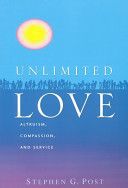
In Unlimited Love: Altruism, Compassion, and Service, author Stephen Post presents an argument for the creation of a new interdisciplinary field for the study of love from a scientific perspective. These insights are essential to our future; in fact, Teilhard de Chardin noted that the discovery of the scientific understanding of the power of unselfish love would be as significant in human history as the discovery of fire. In order to fully explore these ideas, Post established the Institute for Research on Unlimited Love, whose mission is to fund high-level scientific research, develop a dialogue between science and religion on the topic, and disseminate the results of these studies. In this book, he outlines the challenges of exploring the intersection of science, human experience, and the underlying metaphysics of divine love. Book jacket.
ما از اخلاق چه انتظاری داریم؟ این سوال شاید تاحدودی برای عموم مردم و یا متخصصان این رشته قابل پاسخ باشد؛ اینکه خوب بودن را به ما بیاموزد و در تنظیم روابط فردی م...

جشن کتاب تهران به ایستگاه سی و یکم رسیده است. حال و احوال نشر کتاب خوب نیست و باید فرهنگدوستان را به خرید و هدیه دادن کتاب ترغیب نمود. خانه اخلاقپژوهان جوان ب...

بنیاد کتابهای اخلاق اسلامی عمدتا پالایش جان از آلودگیها و آراستن آن به زیباییها است. اندیشه محوری این قبیل کتابها آن است که انسان فعلی آنی نیست که باید باشد...

-
0 Comments