Notice: تابع WP_Block_Type_Registry::register به طورنادرست فراخوانی شد. نامهای نوع بلوک نباید حروف بزرگ داشته باشند. لطفاً برای اطلاعات بیشتر، اشکال زدایی در وردپرس را مشاهده کنید. (این پیام در نگارش 5.0.0 افزوده شده است.) in /home/ethicsho/public_html/wp-includes/functions.php on line 5313
Warning: Use of undefined constant TDC_PATH_LEGACY - assumed 'TDC_PATH_LEGACY' (this will throw an Error in a future version of PHP) in /home/ethicsho/public_html/wp-content/plugins/td-composer/td-composer.php on line 109
Warning: Use of undefined constant TDSP_THEME_PATH - assumed 'TDSP_THEME_PATH' (this will throw an Error in a future version of PHP) in /home/ethicsho/public_html/wp-content/plugins/td-composer/td-composer.php on line 113 بایگانیهای Henry Hazlitt - خانه اخلاق پژوهان جوان Notice: Trying to access array offset on value of type bool in /home/ethicsho/public_html/wp-content/plugins/wp-ulike/inc/general-functions.php on line 807
In the context of the current financial crisis, and at a time of deep global change, growing attention is paid to the global norms and ethical values that could underpin future global policy. Water is a key global resource. At the 3rd Marcelino Botin Foundation Water Workshop, held in Santander, Spain, June 12-14, 2007, the role of ethics in the deep roots, values, and the potential commonalities of the global water policy were discussed. Experts from different cultural, geographic and religious backgrounds considered the different ethical points of view to enhance the debate on how ethical considerations can play a more significant and explicit role in water development and management. Common ground for all contributing authors was considered to be the UN Declaration of 1948, and more specifically the basic aspects related to water ethics: 1. the dignity of every human being and 2. the necessity of solidarity among all human beings.The book is divided in 8 sections which correspond to the papers presented at the Workshop: Some Cultural Traditional Approaches on Water Ethics Some Ethical Aspects of New Water Management Water as a Human Right and as an Economic Resource Water and Poverty Groundwater Use and its Ethical Aspects Ethics of Water Ownership and Management Corruption, Transparency and Participation in the Water Sector Ethical Aspects of Unforeseen and Extreme Events Management such as Floods and Droughts
First published in 1980, Natural Law and Natural Rights is widely heralded as a seminal contribution to the philosophy of law, and an authoritative restatement of natural law doctrine. It has offered generations of students and other readers a thorough grounding in the central issues of legal, moral, and political philosophy from Finnis’s distinctive perspective. This new edition includes a substantial postscript by the author, in which he responds to thirty years of discussion, criticism and further work in the field to develop and refine the original theory.The book closely integrates the philosophy of law with ethics, social theory and political philosophy. The author develops a sustained and substantive argument; it is not a review of other people’s arguments but makes frequent illustrative and critical reference to classical, modern, and contemporary writers in ethics, social and political theory, and jurisprudence.The preliminary First Part reviews a century of analytical jurisprudence to illustrate the dependence of every descriptive social science upon evaluations by the theorist. A fully critical basis for such evaluations is a theory of natural law. Standard contemporary objections to natural law theory are reviewed and shown to rest on serious misunderstandings.The Second Part develops in ten carefully structured chapters an account of: basic human goods and basic requirements of practical reasonableness, community and ‘the common good’; justice; the logical structure of rights-talk; the bases of human rights, their specification and their limits; authority, and the formation of authoritative rules by non-authoritative persons and procedures; law, the Rule of Law, and the derivation of laws from the principles of practical reasonableness; the complex relation between legal and moral obligation; and the practical and theoretical problems created by unjust laws.A final Part develops a vigorous argument about the relation between ‘natural law’, ‘natural theology’ and ‘revelation’ – between moral concern and other ultimate questions.
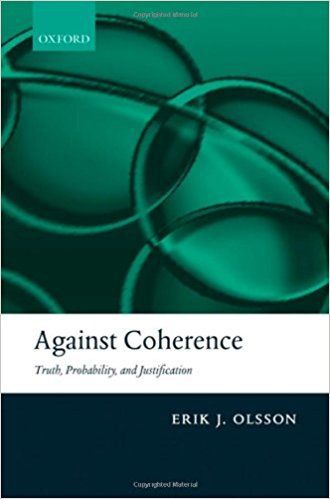
It is tempting to think that, if a person’s beliefs are coherent, they are also likely to be true. This truth conduciveness claim is the cornerstone of the popular coherence theory of knowledge and justification. Erik Olsson’s new book is the most extensive and detailed study of coherence and probable truth to date. Setting new standards of precision and clarity, Olsson argues that the value of coherence has been widely overestimated. Provocative and readable, Against Coherence will make stimulating reading for epistemologists and anyone with a serious interest in truth.
ما از اخلاق چه انتظاری داریم؟ این سوال شاید تاحدودی برای عموم مردم و یا متخصصان این رشته قابل پاسخ باشد؛ اینکه خوب بودن را به ما بیاموزد و در تنظیم روابط فردی م...

جشن کتاب تهران به ایستگاه سی و یکم رسیده است. حال و احوال نشر کتاب خوب نیست و باید فرهنگدوستان را به خرید و هدیه دادن کتاب ترغیب نمود. خانه اخلاقپژوهان جوان ب...

بنیاد کتابهای اخلاق اسلامی عمدتا پالایش جان از آلودگیها و آراستن آن به زیباییها است. اندیشه محوری این قبیل کتابها آن است که انسان فعلی آنی نیست که باید باشد...

-
0 Comments