Notice: تابع WP_Block_Type_Registry::register به طورنادرست فراخوانی شد. نامهای نوع بلوک نباید حروف بزرگ داشته باشند. لطفاً برای اطلاعات بیشتر، اشکال زدایی در وردپرس را مشاهده کنید. (این پیام در نگارش 5.0.0 افزوده شده است.) in /home/ethicsho/public_html/wp-includes/functions.php on line 5313
Warning: Use of undefined constant TDC_PATH_LEGACY - assumed 'TDC_PATH_LEGACY' (this will throw an Error in a future version of PHP) in /home/ethicsho/public_html/wp-content/plugins/td-composer/td-composer.php on line 109
Warning: Use of undefined constant TDSP_THEME_PATH - assumed 'TDSP_THEME_PATH' (this will throw an Error in a future version of PHP) in /home/ethicsho/public_html/wp-content/plugins/td-composer/td-composer.php on line 113 بایگانیهای Henri Colt - خانه اخلاق پژوهان جوان Notice: Trying to access array offset on value of type bool in /home/ethicsho/public_html/wp-content/plugins/wp-ulike/inc/general-functions.php on line 807
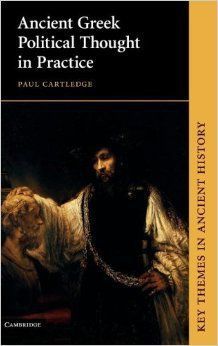
Ancient Greece was a place of tremendous political experiment and innovation, and it was here too that the first serious political thinkers emerged. Using carefully selected case-studies, Professor Cartledge investigates the dynamic interaction between ancient Greek political thought and practice from early historic times to the early Roman Empire. Of concern throughout are three major issues: first, the relationship of political thought and practice; second, the relevance of class and status to explaining political behaviour and thinking; third, democracy – its invention, development and expansion, and extinction, prior to its recent resuscitation and even apotheosis. In addition, monarchy in various forms and at different periods and the peculiar political structures of Sparta are treated in detail over a chronological range extending from Homer to Plutarch. The book provides an introduction to the topic for all students and non-specialists who appreciate the continued relevance of ancient Greece to political theory and practice today.
Outside Ethicsbrings together some of the most important and provocative works by one of the most creative philosophers writing today. Seeking to expand the scope of contemporary moral and political philosophy, Raymond Geuss here presents essays bound by a shared skepticism about a particular way of thinking about what is important in human life–a way of thinking that, in his view, is characteristic of contemporary Western societies and isolates three broad categories of things as important: subjective individual preferences, knowledge, and restrictions on actions that affect other people (restrictions often construed as ahistorical laws). He sets these categories in a wider context and explores various human phenomena–including poetry, art, religion, and certain kinds of history and social criticism–that do not fit easily into these categories. As its title suggests, this book seeks a place outside conventional ethics. Following a brief introduction, Geuss sets out his main concerns with a focus on ethics and politics. He then expands these themes by discussing freedom, virtue, the good life, and happiness. Next he examines Theodor Adorno’s views on the relation between suffering and knowledge, the nature of religion, and the role of history in giving us critical distances from existing identities. From here he moves to aesthetic concerns. The volume closes by looking at what it is for a human life to have “gaps”–to be incomplete, radically unsatisfactory, or a failure.
William James (18421910) was both a philosopher and a psychologist, nowadays most closely associated with the pragmatic theory of truth. The essays in this Companion deal with the full range of his thought as well as other issues, including technical philosophical issues, religious speculation, moral philosophy and political controversies of his time. The relationship between James and other philosophers of his time, as well as his brother Henry, are also examined. By placing James in his intellectual landscape the volume will be particularly useful to teachers and students outside philosophy in such areas as religious studies, history of ideas, and American studies. New readers and nonspecialists will find this the most convenient and accessible guide to James currently available. Advanced students and specialists will find a conspectus of recent developments in the interpretation of James.
ما از اخلاق چه انتظاری داریم؟ این سوال شاید تاحدودی برای عموم مردم و یا متخصصان این رشته قابل پاسخ باشد؛ اینکه خوب بودن را به ما بیاموزد و در تنظیم روابط فردی م...

جشن کتاب تهران به ایستگاه سی و یکم رسیده است. حال و احوال نشر کتاب خوب نیست و باید فرهنگدوستان را به خرید و هدیه دادن کتاب ترغیب نمود. خانه اخلاقپژوهان جوان ب...

بنیاد کتابهای اخلاق اسلامی عمدتا پالایش جان از آلودگیها و آراستن آن به زیباییها است. اندیشه محوری این قبیل کتابها آن است که انسان فعلی آنی نیست که باید باشد...

-
0 Comments