Notice: تابع WP_Block_Type_Registry::register به طورنادرست فراخوانی شد. نامهای نوع بلوک نباید حروف بزرگ داشته باشند. لطفاً برای اطلاعات بیشتر، اشکال زدایی در وردپرس را مشاهده کنید. (این پیام در نگارش 5.0.0 افزوده شده است.) in /home/ethicsho/public_html/wp-includes/functions.php on line 5313
Warning: Use of undefined constant TDC_PATH_LEGACY - assumed 'TDC_PATH_LEGACY' (this will throw an Error in a future version of PHP) in /home/ethicsho/public_html/wp-content/plugins/td-composer/td-composer.php on line 109
Warning: Use of undefined constant TDSP_THEME_PATH - assumed 'TDSP_THEME_PATH' (this will throw an Error in a future version of PHP) in /home/ethicsho/public_html/wp-content/plugins/td-composer/td-composer.php on line 113 بایگانیهای Haven Joseph - خانه اخلاق پژوهان جوان Notice: Trying to access array offset on value of type bool in /home/ethicsho/public_html/wp-content/plugins/wp-ulike/inc/general-functions.php on line 807
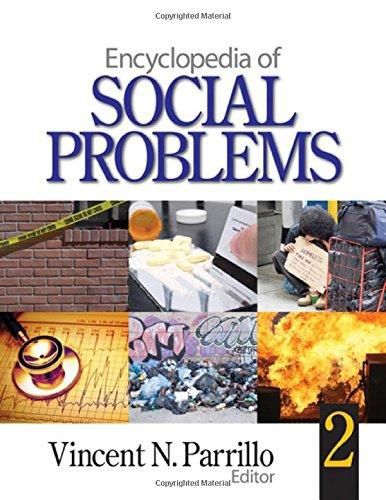
Social problems affect everyone. Because so many actual and potential problems confront us, it is often difficult to decide which ones affect us most severely. Is it the threat of death or injury during a terrorist attack? Is it the threat caused by industrial pollution that may poison us or destroy our physical environment? Or does quiet but viciously damaging gender, age, class, racial, or ethnic discrimination have the most far-reaching effect? Do the problems of cities affect us if we live in the suburbs? Do poorer nations’ problems with overpopulation affect our quality of life? The Encyclopedia of Social Problems offers an interdisciplinary perspective into many social issues that are a continuing concern in our lives, whether we confront them on a personal, local, regional, national, or global level. With more than 600 entries, these two volumes cover all of the major theories, approaches, and contemporary issues in social problems and also provide insight into how social conditions get defined as social problems, and the ways different people and organizations view and try to solve them.Key Features· Provides as comprehensive an approach as possible to this multifaceted field by using experts and scholars from 19 disciplines: anthropology, biology, business, chemistry, communications, criminal justice, demography, economics, education, environmental studies, geography, health, history, languages, political science, psychology, social work, sociology, and women’s studies· Presents a truly international effort with contributors from 17 countries: Argentina, Australia, Canada, England, France, Germany, Greece, Hong Kong, India, Ireland, Italy, Kenya, New Zealand, Romania, Scotland, Turkey, and the United States· Addresses social problems that are fairly new, such as computer crimes and identity theft, and others that are centuries old, such as poverty and prostitution· Examines social problems differently from place to place and from one era to another· Explains the perspectives and foundations of various social theories and offers different lenses to view the same realityKey Themes· Aging and the Life Course· Community, Culture, and Change · Crime and Deviance · Economics and Work · Education· Family · Gender Inequality and Sexual Orientation · Health · Housing and Urbanization · Politics, Power, and War · Population and Environment · Poverty and Social Class · Race and Ethnic Relations · Social Movements · Social Theory · Substance Abuse Readers investigating virtually any social problem will find a rich treasure of information and insights in this reference work, making it a must-have resource for any academic library.
In this volume, some of today’s most distinguished philosophers survey the whole field of ethics, from its origins, through the great ethical traditions, to theories of how we ought to live, arguments about specific ethical issues, and the nature of ethics itself. The book can be read straight through from beginning to end; yet the inclusion of a multi-layered index, coupled with a descriptive outline of contents and bibliographies of relevant literature, means that the volume also serves as a work of reference, both for those coming afresh to the study of ethics and for readers already familiar with the subject.
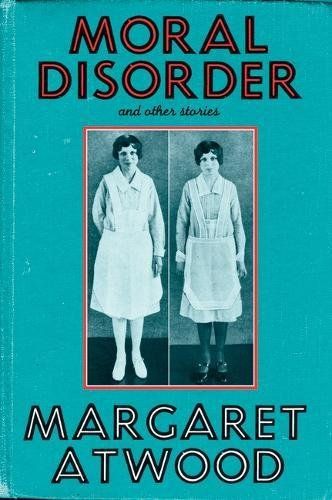
Margaret Atwood has frequently been cited as one of the foremost writers of our time. Moral Disorder, her new work of fiction, could be seen as a collection of ten stories that is almost a novel … or a novel broken up into ten stories. It resembles a photograph album – a series of clearly observed moments that trace the course of a life, and the lives intertwined with it – those of parents, siblings, children, friends, enemies, teachers and even animals. And as in a photograph album, times change; every decade is here, from the 1930s through the 50s, 60s and 70s to the present day. The settings are equally varied: large cities, suburbs, farms, northern forests. The first story, ‘The Bad News,’ is set in the present, as a couple no longer young situate themselves in a larger world no longer safe. Then the narrative switches time, as the central character moves through childhood and adolescence, in ‘The Art of Cooking and Serving’, ‘The Headless Horseman’ and ‘My Last Duchess’. We follow her into young adulthood in ‘The Other Place’, and then through a complex relationship, traced in three of the stories – ‘Monopoly’, ‘Moral Disorder’ and ‘The Entities’. The last two stories, ‘The Labrador Fiasco’ and ‘The Boys at the Lab’, deal with the heartbreaking old age of parents, but circle back to childhood again, to complete the cycle. By turns funny, moving, lyrical, incisive, tragic, earthy, shocking and deeply personal, Moral Disorder displays Atwood’s celebrated storytelling gifts and inimitable style to their best advantage. As the New York Times has said, ‘Atwood has complete access to her people’s emotional histories, complete understanding of their hearts and imaginations.’
ما از اخلاق چه انتظاری داریم؟ این سوال شاید تاحدودی برای عموم مردم و یا متخصصان این رشته قابل پاسخ باشد؛ اینکه خوب بودن را به ما بیاموزد و در تنظیم روابط فردی م...

جشن کتاب تهران به ایستگاه سی و یکم رسیده است. حال و احوال نشر کتاب خوب نیست و باید فرهنگدوستان را به خرید و هدیه دادن کتاب ترغیب نمود. خانه اخلاقپژوهان جوان ب...

بنیاد کتابهای اخلاق اسلامی عمدتا پالایش جان از آلودگیها و آراستن آن به زیباییها است. اندیشه محوری این قبیل کتابها آن است که انسان فعلی آنی نیست که باید باشد...

-
0 Comments