Notice: تابع WP_Block_Type_Registry::register به طورنادرست فراخوانی شد. نامهای نوع بلوک نباید حروف بزرگ داشته باشند. لطفاً برای اطلاعات بیشتر، اشکال زدایی در وردپرس را مشاهده کنید. (این پیام در نگارش 5.0.0 افزوده شده است.) in /home/ethicsho/public_html/wp-includes/functions.php on line 5313
Warning: Use of undefined constant TDC_PATH_LEGACY - assumed 'TDC_PATH_LEGACY' (this will throw an Error in a future version of PHP) in /home/ethicsho/public_html/wp-content/plugins/td-composer/td-composer.php on line 109
Warning: Use of undefined constant TDSP_THEME_PATH - assumed 'TDSP_THEME_PATH' (this will throw an Error in a future version of PHP) in /home/ethicsho/public_html/wp-content/plugins/td-composer/td-composer.php on line 113 بایگانیهای H.P. McDonald - خانه اخلاق پژوهان جوان Notice: Trying to access array offset on value of type bool in /home/ethicsho/public_html/wp-content/plugins/wp-ulike/inc/general-functions.php on line 807
“Through an ambitious and critical revision of Michel Foucault’s investigation of ethics, James Faubion develops an original program of empirical inquiry into the ethical domain. From an anthropological perspective, Faubion argues that Foucault’s specification of the analytical parameters of this domain is the most productive point of departure in conceptualizing its distinctive features. He further argues that Foucault’s framework is in need of substantial revision to be of genuinely anthropological scope. In making this revision, Faubion illustrates his program with two extended case studies: one of a Portuguese marquis and the other of a dual subject made up of the author and a millenarian prophetess. The result is a conceptual apparatus that is able to accommodate ethical pluralism and yield an account of the limits of ethical variation, providing a novel resolution of the problem of relativism that has haunted anthropological inquiry into ethics since its inception”–
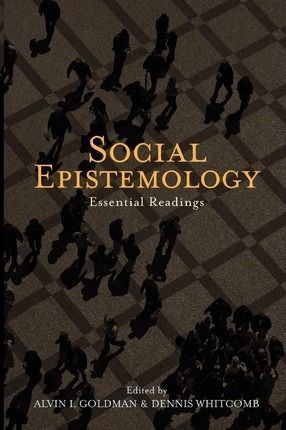
What if anything justifies us in believing the testimony of others? How should we react to disagreement between ourselves and our peers, and to disagreement among the experts when we ourselves are novices? Can beliefs be held by groups of people in addition to the people composing those groups? And if so, how should groups go about forming their beliefs? How should we design social systems, such as legal juries and scientific research-sharing schemes, to promote knowledge among the people who engage in them? When different groups of people judge different beliefs to be justified, how can we tell which groups are correct? These questions are at the heart of the vital discipline of social epistemology. The classic articles in this volume address these questions in ways that are both cutting-edge and easy to understand. This volume will be of great interest to scholars and students in epistemology.
Ayn Rand is well known for advocating egoism, but the substance of that egoisms instruction is rarely understood. Far from representing the rejection of morality, selfishness, in Rands view, actually demands the practice of a systematic code of ethics. This book explains the fundamental virtues that Rand considers vital for a person to achieve his objective well-being: rationality, honesty, independence, justice, integrity, productiveness, and pride. Tara Smith examines what each of these virtues consists in, why it is a virtue, and what it demands of a person in practice.
ما از اخلاق چه انتظاری داریم؟ این سوال شاید تاحدودی برای عموم مردم و یا متخصصان این رشته قابل پاسخ باشد؛ اینکه خوب بودن را به ما بیاموزد و در تنظیم روابط فردی م...

جشن کتاب تهران به ایستگاه سی و یکم رسیده است. حال و احوال نشر کتاب خوب نیست و باید فرهنگدوستان را به خرید و هدیه دادن کتاب ترغیب نمود. خانه اخلاقپژوهان جوان ب...

بنیاد کتابهای اخلاق اسلامی عمدتا پالایش جان از آلودگیها و آراستن آن به زیباییها است. اندیشه محوری این قبیل کتابها آن است که انسان فعلی آنی نیست که باید باشد...

-
0 Comments