Notice: تابع WP_Block_Type_Registry::register به طورنادرست فراخوانی شد. نامهای نوع بلوک نباید حروف بزرگ داشته باشند. لطفاً برای اطلاعات بیشتر، اشکال زدایی در وردپرس را مشاهده کنید. (این پیام در نگارش 5.0.0 افزوده شده است.) in /home/ethicsho/public_html/wp-includes/functions.php on line 5313
Warning: Use of undefined constant TDC_PATH_LEGACY - assumed 'TDC_PATH_LEGACY' (this will throw an Error in a future version of PHP) in /home/ethicsho/public_html/wp-content/plugins/td-composer/td-composer.php on line 109
Warning: Use of undefined constant TDSP_THEME_PATH - assumed 'TDSP_THEME_PATH' (this will throw an Error in a future version of PHP) in /home/ethicsho/public_html/wp-content/plugins/td-composer/td-composer.php on line 113 بایگانیهای Gilbert Harman - خانه اخلاق پژوهان جوان Notice: Trying to access array offset on value of type bool in /home/ethicsho/public_html/wp-content/plugins/wp-ulike/inc/general-functions.php on line 807
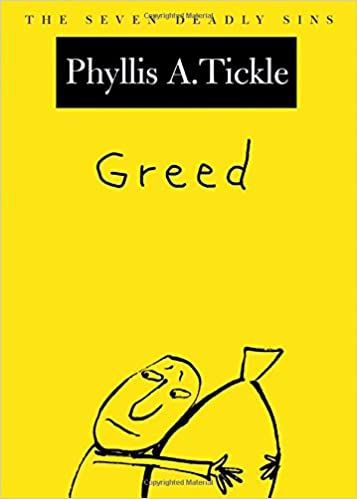
Grasping. Avarice. Covetousness. Miserliness. Insatiable cupidity. Overreaching ambition. Desire spun out of control. The deadly sin of Greed goes by many names, appears in many guises, and wreaks havoc on individuals and nations alike. In this lively and generous book, Phyllis A. Tickle argues that Greed is “the Matriarch of the Deadly Clan,” the ultimate source of Pride, Envy, Sloth, Gluttony, Lust, and Anger. She shows that the major faiths, from Hinduism and Taoism to Buddhism and Christianity regard Greed as the greatest calamity humans can indulge in, engendering further sins and eviscerating all virtues. As the Sikh holy book Adi Granth asks: “Where there is greed, what love can there be?” Tickle takes a long view of Greed, from St. Paul to the present, focusing particularly on changing imaginative representations of Greed in Western literature and art. Looking at such works as the Psychomachia, or “Soul Battle” of the fifth-century poet Aurelius Clemens Prudentius, the paintings of Peter Bruegel and Hieronymous Bosch, the 1987 film Wall Street, and the contemporary Italian artist Mario Donizetti, Tickle shows how our perceptions have evolved from the medieval understanding of Greed as a spiritual enemy to a nineteenth-century sociological construct to an early twentieth-century psychological deficiency, and finally to a new view, powerfully articulated in Donizetti’s mystical paintings, of Greed as both tragic and beautiful. Engaging, witty, brilliantly insightful, Greed explores the full range of this deadly sin’s subtle, chameleon-like qualities, and the enormous destructive power it wields, evidenced all too clearly in the world today.
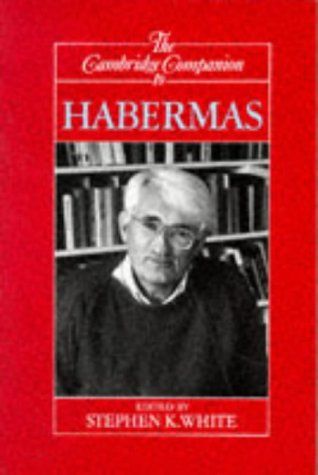
Jurgen Habermas is unquestionably one of the foremost philosophers writing today. His notions of communicative action and rationality have exerted a profound influence within philosophy and the social sciences. This volume examines the historical and intellectual contexts out of which Habermas’ work emerged, and offers an overview of his main ideas, including those in his most recent publication. Amongst the topics discussed are his relationship to the Frankfurt School of critical theory and Marx, his unique contributions to the philosophy of the social sciences, the concept of ‘communicative ethics’, and the critique of post-modernism. New readers and non-specialists will find this the most convenient, accessible guide to Habermas currently available. Advanced students will find a conspectus of recent developments in the interpretation of Habermas.
An award-winning psychologist skillfully combines two genres-philosophical wisdom and scientific research-delighting the reader with surprising insights
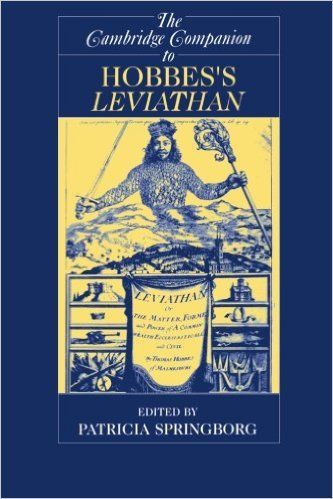
This Companion makes a new departure in Hobbes scholarship, addressing a philosopher whose impact was as great on Continental European theories of state and legal systems as it was at home. This volume is a systematic attempt to incorporate work from both the Anglophone and Continental traditions, bringing together newly commissioned work by scholars from ten different countries in a topic-by-topic sequence of essays that follows the structure of Leviathan, re-examining the relationship among Hobbes’s physics, metaphysics, politics, psychology, and religion. Collectively they showcase important revisionist scholarship that re-examines both the context for Leviathan and its reception, demonstrating the degree to which Hobbes was indebted to the long tradition of European humanist thought. This Cambridge Companion shows that Hobbes’s legacy was never lost and that he belongs to a tradition of reflection on political theory and governance that is still alive, both in Europe and in the diaspora.
Separated by millennia, Aristotle and Sigmund Freud gave us disparate but compelling pictures of the human condition. But if, with Jonathan Lear, we scrutinize these thinkers’ attempts to explain human behavior in terms of a higher principle–whether happiness or death–the pictures fall apart. Aristotle attempted to ground ethical life in human striving for happiness, yet he didn’t understand what happiness is any better than we do. Happiness became an enigmatic, always unattainable, means of seducing humankind into living an ethical life. Freud fared no better when he tried to ground human striving, aggression, and destructiveness in the death drive, like Aristotle attributing purpose where none exists. Neither overarching principle can guide or govern “the remainder of life,” in which our inherently disruptive unconscious moves in breaks and swerves to affect who and how we are. Lear exposes this tendency to self-disruption for what it is: an opening, an opportunity for new possibilities. His insights have profound consequences not only for analysis but for our understanding of civilization and its discontent.
ما از اخلاق چه انتظاری داریم؟ این سوال شاید تاحدودی برای عموم مردم و یا متخصصان این رشته قابل پاسخ باشد؛ اینکه خوب بودن را به ما بیاموزد و در تنظیم روابط فردی م...

جشن کتاب تهران به ایستگاه سی و یکم رسیده است. حال و احوال نشر کتاب خوب نیست و باید فرهنگدوستان را به خرید و هدیه دادن کتاب ترغیب نمود. خانه اخلاقپژوهان جوان ب...

بنیاد کتابهای اخلاق اسلامی عمدتا پالایش جان از آلودگیها و آراستن آن به زیباییها است. اندیشه محوری این قبیل کتابها آن است که انسان فعلی آنی نیست که باید باشد...

-
0 Comments