Notice: تابع WP_Block_Type_Registry::register به طورنادرست فراخوانی شد. نامهای نوع بلوک نباید حروف بزرگ داشته باشند. لطفاً برای اطلاعات بیشتر، اشکال زدایی در وردپرس را مشاهده کنید. (این پیام در نگارش 5.0.0 افزوده شده است.) in /home/ethicsho/public_html/wp-includes/functions.php on line 5313
Warning: Use of undefined constant TDC_PATH_LEGACY - assumed 'TDC_PATH_LEGACY' (this will throw an Error in a future version of PHP) in /home/ethicsho/public_html/wp-content/plugins/td-composer/td-composer.php on line 109
Warning: Use of undefined constant TDSP_THEME_PATH - assumed 'TDSP_THEME_PATH' (this will throw an Error in a future version of PHP) in /home/ethicsho/public_html/wp-content/plugins/td-composer/td-composer.php on line 113 بایگانیهای Georg H.W. Hegel - خانه اخلاق پژوهان جوان Notice: Trying to access array offset on value of type bool in /home/ethicsho/public_html/wp-content/plugins/wp-ulike/inc/general-functions.php on line 807
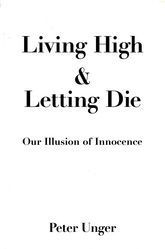
By contributing a few hundred dollars to a charity like UNICEF, a prosperous person can ensure that fewer poor children die, and that more will live reasonably long, worthwhile lives. Even when knowing this, however, most people send nothing, and almost all of the rest send little. What is the moral status of this behavior? To such common cases of letting die, our untutored response is that, while it is not very good, neither is the conduct wrong. What is the source of this lenient assessment? In this contentious new book, one of our leading philosophers argues that our intuitions about ethical cases are generated not by basic moral values, but by certain distracting psychological dispositions that all too often prevent us from reacting in accord with our commitments. Through a detailed look at how these tendencies operate, Unger shows that, on the good morality that we already accept, the fatally unhelpful behavior is monstrously wrong. By uncovering the eminently sensible ethics that we’ve already embraced fully, and by confronting us with empirical facts and with easily followed instructions for lessening serious suffering appropriately and effectively, Unger’s book points the way to a compassionate new moral philosophy.
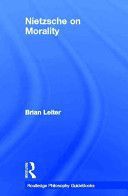
Nietzsche is one of the most important and controversial thinkers in the history of philosophy. His writings on moral philosophy are amongst the most widely read works both by philosophers and non-philosophers. Many of the ideas raised are both startling and disturbing and have been the source of great contention. On the Geneaology of Morality is Nietzsche’s most sustained and important contribution to moral philosophy, featuring many of the ideas fir which he is best known: the slave revolt in morals, will to power, geneaology, perspectivism. The Routledge Philosophy GuideBook to Nietzsche on Morality introduces the reader to these and other important Nietzschean themes patiently and clearly. It is the first book to examine the work in such a way and will be a vital point of reference for any Nietzsche scholar. The Routledge Philosophy GuideBook to Nietzsche on Morality will be vital for all studentnts coming to Nietzsche for the first time.
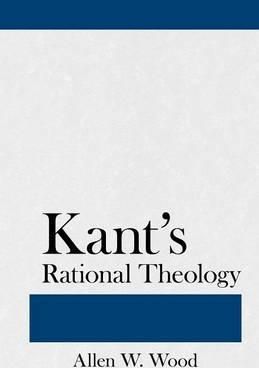
In Kant’s Rational Theology, Allen W. Wood explores Kant’s views on the concept of God and on the attempt to demonstrate God’s existence. “We cannot have a full or balanced understanding of Kant’s thought on religious subjects,” he writes, “as long as we fail to take account of his reflections, often exceedingly abstract, obscure, and subtle, concerning the rational origin, content, and status of our concept of a supreme being.”
Over the last fifteen years, Michael Smith has written a series of seminal essays about the nature of belief and desire, the status of normative judgment, and the relevance of the views we take on both these topics to the accounts we give of our nature as free and responsible agents. This long awaited collection comprises some of the most influential of Smith’s essays. Among the topics covered are: the Humean theory of motivating reasons, the nature of normative reasons, Williams and Korsgaard on internal and external reasons, the nature of self-control, weakness of will, compulsion, freedom, responsibility, the analysis of our rational capacities, moral realism, the dispositional theory of value, the supervenience of the normative on the non-normative, the error theory, rationalist treatments of moral judgment, the practicality requirement on moral judgment and non-cognivist. This collection will be of interest to students in philosophy and psychology.
ما از اخلاق چه انتظاری داریم؟ این سوال شاید تاحدودی برای عموم مردم و یا متخصصان این رشته قابل پاسخ باشد؛ اینکه خوب بودن را به ما بیاموزد و در تنظیم روابط فردی م...

جشن کتاب تهران به ایستگاه سی و یکم رسیده است. حال و احوال نشر کتاب خوب نیست و باید فرهنگدوستان را به خرید و هدیه دادن کتاب ترغیب نمود. خانه اخلاقپژوهان جوان ب...

بنیاد کتابهای اخلاق اسلامی عمدتا پالایش جان از آلودگیها و آراستن آن به زیباییها است. اندیشه محوری این قبیل کتابها آن است که انسان فعلی آنی نیست که باید باشد...

-
0 Comments