Notice: تابع WP_Block_Type_Registry::register به طورنادرست فراخوانی شد. نامهای نوع بلوک نباید حروف بزرگ داشته باشند. لطفاً برای اطلاعات بیشتر، اشکال زدایی در وردپرس را مشاهده کنید. (این پیام در نگارش 5.0.0 افزوده شده است.) in /home/ethicsho/public_html/wp-includes/functions.php on line 5313
Warning: Use of undefined constant TDC_PATH_LEGACY - assumed 'TDC_PATH_LEGACY' (this will throw an Error in a future version of PHP) in /home/ethicsho/public_html/wp-content/plugins/td-composer/td-composer.php on line 109
Warning: Use of undefined constant TDSP_THEME_PATH - assumed 'TDSP_THEME_PATH' (this will throw an Error in a future version of PHP) in /home/ethicsho/public_html/wp-content/plugins/td-composer/td-composer.php on line 113 بایگانیهای Georg Brun - خانه اخلاق پژوهان جوان Notice: Trying to access array offset on value of type bool in /home/ethicsho/public_html/wp-content/plugins/wp-ulike/inc/general-functions.php on line 807
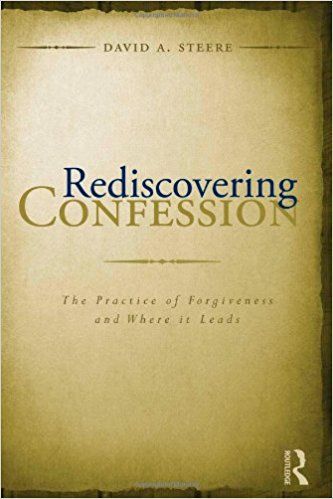
Rediscovering Confession is about recovering the experience of confession, in danger now of becoming a lost art. It identifies four elements present in psychotherapy and confession: a state of heightened self-awareness, a growing realization that our predicament points in some meaningful direction beyond itself, the necessity to make a relevant response to our situation, and a potential for spiritual encounter that accompanies the process. Each chapter contains a section devoted to Practice with exercises for individual contemplation and experimentation, guidelines for forming a confessional partnership, directions for conducting discussions in a study goup, and ways to organize a small confessional group.
Integrating concepts from multiple theoretical disciplines and detailed analyses of the evolution of Internet-related innovations (including computer networking, the World Wide Web and the Linux open source operating system), this book develops foundations for a new theoretical and practical understanding of innovation. It covers topics ranging from fashion to history of art, and includes the most detailed analysis of the open source development model so far published.
Biomedical ethics is a burgeoning academic field with complex and far-reaching consequences. Whereas in Western secular bioethics this subject falls within larger ethical theories and applications (utilitarianism, deontology, teleology, and the like), Islamic biomedical ethics has yet to find its natural academic home in Islamic studies. In this pioneering work, Abdulaziz Sachedina – a scholar with life-long academic training in Islamic law – relates classic Muslim religious values to the new ethical challenges that arise from medical research and practice. He depends on Muslim legal theory, but then looks deeper than juridical practice to search for the underlying reasons that determine the rightness or wrongness of a particular action. Drawing on the work of diverse Muslim theologians, he outlines a form of moral reasoning that can derive and produce decisions that underscore the spirit of the Shari’a. These decisions, he argues, still leave room to revisit earlier decisions and formulate new ones, which in turn need not be understood as absolute or final. After laying out this methodology, he applies it to a series of ethical questions surrounding the human life-cycle from birth to death, including such issues as abortion, euthanasia, and organ donation. The implications of Sachedina’s work are broad. His writing is unique in that it aims at conversing with Jewish and Christian ethics, moving beyond the Islamic fatwa literature to search for a common language of moral justification and legitimization among the followers of the Abrahamic traditions. He argues that Islamic theological ethics be organically connected with the legal tradition of Islam to enable it to sit in dialogue with secular and scripture-based bioethics in other faith communities. A breakthrough in Islamic bioethical studies, this volume is welcome and long-overdue reading for anyone interested in facing the difficult questions posed by modern medicine not only to the Muslim faithful but to the ethically-minded at large.
ما از اخلاق چه انتظاری داریم؟ این سوال شاید تاحدودی برای عموم مردم و یا متخصصان این رشته قابل پاسخ باشد؛ اینکه خوب بودن را به ما بیاموزد و در تنظیم روابط فردی م...

جشن کتاب تهران به ایستگاه سی و یکم رسیده است. حال و احوال نشر کتاب خوب نیست و باید فرهنگدوستان را به خرید و هدیه دادن کتاب ترغیب نمود. خانه اخلاقپژوهان جوان ب...

بنیاد کتابهای اخلاق اسلامی عمدتا پالایش جان از آلودگیها و آراستن آن به زیباییها است. اندیشه محوری این قبیل کتابها آن است که انسان فعلی آنی نیست که باید باشد...

-
0 Comments