Notice: تابع WP_Block_Type_Registry::register به طورنادرست فراخوانی شد. نامهای نوع بلوک نباید حروف بزرگ داشته باشند. لطفاً برای اطلاعات بیشتر، اشکال زدایی در وردپرس را مشاهده کنید. (این پیام در نگارش 5.0.0 افزوده شده است.) in /home/ethicsho/public_html/wp-includes/functions.php on line 5313
Warning: Use of undefined constant TDC_PATH_LEGACY - assumed 'TDC_PATH_LEGACY' (this will throw an Error in a future version of PHP) in /home/ethicsho/public_html/wp-content/plugins/td-composer/td-composer.php on line 109
Warning: Use of undefined constant TDSP_THEME_PATH - assumed 'TDSP_THEME_PATH' (this will throw an Error in a future version of PHP) in /home/ethicsho/public_html/wp-content/plugins/td-composer/td-composer.php on line 113 بایگانیهای Francis Hutcheson - خانه اخلاق پژوهان جوان Notice: Trying to access array offset on value of type bool in /home/ethicsho/public_html/wp-content/plugins/wp-ulike/inc/general-functions.php on line 807
How do modern Muslims adapt their traditions to engage with today’s world? Charles Tripp’s erudite and incisive book considers one of the most significant challenges faced by Muslims over the last sixty years: the challenge of capitalism. By reference to the works of noted Muslim scholars, the author shows how, faced by this challenge, these intellectuals devised a range of strategies which have enabled Muslims to remain true to their faith, whilst engaging effectively with a world not of their own making. The work is framed around the development of their ideas on Islamic socialism, economics and the rationale for Islamic banking. While some Muslims have resorted to confrontation or insularity to cope with the challenges of modernity, most have aspired to innovation and ingenuity in the search for compromise and interaction with global capitalism in the twenty-first century.
Ethics and World Religions presents eighteen original cases that discuss ethical issues of diverse peoples and religions situated around the world. Each case is followed by two commentaries that explore the relevant issues from the perspective of two different religious traditions. Commentaries highlight the religious values, principles, and laws that are relevant, and they also suggest the range of options for resolution that exist within the perspective of that religion.
This evocative and broad-ranging book traces the history of moral regulation in Britain and the US from the late seventeenth century to the present day. Specific coverage is given to movements such as the Society for the Reformation of Manners and the Vice Society, the sexual abuse and anti-pornography movements, and contemporary self-help movements. Hunt argues that the main impetus for moral regulations often stems from the middle classes, rather than those with institutional power, but most significantly they provide classic instances of the intimate link between the ‘governance of others’ and the ‘governance of the self’. Using the work of Foucault, this book analyses how projects of self-regulation can manifest themselves into the regulation of others. Concurrent with this is the rise of health discourses, which play a central role in contemporary discussions of moral governance.
The last few years have seen a remarkable revival of interest in the virtues, which have regained their central role in moral philosophy. This thought-provoking new collection is a much-needed survey of virtue ethics and virtue theory. The specially commissioned articles by an international team of philosophers represent the state of the art in this subject and will set the agenda for future work in the area. The contributors–including Lawrence Blum, John Cottingham, Julia Driver, Rosalind Hursthouse, Terence Irwin, Susan Moller Okin, Onora O’Neill, Michael Slote, Michael Stocker, and David Wiggins–cover practical virtue ethics, ancient views of the virtues, impartiality and partiality, Kant, utilitarianism, human nature, natural and artificial virtues, virtue and the good life, the vices, emotions, politics, feminism, moral education, and community.
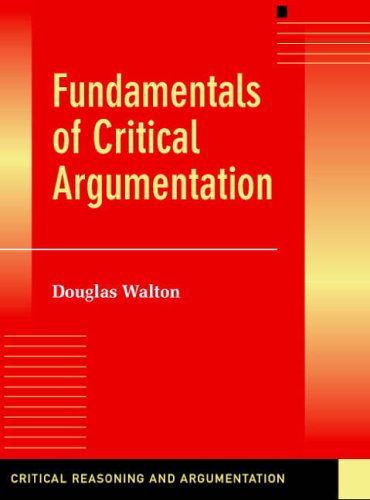
Presenting the basic tools for the identification, analysis, and evaluation of common arguments for beginners, this book informs by using examples of arguments in dialogues, both in the text itself and in the exercises. (Examples of controversial legal, political, and ethical arguments are analyzed.) Illustrating the most common kinds of arguments, the book also explains how to evaluate each kind by critical questioning. Douglas Walton demonstrates the reasonable nature of arguments under the right dialogue conditions by using critical questions to evaluate them.
ما از اخلاق چه انتظاری داریم؟ این سوال شاید تاحدودی برای عموم مردم و یا متخصصان این رشته قابل پاسخ باشد؛ اینکه خوب بودن را به ما بیاموزد و در تنظیم روابط فردی م...

جشن کتاب تهران به ایستگاه سی و یکم رسیده است. حال و احوال نشر کتاب خوب نیست و باید فرهنگدوستان را به خرید و هدیه دادن کتاب ترغیب نمود. خانه اخلاقپژوهان جوان ب...

بنیاد کتابهای اخلاق اسلامی عمدتا پالایش جان از آلودگیها و آراستن آن به زیباییها است. اندیشه محوری این قبیل کتابها آن است که انسان فعلی آنی نیست که باید باشد...

-
0 Comments